










































Shot@Life
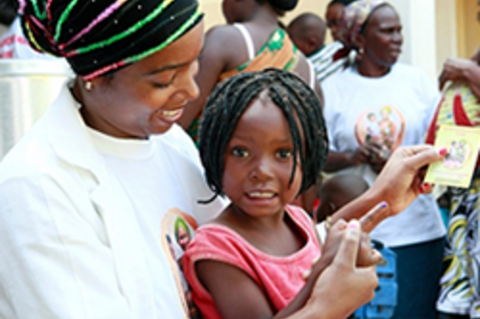
The United Nations Foundation's Shot@Life campaign works to educate, connect, and empower people in the United States (US) to champion vaccines as one of the most cost-effective ways to save the lives of children in developing countries. A national call to action for this global cause, the campaign rallies the US public, members of Congress, and civil society partners around the fact that together, we can save a child’s life every 20 seconds by expanding access to vaccines. By encouraging people in the US to learn about, advocate for, and donate vaccines, Shot@Life aims to decrease vaccine-preventable childhood deaths and give children a "shot" at a healthy life.
This advocacy initiative revolves around the use of social networking to galvanise people in the US to: "Speak up for children and add your voice to the movement of people committed to reducing childhood deaths around the world." For example, visitors to the Shot@Life website can find out how to support funding for global vaccines by, for example, sending a letter to their member of Congress and/or signing an online pledge and telling their friends about it.
Immunisation and Vaccines.
According to organisers, in 2012, 1.5 million children will die from diseases that have all but disappeared in the US because one in five children around the world does not have access to immunisations that could prevent diseases like pneumonia, diarrhoea, measles, and polio. Pneumonia and diarrhoea are the two biggest killers of children under five and account for more than one-third of childhood deaths worldwide. Seventy-five percent of unvaccinated children live in 10 countries: India, Nigeria, Pakistan, Indonesia, Democratic Republic of Congo, Ethiopia, China, Uganda, Chad, and Kenya.
Shot@Life supports the work of these partners: Bill & Melinda Gates Foundation, the United Nations Children's Fund (UNICEF), the GAVI Alliance, American Academy of Pediatrics, the American Red Cross, and Lions Clubs International.
United Nations Foundation website and Shot@Life website, both accessed on April 13 2012; and email from Elise Glaum to The Communication Initiative on April 16 2012.
- Log in to post comments