










































Strengthening Gender Sensitive Practices and Programming in Community Radio
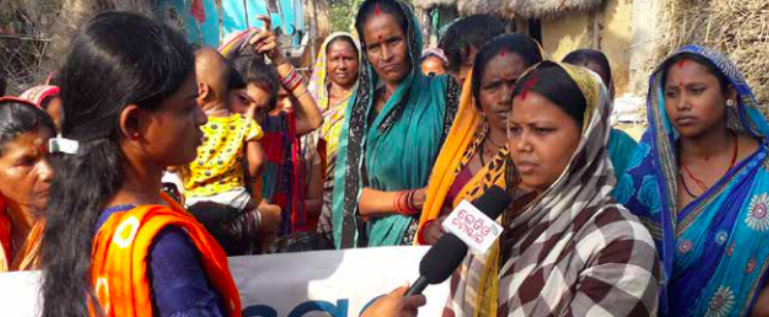
"There is no doubt that community radios can play a fundamental role in challenging prevailing stereotypes and representations that perpetuate gender inequalities and discrimination between communities."
This manual is designed to enhance women's participation and reduce gender inequalities in all aspects of the operation of community radio (CR) stations in India. Intended for directors, managers, producers, and broadcasters working in CR, it seeks to ensure that CR stations embrace gender-sensitive policies in their management and operations, thereby promoting a truly democratic space. The manual also seeks to ensure that the editorial content of stations remains gender sensitive at all times.
The production of the manual involved a desk review and input from representatives from 32 CR stations in India, which were selected based on their experience in working with women and on gender issues.
The manual is structured as follows, with each chapter ending with ideas for activities and a list of programme suggestions for community radio stations:
Gender and Media - Preliminaries: This section offers information on key concepts around gender, gender-related legislation, and the role of CR in supporting gender transformation.
- Chapter 1: Understanding Gender - discusses the concepts of gender, gendering, and patriarchy, and highlights the importance of understanding the gender dynamics within the radio station for CR practitioners so they can work towards creating gender-just and equal communities.
- Chapter 2: Acts and Conventions - explores some of the international policies and conventions and national laws that have been formulated to uphold the founding principles of women's human rights and to guide gender equality work.
- Chapter 3: Sexual Harassment and Workplace Safety - underlines that CR stations must acknowledge and implement the right to protection against sexual harassment as a major step towards ensuring that women enjoy independence, equality of opportunity, and the right to work with dignity.
- Chapter 4: Gender, SDGs, and Community Radio - explains how CR stations can influence behaviour, question patriarchy, and help shape attitudes, perceptions, and practices that can address discrimination and gender gaps, thereby playing a role in achieving the Sustainable Development Goals (SDGs) and gender equality.
Community Radio - Shaping Change: The focus in this section is on gender equality, specifically within the context of amplifying the voices of women and enabling inclusivity in community radio.
- Chapter 5: Gender Balance in Listenership and Volunteering - takes into account the dynamics of active reception of CR programmes and makes recommendations to rectify the gender imbalance in listenership patterns within the community.
- Chapter 6: Equal Opportunities for Capacity Building and Production - looks at the important role CR stations play in facilitating women's visibility in content development and recommends adopting a constructive approach towards capacity-building to enhance women's involvement in radio production.
- Chapter 7: Gender Equality in Decision-Making and Management - identifies women's participation in the decision-making process as vital to end discrimination and reflects on the need for meaningful representation of women in ownership and management of CR stations.
Community Radio and Gender-Responsive Programming: This section deals with three different dimensions of content production.
- Chapter 8: Content for Gender Parity and Social Change - encourages CR stations to uphold diversity, rights-based discourses, and gender justice through its content.
- Chapter 9: Addressing Gender Stereotyping and Insensitive Portrayal - focuses on how CR stations must play a fundamental role in challenging the prevailing stereotypes and sexist representations that perpetuate gender inequalities and discrimination against different communities.
- Chapter 10: Using Gender-Inclusive Language - identifies and acknowledges the biases in use of language in the process of content creation and calls for a shift towards non-discriminatory and gender-neutral linguistic practices, as well as a conscious effort not to use language that stereotypes, excludes, or demeans anyone.
The manual is an outcome of a project granted by the United Nations Educational, Scientific and Cultural Organization (UNESCO) International Programme for Development of Communication (IPDC) to the UNESCO Chair on Community Media at the University of Hyderabad, India.
98
UNESCO website on January 14 2022; and email from Kanchan K. Malik to The Communication Initiative on January 17 2022. Image credit: Radio Namaskar
- Log in to post comments