










































A Primer for Parliamentary Action: Gender-Sensitive Responses to COVID-19
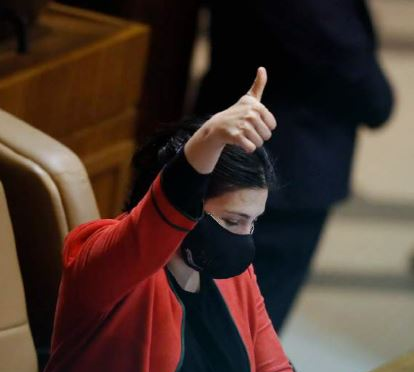
"Parliaments can seize moments of crises as opportunities...; the inclusion of women's different experiences, perspectives, talents and skills ensures better informed decisions, fairer outcomes, and evolution of 'group think' and traditional ways of doing things."
From the United Nations Entity for Gender Equality and the Empowerment of Women (UN Women), this primer highlights practical ways Members of Parliament (MPs) and parliamentary staff can take action to ensure that COVID-19 response and recovery decision-making addresses women's needs. It is informed by the differential impacts of the disease on women as documented to date, as well as the needs and challenges expressed by MPs and parliamentary staff adapting to new priorities and ways of working around the world during the pandemic.
UN Women points out that gender equality is a matter of human rights and democratic principles, including political equality, public participation, transparency, public service, deliberation, and fair and just decision-making. The public counts on parliaments to embody and promote these values in a crisis. Yet women, who make up only 25% of national legislators, are underrepresented in decision-making bodies around the COVID-19 response, according to UN Women.
After an introduction, the primer lists facts that explain how the impacts of COVID-19 are exacerbated for women and girls, as expressed in areas such as increased risks to women's economic security and empowerment. For example, additional caring burdens might limit girls' access to equal educational opportunities, and, as educational provision moves online, girls and boys may not always have equal access to infrastructure, equipment, or services.
Based on this context, the primer outlines specific actions MPs can take, by:
- Legislating - e.g., introduce or support amendments or legislation intended to rectify gender discrimination or inequality.
- Scrutinising - e.g., ask oral or written questions about the involvement of women in the government's COVID-19 response, including who is participating on specialised groups or task forces.
- Representing - e.g., channel women constituents' voices into COVID-19 decision- making by organising virtual town halls (online or tele-town halls), encouraging text message exchanges, or running community online surveys - sending the results to the relevant Minister or opposition counterpart.
- Acting as role models - e.g., give women MPs equal access to "the floor", to showcase their contribution to the crisis response.
The following section examines what parliaments can do, with action points organised into the following categories:
- Commit to a gender-sensitive response.
- Cultivate a gender-sensitive environment in parliament during the crisis.
- Prioritise women's involvement in the parliamentary response to the crisis.
- Institute special gender mainstreaming procedures to the response.
- Monitor and evaluate the gender sensitivity of the crisis response.
- Prepare for a future "business disruption".
- Share lessons with other parliaments.
After links to related resources, a checklist concludes the primer. Meant to guide MPs and parliamentary staff on gender-sensitive options for COVID-19 response and recovery during and beyond the pandemic, it covers 4 key areas of parliamentary work: parliamentary business and legislation; parliamentary scrutiny and oversight; parliamentary representation; and parliamentary evaluation & building back better.
Publishers
Arabic, English, French, Spanish
12
UN Women website, September 11 2020. Image credit: © René Lescornez A.
- Log in to post comments