










































UNICEF's Child-Friendly Schools in Thailand: A Case Study
International Education Programme, George Washington University
From the United Nations Children's Fund (UNICEF), this case study examines both the Thailand Child-Friendly Schools Programme (TCFSP) and UNICEF's Child-Friendly School Initiative (CFSI). As detailed here, during the 1990s, Save the Children US (United States) developed a child-friendly school (CFS) model in northern and north-eastern Thailand. Since 1998, UNICEF has been working closely with the Royal Thai Government (RTG) and non-governmental organisation (NGO) partners to develop model child-friendly schools in disadvantaged districts. In 2003, Thailand began to offer training to neighbouring countries on "Child-Friendly Schools: Theory and Practice" and received study visits as part of the Third Country Development Cooperation (TCDC) programme.
Following a description of the educational context in Thailand, the case study describes, first, the TCFSP's evolution and its strategies. For instance, during TCFSP: Phase 1 (October 1998 - September 1999), teachers and students from most of the 23 schools participating in Phase 1 received training in participatory learning, which encouraged pupils to express themselves; this was reinforced when students from nearly all the schools participated in local Children's Congresses. Participants in these congresses used various media (murals, puppet shows, skits) to communicate their likes and dislikes regarding teachers and subjects in the curriculum. Between November 1999 and the first quarter of 2000, the TCFSP was the subject of 4 formative assessments; a few of the key communication-related lessons to emerge include:
- The participatory learning and action approach was well received by most school stakeholders. But, because the school-self assessment often needed to shake up the decision-making structure in the school, effective implementation depends on the quality of assistance for facilitation provided by people from outside the school community.
- There is a danger that CFS will become a project rather than a process, i.e., it will involve a few activities carried out once, rather than a long-term school reform.
- Generation of local (internal) criteria fosters a sense of ownership by the community but will not, by itself, generate the full range of external, normative criteria based on the Convention on the Rights of the Child.
- Adult stakeholders needed to learn to take child stakeholders seriously, and the children need to be provided with effective ways to participate in the process, appropriate to their age level.
By Phase 4 (October 2001 - September 2002), the number of schools implementing the CFS approach had increased to 346, all in relatively underserved districts in the north and north-east. These schools served approximately 80,000 children, of which one third were disadvantaged, compared to one-fifth in Thai primary schools nationwide. These schools were all, to a greater or lesser extent, implementing school self-assessments, and developing and using child-centred learning methodologies, school management information systems (SMIS), life skills education, and livelihood education.
What followed was UNICEF's CFSI effort (2002-2006), which focused on 10 "priority provinces" in the north and north-east. In 2003, the initiative added 86 child-friendly schools, bringing the total to 459. To strengthen networking among the increasing number of child-friendly schools, TLSDF, with UNICEF support, launched the bimonthly Child Friendly Schools Network Magazine; it focused on sharing "best practices" and featured articles designed for supervisors, teachers, parents and, children. In April 2003, the RTG launched the One District-One Lab (ODOL), or "Dream School", initiative, which aimed to reduce major gaps between the quality of schools in rural areas and in urban areas by establishing one school in each district that was fully equipped with computers and other learning materials and equipment. That same year, the RTG offered an international training programme on CFS and received study visits from China through the Third Country Development Cooperation programme. In 2004, all members of the Southeast Asian Ministers of Education Organization agreed to make all schools in South-East Asia child-friendly. That same year, as an outreach effort, the Office of the Basic Education Commission launched the Thai language CFS website. In 2005, the RTB printed and distributed 5,200 copies of 6 CFS manuals that had previously been developed by different CFS partners.
A May 2006 assessment of the CFS initiative indicated that the students in the CFS and ODOL schools were "observably more engaged and outspoken than those in the non-programme schools. Despite the emphasis in both programmes and the 1999 National Education Act on learner-centred, activity-based teaching, teachers in CFS and ODOL schools were still mainly using teacher-centred pedagogy."
Next, CFSI 2007-2011 is outlined; a complete list of these activities and expected results is provided in Annex A (page 38) but, in short, includes a bimonthly newsletter, teacher training in various concepts (e.g., life skills in the context of disaster), a gender responsiveness survey process, research on out-of-school and at-risk children, and activities to extend child-friendly approaches to early childhood education.
Outcomes, an analysis, and an exploration of future directions for CFS in Thailand follow. "UNICEF and the Ministry of Education have a strategy to mainstream CFS in the national school system at both the primary and secondary levels. The strategy includes strengthening and stabilizing the network of primary education policymakers, education supervisors and teachers who have already been trained by encouraging them - and for them to encourage each other - to make the CFS approach central to all aspects of their work. Several media will be used to strengthen communication within this network, for example, improving the CFS website and magazine, and organizing engaging dialogue in every region and at the ministry level. In addition, advocacy will be necessary to transform CFS from one item on a long list of topics covered in pre-service teacher education into the core framework for thinking about teaching and learning."
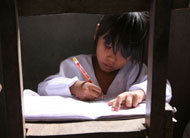
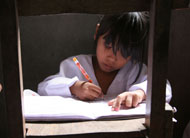
UNICEF website and UNICEF Thailand website - both accessed on February 16 2011. Image credit: © UNICEF-Thailand/2005/Rodraksa
- Log in to post comments