










































Improving Sexual and Reproductive Health Reporting in Kenya
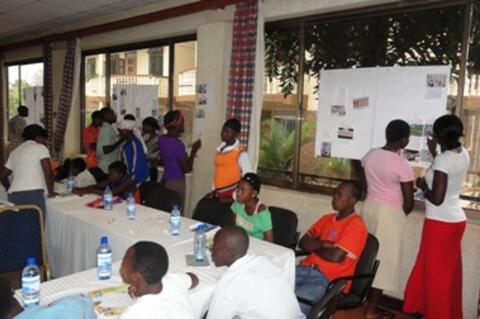
To assess media coverage of sexual and reproductive health issues in Kenya in 2010, Panos Eastern Africa, Panos London, and the African Population and Health Resource Center (APHRC), supported by the Wellcome Trust, implemented the Improving Sexual and Reproductive Health (SRH) Reporting in Kenya project. It was designed to begin building relationships among media, researchers, civil society organisations (CSOs), and communities on sexual and reproductive health (SRH) issues. Initial research into media coverage and communities' concerns identified: 1) that media did not cover the issues that concerned communities and 2) that media coverage drew very little on research. The research was followed by a multi-stakeholder workshop and a one-day training. The purpose of the project was to establish a coalition of capable and committed stakeholders to create informed and inclusive media and to spark public and policy debates around SRH information, rights, and access to services in Kenya - informed by: social, medical, and science research; best practice; and those most affected by the issues.
According to Panos, improving communication and engagement around SRH research is central to efforts to prioritise SRH issues and improve rights and services. A Panos evaluation found that building relationships of trust, understanding, and sense of common purpose between researchers, media, policymakers, and civil society organisations (CSOs) is critical to supporting sustainable stakeholder engagement. Panos's experience also shows that the media have a unique role to play in linking research and policy processes and in widening debate to the broader public.
The project was based on the idea that by strengthening the communication of research on SRH issues, the media can act as a catalyst for debate linking the public, academia, and civil society - rendering them better able to demand effective SRH services from governments. Using academic research on SRH issues as a source of information and stories improves the quality of journalism and also enables researchers to reach wider audiences. Improved communication and dialogue around SRH through the media contributes significantly to addressing the stigma and taboo which inhibit access to SRH rights.
The project comprised the following key activities:
Media Scan
A scan and analysis of media coverage of SRH issues in 2009 was conducted as part of the project. The media scan revealed that SRH issues only accounted for 0.4% of media coverage, of which only 6% cited research. Over half the coverage focused on HIV and AIDS. There was little media attention on issues such as adolescent pregnancies, sexually transmitted infections (STIs), and male SRH, and there was no coverage on abortion during the period covered by the scan.
Community Consultations
Community consultations were carried out in two slum communities in Nairobi. According to Panos, they provided invaluable insights into the vast differences between the priorities and issues covered in the media, as opposed to what informants from research, media, and civil society put forward as key issues. The participants cited poor contraceptive use, rape, early child sex, incest, prostitution, and abortion as critical issues - none of which were represented in the media content scanned. The community consultations and reports were carried out by the APHRC in Viwandani and Korogocho.
Communicating SRH Research Training
The media scan, informant interviews, and community consultations revealed that journalists lacked knowledge of SRH issues and that researchers lacked communication skills. To address these knowledge gaps, APHRC, Panos Eastern Africa, and Panos London organised a training workshop in Nairobi. The training dovetailed with the "Research to Policy and Action Workshop" event. Panos says that the event helped to raise the profile of the project and the importance of communication and media engagement, while also providing practical training.
Creating New Platforms between Media and Researchers Event
APHRC brought together stakeholders from civil society, media, community representatives, policymakers, journalist trainers, and researchers to discuss SRH and identify recommendations to improve media coverage of SRH. These findings and recommendations were compiled into a policy briefing to be disseminated to participants and other interested parties in Kenya and more widely.
Media Coverage
Panos describes a key result of this project as media coverage on SRH issues. Six radio pieces were broadcast and two print articles published by corporations such as the BBC World Trust, Koch FM, and Ghetto FM, as well as print outlets such as The Standard and Daily Nation. There was also coverage of the journalist training in the APHRC newsletter July-September 2010 issue. In addition, two news stories arose as a direct result of the discussion on SRH at the community consultations, and one of the participating journalists won a health reporting award for his article, "Case of Lost innocence, or lost generation", on SRH issues in Nairobi slums, a story which arose as a direct result of the community consultations.
The research findings and recommendations were presented at a multi-stakeholder forum in which journalists, researchers, and CSOs discussed how they could work together to improve media coverage and make it more relevant to communities. The forum promoted opportunities for collaboration between 29 participants from media, research, and civil society to promote multi-stakeholder debate and policy engagement on SRH.
A one-day research communication training workshop for journalists and research institute communication officers was instituted to strengthen relationships, discuss SRH issues and research, and introduce a toolkit [PDF], produced by Panos London and Institute of Development Studies (IDS), to fill gaps in knowledge. This workshop was paired with an African Population and Health Research Centre (APHR) workshop on research-to-policy influence.
A policy brief, "Listen to our Needs: Improving Reporting on Sexual and Reproductive Health in the Kenyan Media", was published in December 2010 to offer recommendations based on the research findings.
Sexual and Reproductive Health
Panos has found from research that Kenya faces many challenges in SRH. Although the country made progress on key indicators during the 1970s and 1980s, more recently, these have stagnated or reversed. Maternal mortality remains unacceptably high at 560 deaths per 100,000 live births. About 14,700 Kenyan women of reproductive age die annually from pregnancy-related complications, while between 249,000 and 441,000 suffer from disabilities caused by complications during pregnancy and childbirth. Contraceptive use has stagnated at 39% of married women since 1998. About one in four (24%) married women in Kenya who wish to delay childbirth are currently not using contraception. Abortion laws in Kenya are restrictive. Section 63 of the country's penal code allows procurement of abortion only in cases where the woman's physical or mental health is endangered. Consequently, Kenya has high rates of abortion carried out by unqualified practitioners.
Panos Eastern Africa, Panos London, IDS: Realising Rights Consortium, the African Population and Health Resource Center (APHRC), and Strategic Africa. Supported by the Wellcome Trust.
Email from Tania Ghosh on October 3 2011; Panos website on October 4 2011; and email from Kate Schoenmakers to The Communication Initiative on September 25 2012. Image credit: Panos Eastern Africa
- Log in to post comments