










































Hear Our Voices from Because I am a Girl
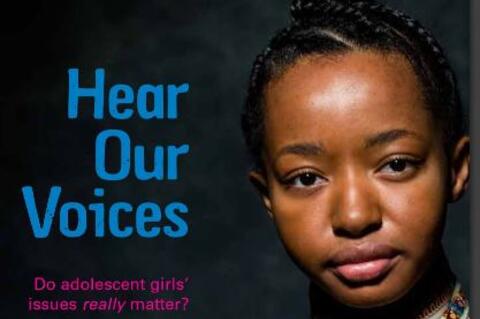
"Thousands of girls claim they are embarrassed and ashamed to express the everyday injustices and threats of sexual violence they face, in 'Hear Our Voices' - one of the largest studies of adolescent girls’ rights of its kind."
Part of the "Because I am a Girl" project, "Hear our Voices" from Plan International comprises study results presented as a video, a technical report, a summary report, and a toolkit intended to provide "consistent, disturbing illustrations of the most pressing concerns for adolescent girls, giving powerful insights into the issues facing them, in their own words."
This project used research tools and analysis to create advocacy tools to support change for adolescent girls 12-16 years old. The toolkit (see Related Summaries below) offers the methodology used by Plan International researchers, which is freely available for use and comment, including training ideas, ethical considerations, and the survey tools for both individuals and focus groups for surveying girls on questions of gender in family and community life and for surveying both girls and boys about the conditions for girls in schools.
The technical report (see Related Summaries below) presents results including methodology, limitations, and an analysis of data from 11 countries.
The summary report is written to encourage advocacy for girls using the data and tools offered: "The purpose of the study was to help girls, communities and Plan to understand the key issues that adolescent girls face today – in their own words." The summary offers the information resulting from the qualitative and quantitative data analysis in a form that uses quotations from girls of each region on the significant topics resulting from the study. It offers connections to Facebook, Twitter, and the Plan web page, as well as infographics of results. The feelings of girls are described and captured in quotations on topics of: marriage, pregnancy, speaking up, feeling valued, violence, safety in and around school, school, school latrines, class participation, encouragement, household work, and the chore burden at school.
For further advocacy, Plan celebrates the Day of the Girl, declared by the United Nations as October 11 each year, and sponsors celebrity ambassadors to campaign for girls.
The project includes a video (see below) available on the project web site and on YouTube.
Gender, Women, Youth, Children, Education
"The evidence shows that the social norms which underpin gender inequality are changing for the better for adolescent girls, but this progress is unjustifiably slow in many areas. Girls around the world are working every day to improve their lives and create a better future for themselves and their families. For example, less than half (41 per cent) of the adolescent girls said that girls ‘always’ or ‘often’ complete at least nine years of school in their communities."
However, conditions for girls vary by country and locale. Examples include the following: "For instance, 77 per cent of girls in one area in Bangladesh reported they ‘never’ or ‘seldom’ feel safe in their community, while only 33 per cent girls from another area of the country ‘never’ or ‘seldom’ feel safe." However, if girls can safely access schools and are allowed to go, they find it, for the most part, a source of empowerment: "Seventy per cent of girls and 69 per cent of boys reported that adolescent girls ‘always’ or ‘often’ participate in class as often as boys." Gender differences include: "Adolescent girls have difficulties claiming their rights to express themselves and discuss their concerns in front of men and boys. Over half (51 per cent) of girls involved in the study said that adolescent girls ‘never’ or ‘seldom’ say what they think when a boy or man is around....One of the key themes that came across most powerfully in the study is pregnancy, showing how adolescent girls across diverse contexts are often unable to claim their rights to control their own body, negotiate sexual relations, or make decisions about their reproductive health. Over half (53 per cent) of girls across the 11 countries claimed that adolescent girls ‘never’ or ‘seldom’ decide if they become pregnant."
Hear Our Voices website, October 28 2014.
- Log in to post comments