










































Communication Planning Guide for IPV Introduction and Routine Immunisation Strengthening
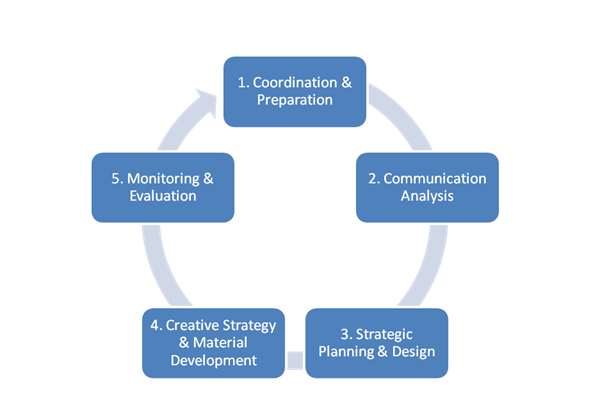
To support the addition of inactivated poliomyelitis vaccine (IPV) to a national immunisation programme, this guide offers a range of checklists, tools, templates, examples, and best practices to support the effective planning and implementation of communication activities associated with IPV and related efforts to strengthen routine immunisation (RI) services. The contents should be adapted to local contexts: "[Y]ou should feel free to incorporate your own approaches to communicating about IPV vaccine into the overall plan based on local knowledge and context."
The World Health Organization (WHO) explains that objective 2 of the Polio Eradication and Endgame Strategic Plan 2013-2018 seeks to hasten the interruption of all poliovirus transmission and, where possible, contribute to strengthening immunisation services for the delivery of other lifesaving vaccines. Under objective 2, at least one dose of IPV will be introduced into RI programmes globally, after which trivalent oral polio vaccines (OPV) will be replaced with bivalent OPV in all OPV-using countries - setting the stage for eventually ending bOPV use.
Included in this document are guidelines, checklists, tools, and best practices from previous experiences of new vaccine introduction and RI communication which are designed to enable countries to effectively plan, coordinate, manage, and report on the implementation of communication plans related to IPV introduction in RI systems by:
- specifying the programmatic and behavioural objectives of the communication plan;
- identifying key audiences and appropriate channels to reach them;
- developing key messages;
- highlighting possible barriers and factors that could hep reach objectives;
- translating messages into effective communication products; and
- monitoring and evaluating communication activities with clear benchmarks.
The resource includes tools for practitioners such as this checklist:
- "Do you have a government-endorsed, multi-agency communications working group in place to support IPV introduction/routine immunisation?
- Have you done your situation analysis?
- Have you done your behaviour analysis?
- Have you planned your messages and materials?
- Do you have your strategy planning matrix and plan of action?
- Have you pre-tested your communication products/materials?
- Do you have a distribution plan for the materials?
- Do you have a crisis communication plan, including explicitly agreed partner roles and responsibilities and SOPs [standard operating procedures]?
- Have you identified and trained agreed spokespeople?
- Have you secured funding for the implementation of the plan?"
It offers concrete guidance, such as the need to begin strategies to support the establishment or reactivation of a communication coordination committee/subgroup for IPV introduction at national and sub-national levels. Some ideas include: "The IPV Communication Committee should be fully integrated within the existing national Immunization Coordination Committee (ICC) or the country's National Immunization Programme and should include all relevant stakeholders to ensure effective mobilization of partners, community support and resources. It should include multidisciplinary teams of communication experts, social scientists, clinicians, health workers, and community representatives, as well as representatives of the ministry of health, line ministries, key partner agencies and community institutions considered important to the implementation of the communication component of the programme. See Annex 1 for a more thorough suggested composition."
Click here to download the guide in English in Word format (32 pages).
Click here to download the guide in French in Word format (35 pages).
English and French
32 (English); 35 (French)
C4D Network Slimline Twitter Trawl: May 18-24 2015.
- Log in to post comments