










































University Leadership for Change in Sexual and Reproductive Health Project
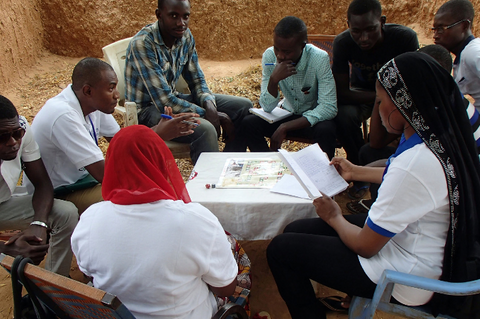
In Niger, rates of childbearing, child marriage, and adolescent pregnancy are some of the highest in the world. The University Leadership for Change (ULC) project engages students, the administration, and university health services from Abdou Moumouni University in Niamey, as well as the ministries of health and higher education to tackle pervasive challenges to improving young people’s sexual and reproductive health (SRH). The project involved strengthening services for youth, involving stakeholders from relevant ministries and the university in decision making and implementation, cultivating leadership skills among students as champions for SRH, and employing a comprehensive approach to behaviour change using peer education, films, and games to help improve the health and well-being for young people and their communities. The ULC Project was implemented by E2A with support from the United States Agency for International Development (USAID) West Africa mission, and in collaboration with the Agir pour la Planification Familiale (AgirPF) project from April 2014 to June 2016.
The project’s three main technical components were:
- Youth leadership and demand generation: The project trained student leaders in SRH and comprehensive behavior change methodologies, providing supportive supervision to student peer leaders to run behaviour change activities on campus and community-based activities with adolescents and young people in communities across Niger (see discussion on behaviour change strategies below for more information).
- Improving access to and quality of SRH services: Partnering with AgirPF, ULC trained university health center providers on behaviour change, family planning, and youth-friendly approaches; provided supportive supervision with the Ministry of Public Health; and facilitated linkages between the university and district health centers, enabling the university to procure contraceptive commodities through the public health system.
- Participatory stakeholder engagement for sustainability: The project established a co-management committee that convened key stakeholders for management and oversight. Members included representatives from the Ministry of Public Health (central and district level); the Ministry of Higher Education, Research and Innovation; the university healthcenter; student leaders; and E2A.
Actitivies to engage youth and the community, and to support behaviour change included the following:
The use of peer leaders and games:
Rather than follow other traditional models for youth friendly services (YFS), which generally treat young people as consumers of health services, ULC actively involved them in decision-making processes. The approach engaged university students as peer leaders, who are trained in SRH and behaviour change, to facilitate behavior-change activities using Pathways to Change and Reflection and Action for Change (REACH) methodologies. Pathways to Change, a board game designed by Pathfinder International, elicits students’ perceptions of barriers and facilitators of change. REACH builds on Pathways to Change, engaging young people to identify and prioritise behavioural problems among their communities and themselves. During these activities, young people identified, and then reflected and acted on barriers and facilitators to accessing SRH information and services.
Based on these activities, the ULC Database and Dashboard (UDD) was created, which houses the outputs of over 300 Pathways to Change games played with young people.The UDD includes data on those who played the games, including their behavioural objective (e.g., seeking contraception, spacing pregnancies); sex and age; educational level; region and context (urban/peri-urban); and time on task (as a proxy for cognitive effort). The UDD is intended to be a dynamic and easily searchable means of differentiating key barriers and facilitators associated with specific behavioural objectives by demographic profile.
The use of narrative:
The project produced three films as part of its behaviour change work, which use drama or narrative to spark reflection, dialogue, and action. The films were produced by local Nigerian film companies and were based on qualitative data collected from young people, service providers, and rural communities. The narrative in the first film, Binta’s Dilemma, presents how university students in Niger confront culturally controversial topics, including contraception, unintended pregnancy, and the societal pressures on young women to bear children once they are married. It is meant to help young people, especially students, reflect on and react to these topics.
The second film, Whose Norms, focuses on the barriers young people face from service providers and the barriers that service providers confront when offering contraceptive services to young people. It seeks to help service providers in Niger offer quality youth-friendly sexual and reproductive health services.
The third film, Hadjo’s Dreams, highlights the issue of child marriage. It aims to encourage reflection by communities about ways that child marriage can be prevented and how the sexual and reproductive health of adolescent girls can be improved.
SRH and youth
Context:
Niger has the highest fertility rate - 7.6 children per woman—and some of the highest rates of child marriage and early childbearing in the world. These statistics are exacerbated by an under-resourced health system, conservative cultural setting, and significant barriers to accessing SRH information and services. Within this context, young people ages 10-24 in Niger total more than 5 million and represent 32 percent of the population.
Lessons Learned:
The following are some of the lessons learned from the project:
- A multi-sectoral approach to AYSRH programming in university settings is critical for ownership and sustainability.
- Integration of university health centers into the public health system is necessary for increasing access to quality youth-friendly SRH/FP services.
- Addressing gender barriers is paramount to the success of AYSRH programmes in Niger.
- Involving and supporting young people as leaders brings added value and contributes to sustainability.
- The use of narratives in behavior change interventions has the potential to address complex behavioral needs of diverse young people.
- The expansion of youth-led activities at community level increases their accountability and leadership.
- Establishing mechanisms to promote participatory and co-shared coordination of the project among the different stakeholders, including young leaders, is key for accountability and sustainability.
Read E2A in Niger: University Leadership for Change in Sexual and Reproductive Health Fact Sheet (January 2017) [PDF] for more information.
Evidence to Action for Strengthened Family Planning and Reproductive Health Services for Women and Girls Project (E2A), Agir pour la Planification Familiale (AgirPF) Project and USAID West Africa
E2A is led by Pathfinder International, in partnership with ExpandNet, IntraHealth International, Management Sciences for Health, and PATH.
- Log in to post comments