










































The Clown Project (El Proyecto Payaso): Communication on HIV/AIDS
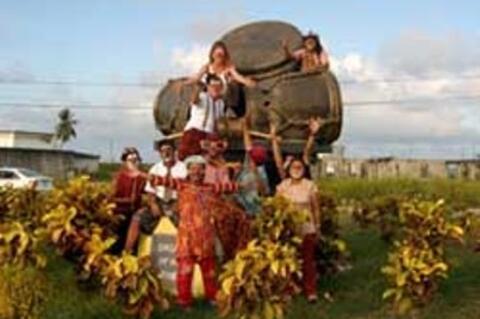
El Proyecto Payaso, Guatemala, (The Clown Project) focuses on HIV/AIDS prevention communication based on the development of educational interventions through street theatre strategy, developed mainly in communities in rural Guatemala, but also through tours in urban areas and throughout Central America.
The Clown Project works in five main areas:
- Implementation of events that are culturally appropriate for the population to which they are addressed, including the participation of clowns, jugglers, musicians, and dancers.
- Organisation of talks in the communities visited to increase understanding of and discussion on the topics of transmission and prevention of HIV / AIDS.
- Work with "peer educators", groups of young people from different geographical areas, who are trained in social communication on sexually transmitted infection (STI) / HIV/AIDS and sexual and reproductive health to be peer educators and to increase the level of the information in their own communities.
- Production and distribution of educational materials and support to partner organisations that is appropriate for each one’s specific population (where illiteracy rates exceed 80% in some cases).
- Development of a scholarship programme through which it seeks to promote equal access of vulnerable populations to culturally appropriate information updates on HIV/AIDS that can generate an indigenous response to the pandemic at the grassroots level. These Fellows from the programme undertake to carry out a project to replicate the experience of the Clown Project in Guatemala when they return to work with their organisation or association.
The central strategy of the project is to disseminate information about HIV / AIDS in a fun and engaging way, through street theatre. The freedom of expression represented by the figure of the clown is used to advantage to include issues that have traditionally been taboo and stimulate discussion about them.
Training is a key element, as part of the talks are held with groups able to disseminate information and increase the impact of the intervention, such as sex workers, evangelical pastors, midwives, health workers, police, firefighters, young adolescents, members of sports teams, councils, students, prisoners, migrant men and women, uniformed personnel of penal institutions, and soldiers.
The project has a special emphasis on training young people as multipliers of educational messages; and to this end, in addition to information on HIV/AIDS, peer educators are trained in theatre and collectively make a theatre script for presentation of theatre in their communities.
Work with peer educators is based on a research project developed in 2001, funded by the British charity Comic Relief. The research was based on a methodology of focus group interviews in a community of K'iche Nahualá on the specific needs of youth and indigenous populations’ access to information about sexual health.
All project activities are planned in conjunction with the local health department and/or partner organisations with similar goals, using established cultural precedents (banquets, circuses, and street festivals, etc.), for greater acceptability of educational content. Similarly, to ensure the adequacy of educational materials produced by the project, these are translated into local languages in collaboration with specialised organisations, and the texts and illustrations are validated through a participatory process with each local population.
HIV/AIDS, Health, Education, Youth.
From its first show, the Project has conducted more than 300 educational interventions in 200 communities, with an average of 500 beneficiaries per community visited, utilising the effectiveness and efficiency of the strategy of street theatre to deliver key messages to a large number of people in a short time and with relatively few resources.
In collaboration with Doctors Without Borders, the Ministry of Health of Guatemala and specialised agencies, educational materials have been produced by the Clown Project in 14 Mayan languages, Garifuna, and Castilian.
Action Clowns (France), Asociación Payasos (Spain), Embassy of Finland, Global Fund, Healthlink WorldWide, Trócaire. Funding is also donated through the Planned Parenthood Federation of America and the Christian Children’s Fund.
The Clown Project website and the Panos website, August 23 2011.
- Log in to post comments