










































Untold: Stories in a Time of HIV & AIDS - Audience Reception and Capacity Building Report
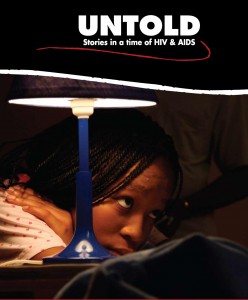
This 24-page report, published by the Soul City Institute for Health and Development Communication, presents a summary of an audience reception study conducted to assess the impact of a series of HIV/AIDS education films entitled "Untold: Stories in a Time of HIV & AIDS." The report also provides an overview of the capacity building programme which was part of the series production. According to the report, the series moved and entertained audiences, created dialogue and debate, and got people thinking about the choices they face in relation to HIV and AIDS.
The "Untold" films were produced in nine Southern African countries and were broadcast on public television in all countries. A DVD set of the films with an accompanying discussion booklet was also distributed to over 100 HIV-education and community organisations across the region. The films were the culmination of a multifaceted capacity building programme in which local writers, producers, and directors were trained and mentored in the development and production of edutainment drama. Eleven writers and nine producers from across the region also completed an accredited 18-month training course in scriptwriting and film production, which was integrated into the process.
For the audience reception study, data were collected via focus group discussion and in-depth individual interviews. Participants were recruited through sampling in rural, urban, and semi-urban areas. Participants were males and females between 15 and 49 years old who had seen at least one of the films.
According to the study, the films were generally viewed as realistic. Viewers seemed to prefer the film from their own country, but they could also identify with the other stories and relate them back to their own lives. The study found that the series stimulated discussion between friends, siblings, parents and children, neighbours, and colleagues. The series also encouraged respondents to shift their attitudes, social norms, and behaviours. The research also showed that the films played a role in breaking down barriers and stigma among viewers.
The study acknowledges the difficulty in assessing reach in many countries, as audience monitoring is generally poor. However, in South Africa, the report states that the series received a 40% audience share. The films out-performed a popular prime time wrestling show, "WWE Smackdown", which, the authors suggest, confirms that there is a demand for quality local programming.
Participants interviewed raised some concerns about the films, such as the fact that some people felt awkward about watching sex scenes, suggesting that future productions should not have these. Older participants who were not familiar with the music and style of Rebel Rhymes commented that the film was ‘un-African’, but many of the youth interviewed related well to these features. The most common suggestion was to increase the length of the films or serialise the individual stories.
The report states that combining the making of the "Untold" series with training was a complex and challenging process; however, for most trainees, the training programme was invaluable. The authors point out that while the training had benefits and was successful in many respects, it would be unrealistic to assume that it has left people completely equipped. Further training is needed to consolidate the skills that each country will need to produce effective, local edutainment material in the future.
Onelove Southern Africa website on February 22 2010.

- Log in to post comments