










































La Voz de la Mixteca [The Voice of the Mixtec]
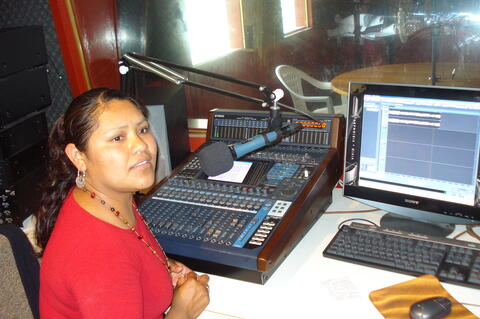
Organisers operate from the conviction that radio has proven to be effective in combating geographic isolation by promoting information exchange, community development, and cultural preservation. Radios are relatively inexpensive communication devices, and signals can reach even the most secluded communities. Where mass media is controlled by media conglomerates, community radio can broadcast alternative viewpoints and suppressed information and coordinate efforts. Furthermore, radio complements the oral traditions of many indigenous languages and the participatory lifestyle in their communities. Where literacy rates are low, radio can serve as a communication and community-building tool. From a linguistic perspective, broadcasting in an indigenous dialect has the potential to keep the language dynamic since it must grow and adapt to express current events and communicate modern concepts.
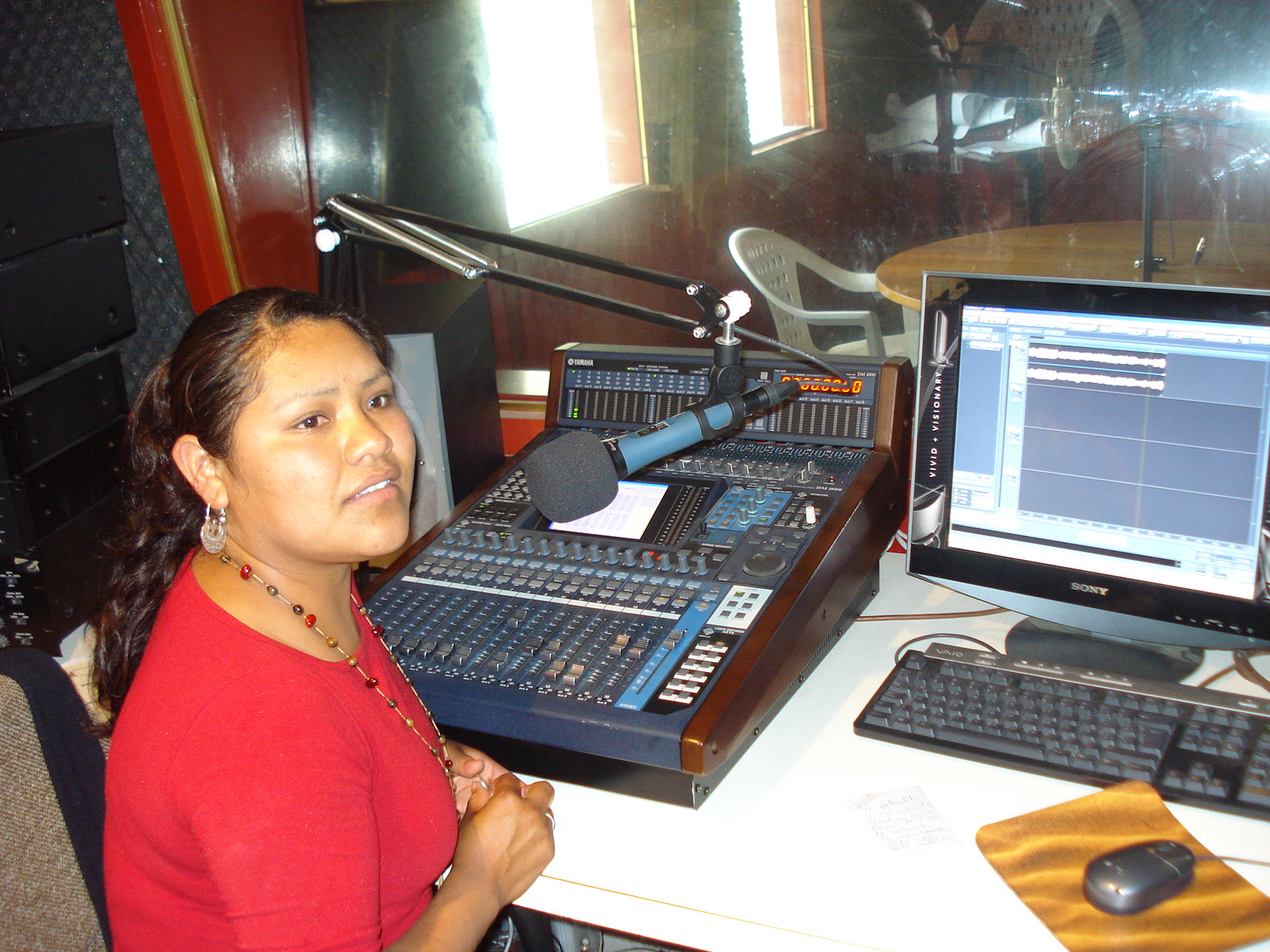
"La Voz de la Mixteca" broadcasts on 930 AM in Spanish, Mixtec, and Triqui from 6 a.m. to 6 p.m., seven days a week. While the station is managed by Daniel Cardona from Mexico City, XETLA's staff of 13 includes 4 Mixtec and 3 Triqui personnel. They work to provide communication, information, entertainment, and education to listeners. The "communication" function is central to XETLA's mission; the station provides 3 hours of daily notices or messages sent between family members, friends, and neighbours - to report anything from births to community celebrations to financial transactions. Notices are aired in Spanish, Mixtec, and Triqui. XETLA has also started to broadcast online, making it possible for migrant workers in the United States and Canada to communicate with family in Oaxaca. In this way, XETLA compensates for the telephone and mail services that are often missing in its listener communities.
XETLA's signal reaches across the Mexican states of Oaxaca, Guerrero, and Puebla; however, the station's staff of 13 is hard-pressed to gather news in all of the communities it reaches. Offering one hour of news programming each day, XETLA, like other CDI-sponsored stations, relies heavily on nationally produced news. XETLA's limited staff attempts to report news from the communities in its broadcast area; news gathered by paid staff is supplemented by segments produced by students, volunteers, and social service organisations. Reportedly, listener involvement makes for a "participatory news service": people can either call or visit the station to share their news, or even to complain about a government official in their own languages.
XETLA promotes local culture by broadcasting regional music, either from groups that come to play live in the station, or groups that XELTA staff have recorded when visiting local communities. XETLA has also produced CDs for 12 local musical groups, providing each band with 1,000 CDs to distribute in their communities and broadcasting the music on air.
Educational programmes are produced in indigenous languages for the station by social service organisations on topics such as health, environmental preservation, and small business development. For example, one XETLA volunteer, Mixtec lawyer Tomás Lopez Sarabia, airs a weekly segment on indigenous and human rights.
Community Media, Culture.
The Mexican state of Oaxaca is home to more than 15 different indigenous groups, with an estimated 50% of the state's population speaking an indigenous dialect. Oaxaca's ethnic diversity may be attributed, in part, to its mountains: The region's various indigenous groups have developed their customs and cultures in the relative isolation of remote villages and have used the mountains as a shield of resistance to homogenising influences from the Conquest to the more recent government assimilation programmes. Here they have been able to develop and maintain their own traditions, languages, and cultures.
However, many of Oaxaca's indigenous communities are not only isolated from each other, but also from the rest of Mexican society. While Oaxaca's indigenous languages - such as Mixtec, Zapotec, and Triqui - enjoy seemingly robust speaker bases, the dialect used in one town may not match the dialect spoken in another, thus splintering speech communities and hindering inter-village communication. In addition to lacking basic electric, water, and sewage removal services, many communities do not have access to reliable telephone or postal services. The United Nations (UN) Human Development Index ranks Oaxaca 30th out of Mexico's 31 states in terms of marginalisation.
Indigenous community radio stations can solve many of the communication challenges faced by indigenous communities, but the stations face serious challenges themselves. Staffing, training, licensing, funding, and geography-related obstacles head the list. Furthermore, the term "community radio" is difficult to define. Government (CDI)-funded stations are one approach to developing indigenous community radio; the Mexican government funds more than 20 radio stations (including XETLA) that broadcast in 31 indigenous languages. The other is a growing network of "grassroots" community radio stations that are usually run by members of the community, many indigenous, out of their homes and often without state-sanctioned permits. The latter stations are reportedly protective of their independence, claiming that the CDI-funded stations are merely a means for the Mexican government to communicate its agenda to indigenous communities. Director of La Voz de la Mixteca explains, "The mass media is completely vertical - all media are vertical - but our station is trying to lessen this 'verticality' through community participation."
"Indigenous Community Radio in Mexico", by Sara McElmurry, March 20 2009 - part of the CIP Americas Program's series of 10 Citizen Action Profiles on Communication Rights; and XETLA - "La Voz de la Mixteca" website, January 26 2010. Image credit: Daniel Cardona

- Log in to post comments