










































Social Movements Engagement Guidance
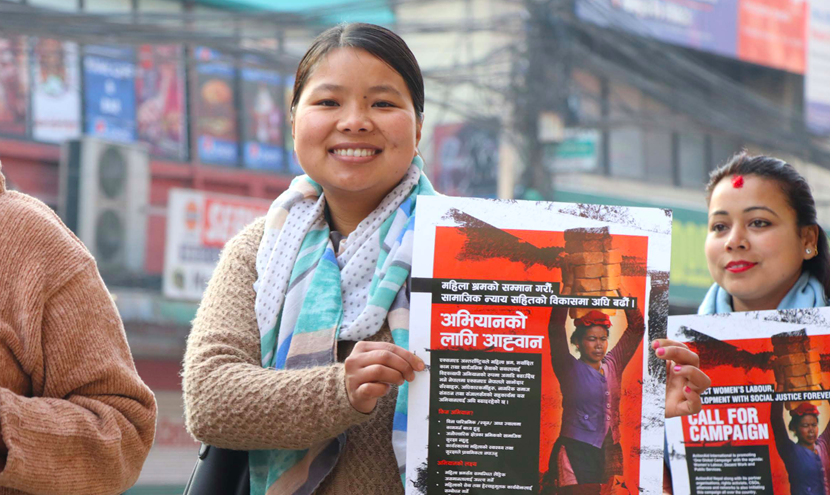
"Social change requires all forms of societal transformation. A social movement is a collective effort to bring about social change and is one of the primary mechanisms by which social change can occur."
This guide outlines ideas, considerations, and strategies that support more effective collaboration between international non-governmental organisations (INGOs) and social movements to work together towards common goals. It is designed to support ActionAid staff and partners and those outside ActionAid to ensure that their engagement with social movements is guided by a feminist perspective and emphasises flexibility and adaptability. In particular, it seeks to develop a deeper understanding of social movements and guide good working practices to avoid issues such as sexual harassment, exploitation, and abuse (SHEA) and to generally minimise risks to the movements, people, and organisations engaged.
While there are different definitions, ActionAid defines a social movement as "a coming together of people who are organised and mobilised to fight injustice, sharing a common cause rooted in a shared social, political, and cultural identity and an interest in justice. This definition is inherently flexible and can be applied to a wide range of collective efforts to bring about social change. The boundaries of what constitutes a social movement is open to interpretation; some movements may have named leaders and organisational structures, while others may be more decentralised. Movements may arise around a specific issue or set of issues or may have a more general focus on broader social change."
Working with progressive social movements is a core part of ActionAid's change strategy, since the transformative power of working together on shared concerns is considered important to bringing about systems change. As explained in the guide, this work involves harnessing the power of organising, collective actions, and mobilising change agents, especially women and young people and their movements. Based on learning and conversations with movement leaders, this Guide outlines processes, systems, methodologies, and approaches for supporting movements with their work. It highlights the fact that "INGOs must be consistently conscious of their power and privilege, and remain humble in how they engage with movements. INGOs should be cognisant that actors, spaces, agendas, objectives, and interests are constantly changing therefore they must always reposition to contribute to change at different moments and adapt ways of working to movements' needs."
The contents of the guide are as follows and are interspersed with case studies from ActionAid-supported countries such as Gambia, Mozambique, Zimbabwe, and Pakistan:
1. Introduction
2. Background
- What is a social movement?
- What is a people's organisation?
- Organising and mobilising
- Challenges facing social movements today
- Stages of social movements
3. Engaging with Social Movements
This chapter looks at the different ways INGOs can engage with social movements (such as capacity strengthening, research support, or funding), which includes guidance on mapping social movements as a first step in order to analyse and explore the context.
- Mapping social movements
- Engagement strategies
4. Monitoring Social Movements and Measuring Their Impact
INGOs are accountable to the outcomes and impacts of social movements with which they engage. That means carefully monitoring INGO engagement and its subsequent outcomes and impacts. Monitoring outcomes helps social movement leaders and their partner INGOs to understand the path the social movement is taking and assist them in making informed decisions.
5. Protection from Sexual Exploitation and Abuse (PSEA), Sexual Harassment, Exploitation and Abuse (SHEA) and Safeguarding
One way INGOs can support social movement members is by following the principle of 'do no harm' and making sure their rights, dignity, and power are promoted through safe and positive ways of working. It is imperative that INGOs put in place all measures to reduce the likelihood of exploitation of social movement actors, who are recognised as agents of change but who are also vulnerable to threats of abuse and exploitation by international actors.
6. Risk Analysis
The purpose of risk analysis is to address the risks faced by social movements and safeguard the physical and mental well-being of the activists and leaders. Common risks include repression and violence, legal and regulatory challenges, stigmatisation and marginalisation, and infighting and fragmentation.
7. Conclusion
The conclusion offers a set of reflective questions that can act as a checklist for INGOs when working with social movements.
This guidance document is accompanied by the Building a Movement Mindset Guide and Toolbox that are designed to support the practical implementation of the tailored strategies outlined in this guide (see Related Summaries, below). Together, these resources are designed to empower ActionAid and other INGOs to effectively partner and engage with social movements, building a "movement mindset" within organisations and fostering meaningful and impactful change worldwide.
Click here to download Annex 1: Six Steps to Mapping Social Movements in Word format.
Publishers
ActionAid website on August 8 2024. Image credit: ActionAid
- Log in to post comments