










































Advancing Sexual and Reproductive Health and Rights in Universal Health Coverage: An Advocacy Guide
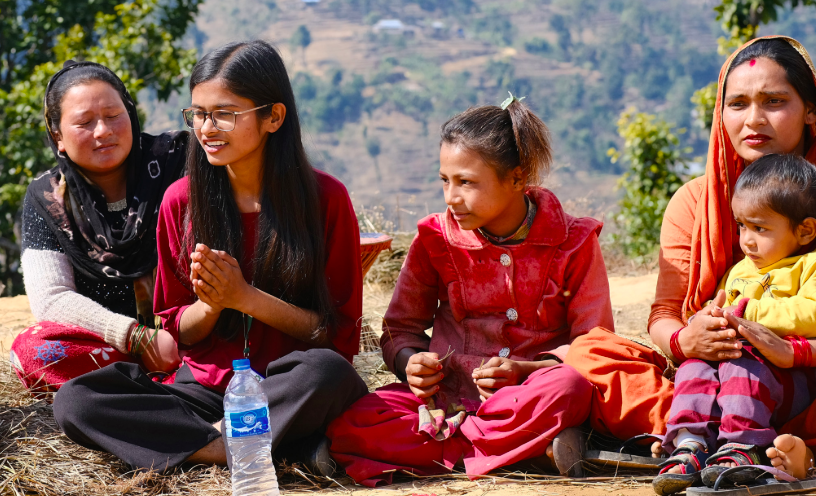
"As advocates, we must call for SRHR to be included, costed, and financed in UHC."
This advocacy guide offers a practical tool for advocating for sexual and reproductive health and rights (SRHR) in universal health coverage (UHC) plans, strategies, and policies, based on principles of gender equality and human rights. It highlights the reasons for the need for the integration of SRHR in UHC, explains related policy processes and advocacy entry points, and offers practical steps and resources to develop an advocacy plan.
As explained in the guide, UHC is about ensuring quality healthcare services to all people without financial hardship. UHC is a means to achieve the right to health for all and should be designed and implemented to meet the health needs of every person, especially the most marginalised. UHC seeks to address healthcare costs, infrastructure, service provision, commodities, medicines, and information, but too often, SRH services are left out, not prioritised for funding, or not comprehensive in nature. This is despite the fact that every person needs sexual and reproductive health (SRH) services and the fact that these services are critical to fully realising the right to health, especially for girls and women.
This guide has been developed to:
- Reinforce and add to existing knowledge of the global context for SRHR in UHC.
- Offer guidance on when and with whom to engage in a particular national context.
- Provide practical steps to take in the development of an advocacy plan.
- Highlight useful advocacy tips.
- Introduce advocates to new tools relevant to SRHR in UHC.
- Create an understanding of the context, challenges, and successes of advocates in other countries (with the help of examples from around the world).
The guide consists of the following sections:
Part 1: Background - provides an overview of key concepts and considerations as well as the global policy context for gender-responsive UHC and SRHR, including in the context of the COVID-19 pandemic.
Part 2: Advocacy in Action - takes the checklist guidance developed by the World Health Organization (WHO) in their handbook on SRHR and UHC - "Critical Considerations and Actions for Achieving Universal Access to Sexual and Reproductive Health in the Context of Universal Health Coverage Through a Primary Health Care Approach" - and simplifies and contextualises it for advocacy at the national level, including real-world examples from advocates, to support effective participation in UHC processes. The checklist consists of eight questions that should be answered and clarified to identify progress and gaps in a country's UHC plans, and if and how they include SRHR. This chapter also discusses potential roadblocks for advocacy and offers additional tools and guidelines to aid advocacy efforts.
Part 3: Your Advocacy Plan - outlines steps and tips to help create an advocacy plan. The steps are as follows:
Step 1: Identify the problem or any gaps to be addressed within the general topic of SRHR in UHC.
Step 2: Identify the policy, programme, process, or step in the process that needs to be influenced to address the problem, and explore how that policy, programme, or process works.
Step 3: Identify key actors.
Step 4: Identify goals, advocacy targets, and timelines.
Step 5: Gather additional data.
Step 6: Connect with allies and partners
Step 7: Prepare talking points and materials.
Step 8: Connect with the relevant stakeholders and deliver the message.
Step 9: Reflect on the process and evaluate the impact.
Part 4: Conclusion
Part 5: Annexes
Publishers
Women Deliver website on July 2 2024. Image credit: Puja Yadav, Women Deliver
- Log in to post comments