










































Changing the Script: Intergenerational Communication about Sexual and Reproductive Health in Niamey, Niger
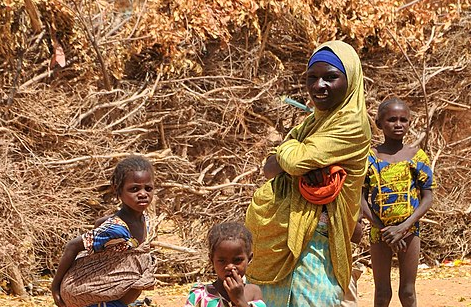
Tulane School of Public Health and Tropical Medicine (Silva); CERA Group (Kassegne, Nagbe, Babogou, Ezouatchi, Ado, Moussa); Population Council (Dougherty)
"The findings from this study show that even in a normative environment that is unfavorable to intergenerational communication, adults who are early adopters can use shared social values to justify and recognize that communicating about FP/SRH with young people is protective."
One of the challenges adolescents in Niger face in accessing family planning (FP) services is social and religious norms supportive of high fertility and early marriage. For instance, in Niger's capital, Niamey, 70% of women 15-19 years of age agree that adolescents who use FP are promiscuous, while 77% agree that FP is only for married women. Most strategies to reduce adolescent pregnancies have been designed to educate adolescents directly about FP, while adolescents often cite peers and parents as their primary sources of sexual and reproductive health (SRH) information. Yet parents' lack of knowledge about SRH, low self-efficacy to initiate conversations, and adverse social norms act as barriers to open intergenerational communication. To better understand the normative environment influencing communication between parents and youth about FP/SRH in francophone West Africa, the United States Agency for International Development (USAID)-supported Breakthrough RESEARCH project conducted a qualitative study in Niamey. This paper shares the results of that research.
To begin, the research team developed a screening tool to categorise research participants into those who practiced open intergenerational communication about FP/SRH and those who did not. Next, they carried out 40 in-depth interviews with (unmarried) young people (ages 16-24) and adults (25 years old and older), stratified by whether they practiced open intergenerational communication. Data collection took place between January and March of 2021.
Results showed restrictive social norms related to youth SRH and access to information and services. For instance, participants report that all members of their community only approve of sexual activity within the context of marriage and that allowing youth to access FP services was perceived as sending a message of sexual permissiveness. Adults are contending with fear of social and religious sanctions for themselves and their youth if their young people are (or perceived to be) sexually active, as well as fear of negative health outcomes such as sexually transmitted infections (STIs) for their young people.
Adult participants, whether open communicators or not, believe that it is the responsibility of religious men to communicate with youth about FP/SRH in a specifically religious context such as wedding ceremonies or religious sessions. This belief is reflected in participants' comments that not having discussions about sex with their children is a sign of respect between parents and young people. What prevents young people from going to their parents to talk about sexuality, say the youth who were interviewed, is shame. (Sexuality is taboo in this community.)
However, particularly among participants classified as open communicators, there is a hierarchy of norms and normative beliefs, where they perceived abstinence as the most virtuous decision for youth but approved communication about and access to SRH services in order to minimise harm.
Participants rely on values such as the protection of youth, protection of family honour, and promotion of well-being as means to justify discussing FP/SRH and abstinence openly with young people, even if discreetly to avoid social sanctions. Due to their empathy toward young people, participants classified as practicing open communication acknowledge that society loses when young people have negative health outcomes due to being unaware or unprepared for sexual activity and thus are willing to go against social norms by talking openly about FP/SRH, including the importance of abstinence, which continues to be the most valued behaviour for unmarried youth in Niger. Thus, participants in this study are implicitly adopting a harm reduction strategy commonly used in public health.
Implications for the field include demystifying and destigmatising SRH topics, increasing adults' communication skills, and changing the "script" to a more life-affirming view of SRH. Programmes working to promote intergenerational communication could also consider working with religious leaders, potentially using a human-centred design (HCD) approach to develop ways to enhance compatibility between the fact that not all youth abstain from sexual activity and the value of protection of youth and promotion of well-being.
In conclusion: "understanding societal norms related to youth SRH as well as intergenerational communication about FP/SRH, and how people are already acting in a counter-normative way[,] holds clues to creating programs that can broach these subjects in a culturally appropriate way and helps recognize the complexity of youth FP/SRH promotion in a context such as Niger's."
Journal of Health Communication 00: 1-9, 2022. DOI: 10.1080/10810730.2022.2160527. Image credit: NigerTZai via Wikimedia (CC BY-SA 4.0)
- Log in to post comments