










































Young Children in Cities: Challenges and Opportunities - Early Childhood Matters, No. 115
Image
SummaryText
This edition of Early Childhood Matters looks from various different angles at young children’s experiences of growing up in urban settings. It includes studies of: the situations of ethnic groups such as the Roma; Mexican border-dwelling children; slum-dwelling children in Delhi, India; urban caregivers in need of care; children in urban emergencies; and child-friendly city efforts.
Some communication-related aspects of these articles include the following:
- In "Children living in urban poverty: A global emergency, a low priority", Sheridan Barlett recognises that data collection on children is likely to miss those who are undocumented and in illegal settlements, lacking an address or registration of children. Neighbourhood cohesion - people of similar ethnicity or place of origin - makes a difference in cities as informal support systems form. Space available for children to play together in the community affects social and physical development. These are also affected by health, including illnesses due to improper sanitation including lack of information on hygiene, such as hand washing.
- In "The urban experience of young Roma children", Catalina Ulrich contrasts rural and urban Roma children: "In cities, by contrast, it is not uncommon to see Roma children displaying exceptionally precocious social intelligence to solicit food or money, an activity which requires a range of social skills: assertiveness, persuasiveness, the ability to read people....Observe the same children in a primary classroom, however, and they are likely to display none of the same confidence. The inadequacies of the formal education system in including Roma children are well documented...." The author suggests that in urban settings, satellite TV is breaking down the traditional structures that insulate Roma children. "Soap operas are especially popular, as demonstrated by how many babies in Roma communities are named after their leading characters. In urban Roma populations with a higher penetration of media, I observe that conspicuous consumption is more noticeable and childhoods appear shorter, with children dressing like mini-adults from a young age." In some cities, there is an alternative community-based early child development (ECD) service for socially disadvantaged children, with trained Roma outreach workers attempting to improving parenting skills of pregnant women and mothers of toddlers. A Roma-focused advocacy group works towards free national summer schools for low-income children age 5 and above with a methodology encompassing neighbourhood kindergarten and school registration drives, teacher training, summer and after-school programmes, family counselling and participation, and incentives to parents for children’s attendance and achievement.
- In "Making Rotterdam child-friendly: An interview with Hugo de Jonge", Mr. Jonge states that "we don’t just rely on traditional media channels to reach these [hard-to-reach] groups. So for instance we might set up an information stall in a marketplace near a mosque, and stand there offering to answer questions or provide information. We learn a lot about what concerns the groups we’re trying to reach. For example, when we used this approach to publicize language courses for migrants which would enable them to communicate more easily with public servants such as teachers at their children’s schools, we came to understand that some parents were avoiding contact with schools because they were worried they would get in trouble for not speaking Dutch...Nothing beats two-way personal communication."
- In "Freeing children to contribute: building child-friendly cities in the Asia Pacific region", Karen Malone recognises that "there is a benefit in our children becoming capable and competent and resourceful." This can happen as children become street-wise through work with supports for their safety available, like on-site child care in market areas for the very young and with space to support those children who also work.
- In "Community classrooms for the all-round protection of Petare's boys and girls", Gloria Perdomo cites the problem of children emulating street gang members. She reports on a group of women set out to build a community programme of care for children who were not in school in Caracas, Venezuela.
- In "Hope for the children of Juarez", Jean Friedman-Rudovsky describes a campaign "named Hazlo por Juárez (Do it for Juarez), a coalition of community groups pressuring government to improve and expand current [ECD] services including doubling the current number of day care spaces available and creating programmes that train providers in early development. They have used various campaign strategies, from coalition building to advocacy to graffiti sessions to achieve their objectives."
- In "Inspiring slum children through education: a story from Delhi", Geeta Dharmarajan reflects on a education services provided by Katha and explains how Katha's model of classroom education, combined with community-focused projects, teaches children to think for themselves and contribute to strengthening their society, and looks at how Katha's work with government to take their ideas to scale could provide a model for India's rapidly-urbanising society.
- In "A safe passage to adulthood: reaching slum children through women-led savings", Joel Bolnick and Benjamin Bradlow cover the work of "Slum/Shack Dwellers International (sdi), an international alliance of slum dweller organisations in 33 countries in Africa, Asia, and Latin America, which originated in 1991 when slum dwellers from South Africa visited an alliance of three organizations in India dealing with urban poverty. This article explains how the bedrock of sdi’s work, women-led savings schemes, creates space for young children to develop their own initiatives to improve their lives and their communities."
- In "An experience of early comprehensive care with children under 3 years old", Gloria Gonzalez, Gladis Tisoc, and Susana La Madrid write about Kusi Warma of Lima, Peru. The 'Community Tailored Monitoring' project is carried out by community parents trained as community agents to be monitors using: mapping to identify pregnant mothers and all the children aged under three years; weight increase control charts for expectant mothers; weight and height control charts for children under 3 years old; graphs showing the dietary status of both children and pregnant mothers; monitoring notes for mother-child interaction indicators; and control charts for attendance at early stimulation sessions. Observation and monitoring leads to nutrition and health interventions and ECD stimulation sessions run by the same community agents. Raising awareness of ECD is done by community agents with the help of a range of communication tools, including: 'loudspeaker campaigns that move from one community to another and posters, etc."
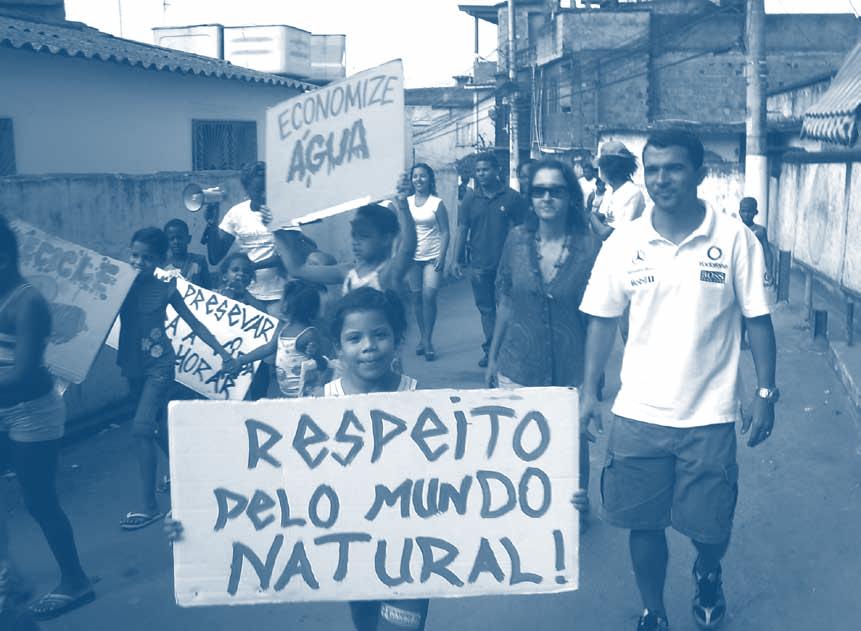
- In "Caring for the caregiver", Claudia Cabral and Valeria Brahim discuss supporting these children and their families by reducing violence, providing quality education, and improving the physical environment in Brazil.
- In "Restoring a sense of normalcy after urban emergencies", based on an interview with Mary Moran, the article examines post-emergency responses involving young children, including child-centred spaces and cultivating mutual support among affected populations.
Publishers
Publication Date
Number of Pages
68
Source
The Bernard van Leer Foundation website, July 18 2012.
- Log in to post comments