










































Women's Pathways to the Digital Sector: Stories of Opportunities and Challenges
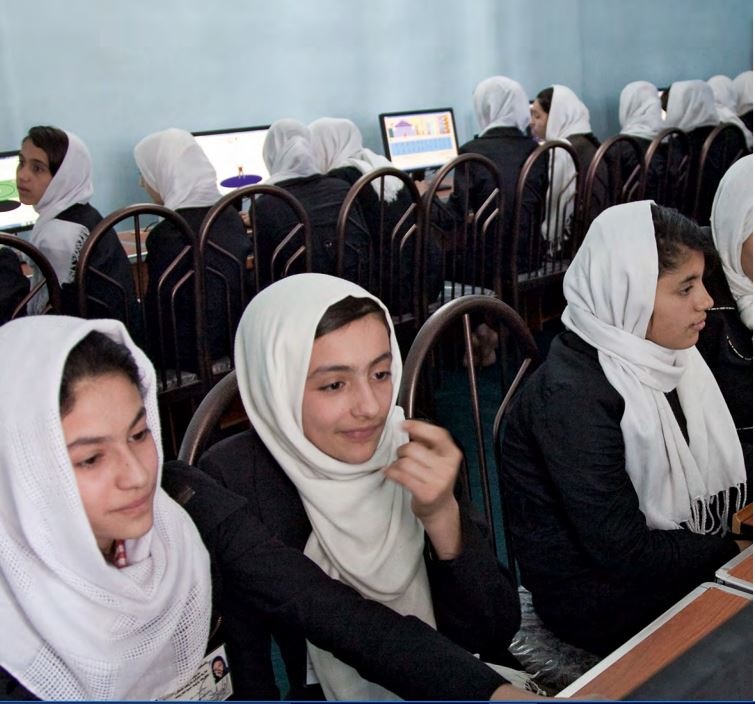
"This study aims at understanding the role of ICT [information and communication technology] in realising women's rights, gender equality and women's economic empowerment in order to identify challenges and opportunities for women and girls to partake in ICT education and employment."
The research used a two-fold methodology, a desk study and biographical interviews, to portray women working in ITC in developing and emerging countries. The report was commissioned by the German Federal Ministry for Economic Cooperation and Development (BMZ) and prepared by Panoply Digital in collaboration with Deutsche Gesellschaft für Internationale Zusammenarbeit (GIZ) GmbH with input from numerous members of the G20 Development Working Group (DWG) and other organisations.
Based upon Sustainable Development Goals 4 (Education) and 5 (gender equality), the report examined barriers of access and affordability of digital services and ICT and found that women are 1.6 times more likely to report lack of skills as a barrier, often due to lack of formal training. A lack of online content specifically tailored for women and in the languages spoken by women can result in lack of interest and lack of confidence. "As a result, women are less likely to 1) develop confidence and complex digital skills such as coding, 2) use ICT to create content of their own, or 3) use ICT for their own entrepreneurial activities." The gap between male and female use is between 16.8% and 30.9% depending on geographic location. Even he mobile phone usage gap between men and women is 45% in sub-Saharan Africa and up to 50% in rural Asia.
The stories of 22 women include: entrepreneurs; PhD. Candidates; executive directors of non-profit and for-profit organisations; business analysts; CEOs; science, technology, engineering, and mathematics (STEM) students; and researchers. Key findings include the following (See the document for recommendations and actions for each finding):
- Inclusive educational systems - Digital literacy skills are not frequently taught in schools so that the teaching of advanced skills such as coding is not possible. STEM subjects in schools are not often inclusive of girls, which negatively impacts the pursuit of digital technology careers.
- Tertiary education/labour market transitions - Tertiary education has not adapted to the needs of the technical labour market so that students finish their education with skills that do not match the needs of the market. A recommended action for example, is to have gender neutral STEM environments.
- Non-formal education - Girls outside the formal education system have little access to training in digital skills, reducing the possibility of work in the ICT labour market. Government ministries partnered with the private sector could launch intiatives focused on girls and womne such as tech camps, competitions, mentoring and online courses.
- Access and affordability - Women find that cost is a barrier to acquiring digital knowledge and skills. Appearing in public places where they might access digital technology is restricted in some countries where these are considered male only. Public-private partnerships could focus on women's access, and local non-governmental organisations might provide safe spaces for access.
- Content - Localised content that interests women is scarce. Working with community stakeholders could produce locally relevant content to suit women and girls.
- Self-confidence - There is a gendered lack of confidence that limits women’s participation in technology. Yet, technological exposure can build confidence when young girls have opportunities to learn ICT skills and continue training in adolescence.
- Cultural stereotypes - Socially constructed barriers can limit learning and opportunity to work in the technology sector. An action to break barriers could be: promoting the United Nations Women's Empowerment Principles.
- Working environment - Workplace barriers include stereotyping, glass ceilings to advancement, work termination for pregnancy, and discrimination of male colleagues.
- Lack of sex-disaggregated data and gender statistics - Measuring the gender digital divide frequently may produce evidence for policy recommendations to bridge the divide.
- Collaborating for change - Bridging the digital gender gap requires collective action. Female and male champions in local communities, as well as in governments, the private sector, and civil society, may be influential. For example, campaigns could focus on how men can be agents of change for women's access to the technology sector.
Donor Committee for Enterprise Development (DCED) website, October 4 2017.
- Log in to post comments