










































The Vaccine Uptake Continuum: Applying Social Science Theory to Shift Vaccine Hesitancy
Harvard T.H. Chan School of Public Health (Piltch-Loeb); NYU College of Global Public Health (Piltch-Loeb, DiClemente)
"[H]ealth behavior change theories are helpful to understand the range of possible factors that could help catalyze health-promoting behavior change, in this case, enhancing vaccine uptake."
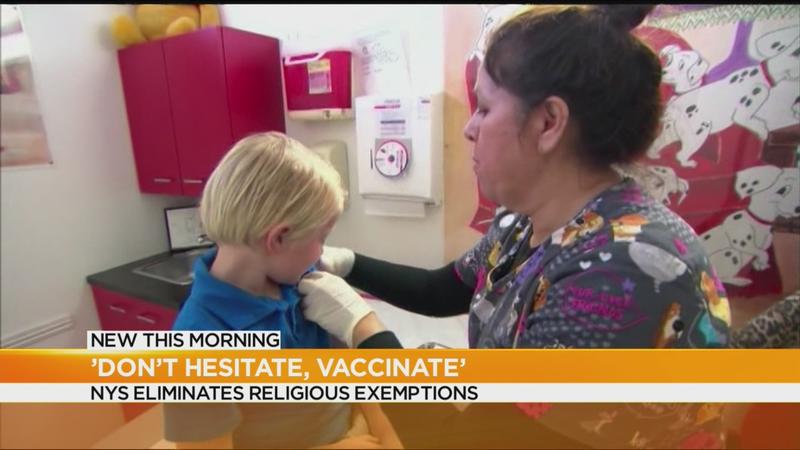
The growing anti-vaccine movement has focused renewed attention on the need to persuade people to increase vaccine uptake. Shared vaccine hesitancy beliefs may be rooted in religious dogma, parental-choice belief systems, or community norms. This commentary discusses how social and behavioural sciences can play a role in understanding, predicting, and promoting vaccine uptake.
Among the theories available to understand the mechanisms of health behaviour are the Health Belief Model (HBM), Transtheoretical Model (TTM) (also known as stages of change), and the Theory of Reasoned Action or Planned Behavior. A common denominator of many of these theories and models is the conceptualisation that people cognitively weigh (evaluate) the severity of the health threat they confront and the perceived benefits or harms of taking a specific action related to that health threat. This individual risk assessment, much like a scale, is influenced by many factors, including the perceived risk of a disease, the information available about disease transmissibility and severity, the source of the information (is it a trusted source or not), their personal environment, cultural beliefs, and the social context within which they live and interact.
Drawing on social and behavioural science theory, the commentary proposes a vaccine uptake continuum comprised of 5 factors, with steps as follows:
- Enhancing awareness of the health threat of vaccine-preventable diseases (VPDs) through appropriately targeted and tailored public health education and media/social marketing campaigns that use multiple channels (e.g., TV, interviews, blogs, clinical practice) by trusted information sources including influential community members, religious leaders, and the media.
- Maintaining availability of the vaccine: Medical providers and pharmacists play a pivotal role in distributing vaccines and informing the population about vaccine availability.
- Ensuring accessibility of the vaccine by selecting appropriate public health points of dispensing vaccines, such as paediatricians' offices, community-based points like local pharmacies, and schools. These comfortable and familiar environments help facilitate vaccine uptake through continuity and timeliness. However, there is a need to optimise information describing their availability through other, less traditional vaccination sites that provide ease of access for community members.
- Safeguarding affordability of vaccine programmes: In the United States (US), due to various government programmes, affordability is not a major barrier to vaccination uptake for most children. However, for adults, while a vaccine may be affordable (including its administration), it may still be cost prohibitive.
- Encouraging acceptability of the vaccine: The authors recommend considering why individuals possess anti-vaccine beliefs and designing targeted messages to combat those beliefs to shift individuals' risk assessment. Individuals within specific communities - whether defined by documentation status, structural racism, economic disparities, or cultural background - have pre-existing belief systems that may underlie vaccine hesitancy. Therefore, in order to enhance vaccine uptake, the authors call for specific counter-messages that are targeted to address the belief system held by members of a particular community. Trust-based - rather than fear-based - messaging that is communicated by community members and key community stakeholders may be valuable in promoting the adoption and uptake of vaccines.
In conclusion: "If the future is to look different from the present, public health campaigns need to intensify efforts to effectively work across the vaccine uptake continuum to shift individuals' and community attitudes, beliefs, and, their decision-making toward vaccine acceptance."
Vaccines 2020, 8, 76; doi:10.3390/vaccines8010076. Image credit: WHEC.com
- Log in to post comments