










































Using Digital Tools to Expand Access to Agricultural Insurance
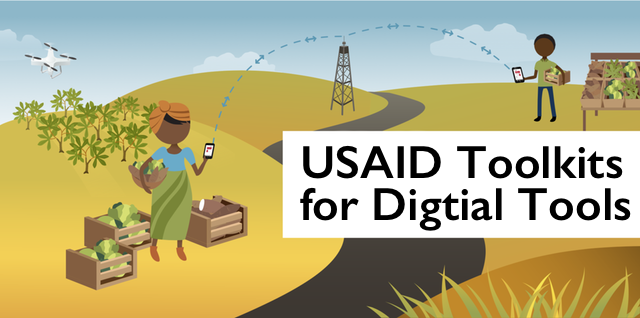
"The use of digital tools in agricultural insurance has the potential to facilitate client uptake, reduce transaction costs, improve efficiency of the insurance process, and increase household resilience to respond to external shocks while ensuring stability, growth, and sustainability of agricultural value chains. "
This USAID Feed the Future programme document discusses the use of technology to accelerate and amplify USAID investments in sustainable agriculture and food security. It suggests that key barriers to developing insurance markets, particularly for agriculturalists, are: " (i) lack of awareness and understanding about insurance among households, (ii) high overhead costs associated with data collection and claims processing, and (iii) the limited availability of insurance products that meet the needs of [economically] poor and low-income farmers."
Mobile insurance policy purchase is increasing worldwide, though only 7 % is in the agriculture sector, as stated here. "Advances in remote sensing technologies have produced several 30-year time series of rainfall data, enabling government and private insurers to develop and calibrate more accurate predictive models for risk coverage and pricing." This guide, a collaboration between the U.S. Global Development Lab and the Bureau for Food Security called Digital Development for Feed the Future (D2FTF), aims to support integration of digital tools and interventions that promote access to agricultural insurance to develop an inclusive insurance market, satisfying objectives through:
- Increased sustainable productivity, particularly through climate-smart approaches;
- Improved proactive risk reduction, mitigation, and management;
- Improved adaptation to and recovery from shocks and stresses; and
- Improved climate risk, land, marine, and other natural resource management.
The analytical framework assessed risks within the value chain, existing risk management tools, existing insurance markets, feasibility of digital agricultural insurance, the regulatory and policy environment, and identified interventions. Assessments tools and templates are available in the document. Examples of levels and types of interventions include:
- Smallerholder farmers who need to learn about insurance to increase uptake and need lower transition costs. Tools include: mLearning, gamification, digital videos, SMS nudges/tips/stories, Internet radio, and chatbots for uptake and digital financial services for transactions.
- Aggregators of products need digital financial services for lower cost transaction, and mLearning to scale up agent training and digital client profile when partnering with village groups.
- Service providers who design products and test them, replicate and scale up pilots, support data collection and quality, and increase data processing capacity need: mobile insurance; livestock insurance using radio frequency identification devices (RFID); index-based insurance using remote sensing; sensors such as drones/UAVs, satellites, weather stations; and cloud-based information system, blockchain, machine learning.
- Governments, policymakers and donor, in order to provide rules and regulation, consumer protection, and resources pooling need: digital infrastructure; drones/UAVs; and satellite information.
The document reviews current tools and describes examples of:
- In Uganda, the USAID Commodity Production and Marketing (CPM) Activity used mobile technology to collect biographical information on smallholder farmers and connect them to a range of digital financial services, bundling crop insurance and production loans to increase client value.
- In India, the use of RFIDs comprising a microchip inserted into livestock resulted in fewer fraudulent claims and faster claims processing.
- The use of a mobile-based loyalty model to offer insurance—where coverage is based on parameters such as increased use of airtime, mobile money transactions, or savings in mobile wallets—has achieved significant scale in certain countries. For example, EcoLife Zimbabwe reached 20 percent of Zimbabwean adults within 7 months.
The toolkit concludes that: "Technology has its shortcomings, and the use of digital tools alone will not be sufficient to increase access to affordable, quality agricultural insurance for smallholder farmers. However, when strategically and thoughtfully inserted into existing Feed the Future programs, technology has the potential to accelerate and amplify USAID investments in sustainable agriculture and food security"
Email from Wayan Vota of ICTworks to The Communication Initiative on April 11 2018.
- Log in to post comments