










































TunaHAKI (We Have a Right) Centre for Child Development

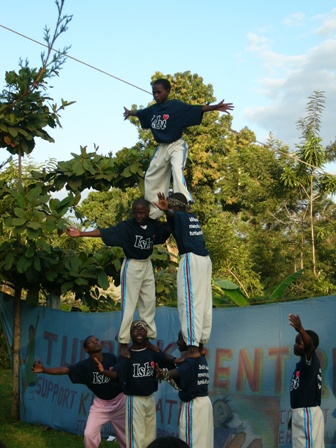
According to the organisers, TunaHAKI Centre for Child Development works to improve the welfare of vulnerable children by both providing basic needs and an arts and performance focus. The children are learning, among other things, to be aerialists, acrobats, and gymnasts, which the Centre says builds self-esteem, confidence, cooperation skills, and a sense of family that empowers abandoned children and gives them a sense of home.
Staff at TunaHAKI identify vulnerable children living on the street, particularly those at risk of sex work, crime, and diseases. Government social welfare officers, and ward and village leaders, also direct clients in need. According to the organsiers, through counselling, non-formal education, and creative arts, the centre works to establish healthy and trusting relationships with the young people. The centre works towards family re-unification where possible, and implements a programme of home visits and community awareness using TunaHAKI's drama performances as a participatory development method.
One group of children visited the United States where they performed in Los Angeles and San Fransisco (in the state of California), and received training from Cirque du Soleil.
Children, Youth.
TunaHAKI hopes to develop as a centre of excellence, promoting youth arts and education to vulnerable young people in the Northern part of Tanzania, particularly Kilimanjaro region. It is seeking to expand and improve its residential facilities so that more children are able to benefit from its resources, as well as to develop its community programme.
According to TunaHAKI, children who have spent time on the streets or live without adult care are vulnerable to extreme violations of their basic rights. They have difficulties in accessing food, health care, clothes, and security/protection. They are often physically, verbally, and mentally abused in their daily lives. Most of them have been found working as child labourers. These include working in hazardous environments, selling fruits, working in mining, and selling newspapers on the streets; others become involved in commercial sex work. As they reach the age of youth, some children become criminals, drug addicts, drug dealers, and sex workers as a means of survival. The objective of this project is to remove vulnerable children from this environment by providing a safe place at TunaHAKI Centre.
TunaHAKI Center website on May 24 2009 (no longer in operation as of October 1 2009); "TunaHAKI: Non Sequitur interviews Scott Fifer", February 5 2007, on Archinect.com; and TunaHAKI Canada website, October 1 2009.
- Log in to post comments