










































Supporting the Media's Development of Public Service Announcements during the COVID-19 Pandemic in Myanmar
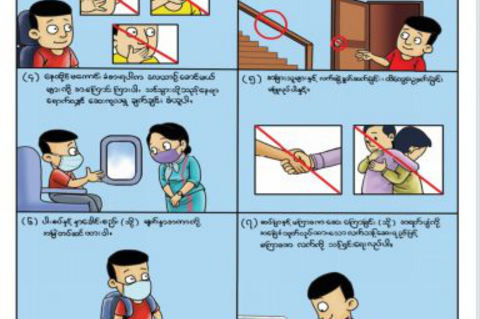
"Before participating in this initiative, we never thought about producing creative public service announcements. So not only have we improved our content, we've increased our audience, survived a difficult crisis, and diversified our revenue sources." - Brang Mai, Chief Executive Officer (CEO) of Myitkyina News Journal in Kachin State
In April 2020, the Media Development Investment Fund (MDIF)'s Myanmar Media Program (MMP) launched a project where they asked 10 partner media organisations to develop a COVID-19 public service announcement (PSA) for dissemination on their media platforms. They used it as a way of providing revenue to the media in partial compensation for falling revenues due to the pandemic, as a tool to help develop their business skills, and as a strategy for communicating important information to the public.
The concept behind this initiative is that PSAs can fill the empty space left by advertisers in a time of crisis, thereby serving to support media development. They can expose audiences to valuable messages relevant to a health emergency, while also helping media survive during a time of financial peril.
Of the 10 media organisations that took up MMP's call to create a PSA, 3 are based in Yangon, but with nationwide coverage. The other 7 are local media, operating in different regions and ethnic states. They use a variety of media platforms - digital, print, and television - so the PSA formats also vary widely: cartoons, advertorials, banner advertisements on websites and social media, songs, and video content broadcast on television or via digital platforms.
The way it worked was that, after the media partners developed their PSA ideas, they submitted proposals to MDIF's expert team, who provided feedback, focusing on the key performance indicators (KPIs) the media would need to meet - for example, the intended audience for each PSA and the means to achieve their targets. The next step was negotiation. Acting like regular advertisers, MDIF asked the media to offer discounts. In this way, its partners gained experience for their future negotiations with advertisers. Once the negotiations were completed, the media signed contracts that set out the terms of the agreement. Then, in the same way they would do with a commercial advertiser, at the end of each month, the media sent MDIF proof that the PSAs had been published: broadcast schedules, links to PSAs on online platforms, or copies of print publications. They also submitted an invoice, which MDIF only paid if the agreed deliverables were achieved. This focus on real-world, on-the-job training is consistent with MDIF's focus on business capacity-building for the media industry.
The resulting PSAs provide information about COVID-19 to people across Myanmar, including in rural areas and in different languages, thereby reminding people of the media's public service role to provide clear and accurate information during an emergency and to help the public determine their own decisions and actions. Most of the PSAs cover the basics, such as: what is the COVID-19 virus, how does it differ from influenza, and how to avoid it (e.g., through mask wearing, frequent hand washing, and physical distancing). However the message of one of the PSAs, published by Dawei Watch, stands out in that it tackles a rarely addressed issue: the fact that COVID-19 increases children's stress levels. The government's stay-at-home policy has reduced their space and flexibility to play. As children are not yet able to express their anxiety, parents need to attend carefully to mental health issues. By addressing this sometimes-sidelined issue, the PSA seeks to respond to the real and specific information needs of its audience.
Over 3 months, the 10 media organisations produced and disseminated more than 400 different PSAs through this public service campaign to educate and inform audiences about COVID-19. About 11 million people accessed messages about COVID-19 from the online platforms of the 10 participating media, and 15 million television viewers and 70,000 journal and newspaper readers viewed or read messages. This means that altogether the PSAs have reached an estimated 26 million people across the country.
Health, Media Development
MDIF reports that, when commercial advertisers abruptly cancelled their promotional plans due to the pandemic as early as March 2020, media revenue from advertising dropped drastically. MDIF's research into the impact of COVID-19 on media in Myanmar, published on July 16 2020, found that 32 out of 36 respondents had experienced a decrease in advertising revenue, with half seeing their revenue drop by 75%. Considering the extent of the economic crisis caused by COVID-19, it is likely that it will also be a long time before commercial advertisements return in a significant way. PSAs are an alternative way to assist with both media's survival and business development.
Since the first phase, MDIF has expanded the initiative to include 17 additional media partners. And MDIF is planning to expand the PSA business initiative beyond COVID-19 to address other public interest topics and messages relevant to its partners' audience needs in different parts of the country. Furthermore, according to MMP, this initiative has the potential to inspire other organisations. Instead of simply giving grants, donors could change the funding mechanism into a business opportunity for media.
MMP is funded by the Swedish International Development Cooperation Agency (Sida).
Email from Peter Whitehead to The Communication Initiative on November 16 2020; and "Public Service Announcements in a Pandemic: Informing the Public while Supporting Media Business Development", by Tosca Santoso, MMP, November 12 2020 - accessed on November 17 2020. Image credit: Monywa Gazette
- Log in to post comments