










































Social Norms Diagnostic Tool: Sexual and Reproductive Health and Rights & Gender-Based Violence
"Research into discriminatory social norms identifies many ways in which they may curtail the ability of women and girls, transgender and gender non-conforming people to break the cycle of poverty, and access the resources and services they need to make autonomous decisions about their lives and realise their social, political and economic rights."
Drawing on a feminist, participatory research approach, this resource presents a set of exercises designed to help programme teams identify and discuss social norms, perceptions, and expectations - and to develop ideas for change strategies - around women's and girls' sexual and reproductive health and rights (SRHR), gender-based violence (GBV) and intimate partner violence (IPV), and child, early, and forced marriage (CEFM).
The tool uses participatory and transformative methods such as Theatre of the Oppressed techniques to engage community members not simply as research participants but as agents of change. It is also designed to recognise and examine unequal power inequalities by including questions around who makes key decisions, whose opinions matter, and which people are influential and in what ways. In the key activities, duty bearers, community members, men, and women are engaged separately to help address these power inequalities in a safe space.
Specifically, the tool outlines a two- to three-day workshop, depending on thematic focus. As the tool diagnoses social norms impacting women's and girls' SRHR with a participatory action planning element, Activities 1, 2, and 5 are essential for the implementation of each tool. Activity 6 offers opportunity to discuss strategies for change specific to early marriage, early pregnancy, and SRHR.
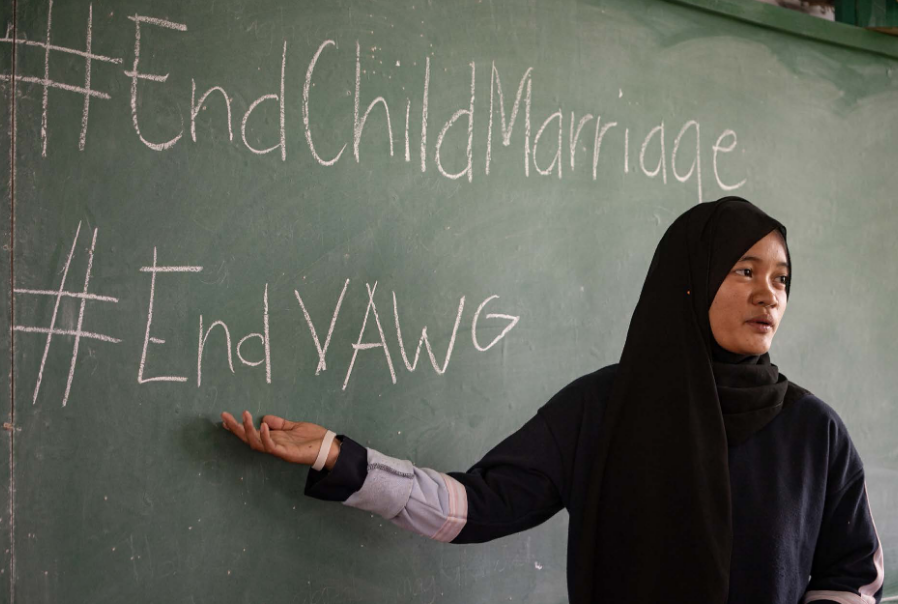
The tool was a primary method used in an Oxfam feminist research study in the Philippines entitled Intersecting injustices: The links between social norms, access to sexual and reproductive health and rights, and violence against women and girls. Although this document refers to the Philippines, the methodology and exercises can be adapted to other countries, regions, and communities.
Publishers
34
Email from Oxfam Policy & Practice to The Communication Initiative on December 17 2020; and Oxfam Policy & Practice website, April 20 2021. Image credit: Vina Salazar - Oxfam 2019
- Log in to post comments