










































Social Media as a Platform for Health-Related Public Debates and Discussions: The Polio Vaccine on Facebook
Technion - Israel Institute of Technology (Orr, Baram-Tsabari); Carmel Medical Center (Landsman)
"The traditional online media supported the Ministry of Health in the Polio crisis of 2013. This in turn led to responses from both opponents and supporters in the social media. The social media were, in fact, the actual locus of debates and discussions (and the battle for public opinion)."
Noting that social media can act as a platform for debating, discussing, and disseminating information about vaccines, researchers undertook a project to map and describe the roles played by web-based mainstream media and social media as platforms for vaccination-related public debates and discussions during the Polio crisis in Israel in 2013. In this paper, the researchers present data collected from the Israeli mainstream media and Facebook focusing on a specific content-driven group called "Parents talk about Polio vaccination", what they describe as "the only diversified Facebook Polio-related group. The exploration of the texts submitted and shared by this particular group provides a unique opportunity to analyze authentic exchanges while the debates and discussions were ongoing." The paper presents public voices, which the researchers contend should be seen as authentic (i.e., unmediated by the media or other political actors) and useful for policymaking purposes (in that social media can be a main channel of communication during health crises).
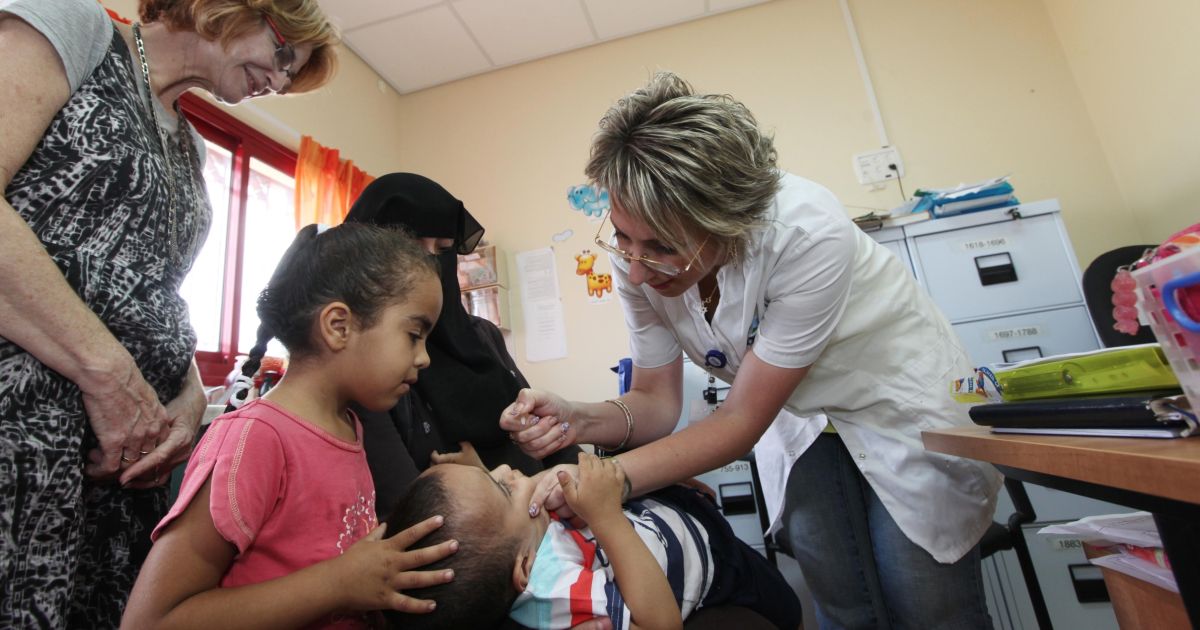
In March 2013, a type 1 wild Polio virus (WPV1) was found during routine environmental surveillance of the sewage system in a southern town in Israel. Epidemiological analysis showed that children under 9 years of age were the carriers and the main distributors of the virus. Children in Israel are regularly vaccinated with inactivated poliovirus vaccine (IPV), which protects them from developing poliomyelitis but does not prevent them from becoming transmitters and spreading the disease if infected with the virus, nor from spreading the virus. On August 5 2013, the Ministry of Health launched a vaccination campaign called "Two drops" that involved administering oral polio vaccine (OPV) to children who had already been vaccinated with IPV. This additional vaccination was in fact meant to protect society more than the children themselves. In other words, OPV was added to prevent children from becoming carriers of WPV1 and from spreading the virus, or to promote herd immunity. Even though the scientific consensus which led to the recommendation to add OPV to young children's vaccination routine was very solid, this guideline sparked intense public debates and discussions, which were widely reviewed in the traditional as well as electronic mass media and in the social media, including platforms such as Facebook, various online forums, and blogs. (As noted here, "[t]he Health Ministry’s decision to launch a campaign to vaccinate children with OPV came at a time when there was little trust in governmental decisions in general in comparison to other Western democracies, or Israel in earlier eras.") By November 2013, Israel's sewage samples all came back negative for WPV. By January 2014, Israel's official national campaign was over. Overall, 945,000 children constituting 78.75% of the intended population were vaccinated with the OPV during the 2013 campaign. By the end of the campaign, the Israeli Ministry of Health announced that the OPV would once again become the routine vaccination for children in Israel. Since the campaign was initiated, and to this day, there has not been a single case of polio virus. In April 2015, Israel was officially once again polio-free.
In Israel, there are several online forums and social media outlets that support patients and people interested in health issues. There are about 4 million Facebook users in that country, 2.4 of whom check their Facebook account on a daily basis. Documentation shows that 56% of all online users in Israel read about a medical issue online before going to the doctor. To map the research field, the researchers manually collected the Polio-related coverage in 10 online Hebrew platforms between May 28 and October 31 2013, when the polio crisis was at its height. Of the 10 platforms, 7 were mainstream popular media news sites: Ha'aretz, Israel Hayom, NRG, Mako, The Marker, Walla, and Ynet; one was a popular science blog called Sof Ha-Olam-Mabat me-ha-yaziah ("End of the world: a view from the balcony"), one was an open Facebook page called Vaccinations Inc., and one was a news site serving the ultra-orthodox sector in Israel called Be-hadrei Haredim. They also mapped Facebook for groups discussing the Polio vaccination and found 5 main groups with a flourishing discussion: "Parents talk about the Polio vaccination", "Mamazone" (a general group dedicated to mothers), "Mothers Say No to the Attenuated Polio Vaccination", "Open Notepad - Parents for Transparency and Safety in Vaccinations" (4798 members), and "Vaccines Inc.". Out of these groups, the researchers chose for further analysis the group "Parents talk about the Polio vaccination", which proclaimed itself neutral, and had the most diverse range of participants to analyse. Data were collected from that group from August 14 to November 12 2013.
The researchers found that traditional media mainly echoed formal voices from the Ministry of Health (MOH). As reported here, the Israeli media tend to direct considerable attention to certain subjects, for a relatively short period of time, and then cease to give them any attention. The 2013 Polio crisis in the Israeli media was no exception. A "Google trends" search showed that the issue of Polio and Polio vaccinations was almost non-existent in the traditional online news media except during the sampling period.
The comments on the Facebook vaccination opposition groups could be divided into 4 groups: comments with individualistic perceptions, comments that expressed concerns about the safety of the OPV, comments that expressed distrust in the MOH, and comments denying polio as a disease. The targeting of OPV shows that some of the opposing parents in the case of the 2013 Polio crisis were not categorically against any vaccination, as is the case for classic vaccination opponents, but were made up in part of people who vaccinated their children, but opposed the OPV specifically.
In the Facebook group "Parents talk about the Polio vaccination", 321 commentators submitted 2,289 comments, with 64% of the comments written by women. Most (92%) people involved were parents, and they tended to be more educated than the average population. (Yet, "[t]he value of revealing different public opinions and directly communicating with audiences is independent of their representativeness.") The comments were both personal (referring to specific situations) and general in nature (referring to symptoms or wide implications). Questions raised were mainly answered by physicians and health administration officials, but also by other parents and sometimes even by anti-vaccination activists. According to the third author, who was one of the physicians who answered questions in the group (and also a co-founder and administrator of the group), they tackled misinformed opinions. "They provided honest, reliable, and more importantly rapid information in a personalized manner." Indeed, a few (13%) of the commentators were physicians (n=44), who were responsible for 909 (40%) of the items in the sample. Half the doctors and 6% of the non-doctors wrote over 10 items each. "The group provided space for dialogue between professionals and parents, many of which extended over long threads. It is unclear, however, to what extent those hesitating whether to vaccinate their children changed their minds as a result of these interactions. A telling example is a thread 98 comments long of a multi participant discussion with a worried mother, who concluded the discussion with the comment: 'I will probably take my child to get the vaccination today. [This was] after [I read] the document sent by X and after discussing the issue with my cousin who has read the research material thoroughly (she is familiar with research) and she spoke to physicians including alternative physicians, who recommended vaccination'." According to the researchers, "[t]his Facebook group formed a unique platform where unmediated debates and discussions between the public and medical experts took place."
In short, the findings show that while most of the web-based traditional media assessed in this report echoed the formal positions of the MOH, the social media (i.e., Facebook) served as a platform for lay audiences to express their opinions about the vaccination campaign's merits or perils, and to get advice from peers, experts, and pseudo-experts. The researchers say (footnote numbers removed): "Social media have many advantages in comparison to mainstream media such as facilitating public participation in science and health communication....Nevertheless, social media clearly have negative aspects, most of which are true for traditional media too. One example is the uneven quality of information. The public, if exposed to misleading and biased information, will eventually develop trust problems and may choose not to follow formal medical advice."
These findings "suggest that there are authentic voices which strongly object to formal health stances and recommendations. It has recently been shown that if decision makers wish to create an authoritative atmosphere they must convey their message by exhibiting professionalism, building trust and offering to share information....Decision makers need to be cognizant of the authentic public voices we explored, and find ways to change public opinion in those forums where debates and discussions actually take place. Decision makers and formal authorities need to invest resources and manpower in answering questions and countering typical anti-vaccination messages when they are most likely to influence public decisions."
Some of the unanswered questions the researchers pose here include: Is information or recommendations from accredited professionals treated differently by commentators than information or recommendations from lay people? Do groups such as "Parents talk about the Polio vaccination", and social media in general, provide adequate tools to address vaccination opponents and conspiracy theories? How do the social media affect the decision to vaccinate? How can social media be harnessed to promote public health? In light of these issues, they call for further research to study what people actually learn in social media environments, what information and messages they remember and use for future reference, and the differences between those who are actively and passively engaged in social media debates and discussions.
Israel Journal of Health Policy Research (2016) 5:34. DOI 10.1186/s13584-016-0093-4. Image credit: Haaretz.com
- Log in to post comments