










































Sisi Watoto (We, the Children)
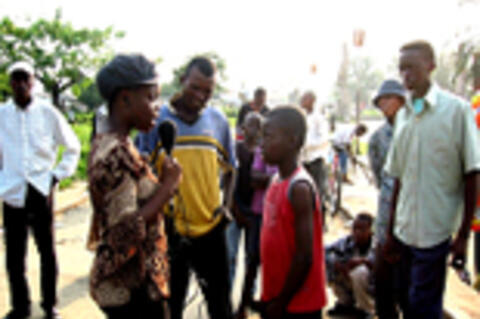
The programme is presented in magazine format, allowing for a variety of styles to be included in each episode. The young journalists report on news surrounding the conflict and its effects on children. They also interview experts, government officials, civil society, and young people about the demobilisation process. The programme covers a broad range of topics including: information about services available to ex-combatants; personal accounts of demobilisation successes; the examination of girls' roles and child soldiers and their demobilisation; and discussions about promoting demobilisation during crisis. Examples of previous individual programme topics are as follows:
- Successful Demobilisation and Reintegration: In one programme a child soldier-turned-musician shared his story of demobilisation and then reintegration into his family. Through music, this child found a new purpose in life and a way to forget about his time in the armed forces.
- Difficulties Post-Demobilisation: The Sisi Watoto journalists highlighted that demobilised children should not have disproportionate expectations. Numerous children joined the armed forces due to poverty and a lack of any other option. After demobilisation, children are confronted with the same precarious economic conditions.
- Discussion of the demobilisation, disarmament and reintegration (DDR) process: Demobilised child soldiers described their experiences during the disarmament and demobilisation processes and their life in the transit centre in Kindu. Also, the term DDR is widely used in the Congolese media, but what is the Congolese population's understanding of it? To respond to this question, a team of young Sisi Watoto reporters interviewed adults and children in the streets of Bukavu and in demobilisation canters.
According to the organisers, since its inception, the project has been able to open a space in eastern Congo for discussion about conflict issues affecting children, and has furthered young people's ability to speak out. They state that the programme received over 500 letters from Bukavu and its surrounding communities containing children's hopes, opinions, and suggestions for the peace process, for further issues to be covered, and requests to join the team of journalists. As a result of the programme, organisers say that a group of young leaders has been formed who give voice to children and contribute to the dialogue of peace.
Conflict, Children, Youth, Rights, Violence.
The team has been recognised by One World and UNICEF, which awarded them the "Children's Lives, Children's Voices" award for the best radio programme produced by, for, and about children. The award is determined based on a worldwide review of nominations by a panel of children's rights experts and journalists.
United States Agency for International Development's Office of Transition Initiatives (USAID/OTI), Search For Common Ground (SFCG).
Aloys Niyoyita sent an e-mail to Soul Beat Africa on November 10 2004 and Search for Common Ground website on November 9 2008.
- Log in to post comments