










































Sexual Violence and Impunity (SVI)
"For countries in South Asia that have endured conflict, acknowledging the violence and the suffering of victims is an important step in overcoming past grievances. Yet the high incidence of sexual violence in the region remains taboo, limiting restitution for victims and helping perpetrators avoid punishment."
This International Development Research Centre (IDRC)-funded project investigates why the issue of sexual violence remains taboo in South Asian discussions of nations and people caught in political conflict. Zubaan, a feminist publishing house based in New Delhi, India, is bringing together the collective knowledge of South Asian academics, researchers, and activists on the subjects of sexual violence and impunity (SVI), with the aim of building a community of young and committed researchers who will bring new insights to bear on their work. In these ways, it ultimately hopes to help open up a fuller dialogue on peace and justice in South Asia.
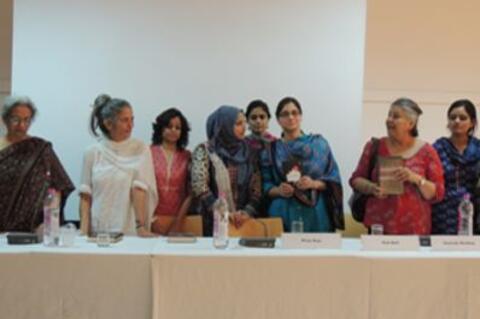
Zubaan commissioned researchers and advocates in five countries - Bangladesh, India, Nepal, Pakistan, and Sri Lanka - to write analytical research papers on the topics of sexual violence and impunity, justice and reparations, and legal practices and gaps. The research addresses issues relating to accountability, state involvement and complicity in strengthening impunity for perpetrators, legal regimes and their understanding of the rights and needs of survivors and victims of sexual violence, the faulty nature of medical knowledge and evidence, hospital procedures to respond to victims reporting sexual violence, and more. As of this writing, the project has generated over 50 research papers, an 8-book series, a special issue of the journal Seminar dedicated to findings from the project, and extensive media coverage. In May 2016, Zubaan and IDRC hosted a day-long event to present the research publicly and to launch the book series.
At the same time, SVI is building a new cadre of young researchers and activists who can play a meaningful role in fleshing out the dialogue on peace and justice in South Asia so that these hidden crimes are acknowledged. Over 85% of researchers involved are under 40.
The researchers have helped to build the case for new legal and medical responses to sexual violence, while empowering victims to speak out. In India, team members provided crucial inputs to the Justice Verma Committee Report on Amendments to Criminal Law, a review process launched after a vicious gang rape and murder in Delhi in 2012. They have worked with the Committee to develop new legislation on the prosecution of sexual assault and harassment. In particular, research on medical and forensic protocols has fed directly into new guidelines issued in March 2014 by the Ministry of Health and Family Welfare. These guidelines aim to reduce the trauma for victims while increasing the likelihood that criminal evidence will be collected. The measures, which the World Health Organization (WHO) has described as "a positive way forward...providing empathetic support and rebuilding lives after assault," have been widely shared and are hopefully a touchstone for other countries in South Asia.
In Bangladesh, for example, the Bangladesh Legal Aid and Services Trust (BLAST) successfully petitioned the Supreme Court to urge the adoption of standardised guidelines and protocols to deal with victims and survivors of sexual violence. BLAST is now working with the sub-committee that has been commissioned to draft guidelines.
In March 2015, another project partner - the Nepalese human rights organisation Advocacy Forum - filed a submission with the United Nations highlighting ongoing impunity for serious human rights abuses committed in Nepal during a decade-long period of conflict that ended in 2006. The report cites Nepal's failure to respond effectively to sexual violence and, among other measures, it contests the country's 35-day limit on bringing complaints of rape to police which still stands despite a 2008 Supreme Court ruling that ordered the government to amend the law.
Looking ahead, efforts will focus on generating visibility for research findings, with a series of briefs, media outreach, and other publications and events planned to ensure regional policymakers have sexual violence on their agenda, as they work toward post-conflict transitions in South Asia.
Sexual Violence
Silence around the topic of sexual violence has increased in Bangladesh, India, Nepal, Pakistan, and Sri Lanka, even despite the increase in incidents of recent conflicts. The end of violence in Sri Lanka, for example, has not produced open discussion about the use of sexual violence as a weapon of war. The Bangladesh War Crimes Tribunal of 2009 makes no mention of rape, despite its widely acknowledged occurrence. Elsewhere in the world, rape is increasingly being discussed and recognised not only as a weapon of war but also as a crime against humanity and as an instrument of genocide. In South Asia, however, critical analysis of existing jurisprudence on sexual violence is a newly emerging area of scholarship in the region, and a solid community of practice has yet to emerge.
Overall, the research carried out as part of this project points to essential transformations needed to end the silence on sexual violence, including: identifying sexual assault as a major problem and an impediment to development; increasing visibility of the issue in the media and in public discourse; and having reasonable provisions in the law to protect women. The project aims to have a wide and lasting impact on the culture of impunity.
Zubaan, IDRC
Email from Navsharan Singh to The Communication Initiative (via Liane Cerminara) on November 13 2017 and December 11 2017; and IDRC website and SVI website - both accessed on November 15 2017. Image credit: IDRC, Anupam Srivastava
- Log in to post comments