










































Sensitisation and Education through Kunda Arts (Seka)
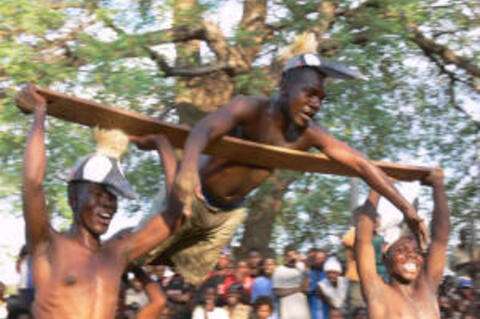
The organisation uses theatre to generate debate within communities and amongst stakeholders in the area. According to the organisation’s website, a small group of actors from the villages surrounding the park created a blend of traditional song and dance, puppetry, physical theatre and storytelling. One part of the strategy is that actor-researchers spend time living in the areas for which the performances are designed. This aims to help them understand the issues at stake before creating plays to address those issues. According to the organisers, the participatory nature of the performances allows the audience to take ownership of their issues as well as to suggest and implement possible solutions.
According to the organisation, Seka’s theatrical use of humour, visual imagery, puppets, and local song and dance forms has earned them a reputation as an effective channel for vocalising community concerns. The organisers believe, when used effectively, theatre stimulates action rather than allowing debate to stagnate at a ‘talk-shop’ level. Seka facilitates results-oriented programmes using the following process:
- Gathering information: The actor-researchers, who are trained in action research methodologies, live in the villages for a specified amount of time - interacting, observing, and learning about the issues, people's views, concerns, and hopes.
- Analysing the information: Each evening the actor-researchers report back information they have gathered. Toward the end of the stay in the village the actor-researchers analyse all the information.
- Developing the script(s): Drama scripts are then developed, taking into account the main issues that have risen to the surface. Each script aims to be specifically created to tackle the issues identified as needing to be addressed in each community.
- Performance: The day of the performance is promoted as a big village event. Other groups from the village will come to perform and dance to make it a collective effort involving everyone. All stakeholders are invited - government officials, chiefs, headmen, children, parents, and any other stakeholder specific to the area. The performance itself is participatory, which aims to allow the audience to verify findings, as well as take ownership and come up with solutions to their own problems.
- Action Plans and Follow up: The Seka team, field workers, and community then act on the suggested interventions with solutions deemed practical by the community.
Environment, Health, Education.
According to Seka, solutions that the community comes up with during the theatre productions are then turned into interventions. For example, Seka identified a problem concerning a lack of teachers' houses and classroom blocks, and as a solution community members built classroom blocks and teachers houses (moulded the bricks, ferried the sand and other building materials). Seka also cites that their communication strategy identified another problem related to out-of-school children; children were herding cattle all day long and not having time to go to school. As a result, parents came up with a duty roster for herding the cattle to allow the children to go to school.
Seka is headed by Miranda Guhrs and Msatero Tembo. Miranda is the granddaughter of the late conservationist Norman Carr – whose legacy is the South Luangwa National Park. She grew up in the area and is fluent in the local language. According to the Seka's website, "Msatero Tembo started out as a small time actor in dusty Chipata town and was 'discovered' by South African Company Theatre for Africa. He has since toured Europe, Africa and the United States three times over with various productions. The team of actors are a diverse group of people from single mothers to reformed poachers to royalty in line to the chieftainship throne."
Sensitisation and Education through Kunda Arts (Seka), Africa Resources Trust, Theatre for Africa.
Email from Miranda Guhrs to Soul Beat Africa on July 31 2007 and the SEKA website on September 27 2007.
- Log in to post comments