










































Sarau Científico - A Project for Engaging Low Income Communities in Biomedicine Research and Bioethics
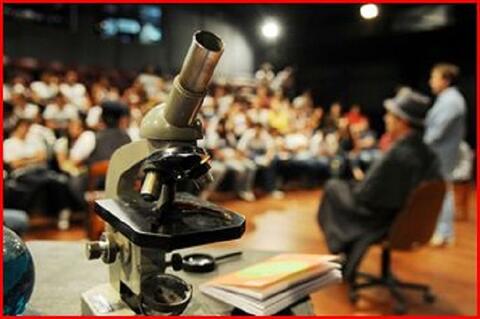
Carried out in Brazil, this project designed and delivered a series of "saraus científico" (science parties) in an ongoing effort to creatively engage low-income teenagers in discussion on health research and bioethics. The project was built on the Science Café concept (see Related Summaries, below) in that it facilitates discussion of science in an informal, culturally appropriate space designed to create a mood in which young people from the 70 slum communities located in the vicinity of the Museu da Vida (Museum of Life) feel comfortable and motivated to actively participate in science. This project was funded by the Wellcome Trust.
The concept of sarau científico is to engage youth in science through an informal, interactive party in which people meet to dance, sing, tell jokes, read poems and other cultural expressions, and chat and share opinions and ideas. The parties integrate situations recognised by the teenagers, such as references to specific music they like or to popular television programmes in order to foster a connection with them. A question and debate session follows each sarau.
The activities were designed, in a participatory way, by a multidisciplinary group including scientists, experts in bioethics, science communicators, musicians, actors, and young people.
Among the themes discussed: genetically modified crops (December 2010 and June 2011), stem cell research (January 2011), animal testing (February 2011), DNA (April 2011), and clinical trials (June 2011). Both actors/musicians and scientists participated in the saraus. Organisers believe that it is very important to have scientists interacting with the public, so they selected scientists who were good communicators and, in most cases, young (in order to communicate to the teenagers in attendance that science is a professional option).
Health, Youth.
According to project organisers, cultural and scientific opportunities are very limited in the population this project seeks to reach. Their reality is permeated by drugs, guns, and violence (including within their own family). Although debates on health research and bioethics issues have been increasing in Brazil, there is still a dearth of projects aiming to engage the general public, mainly among the economically poorest sectors of the society, in the discussions. This project seeks to address this gap.
Organisers distributed questionnaires at the end of each sarau. Among the issues that received positive comments from the audience were: creativity and innovation in the format, strategies, and languages; presentation of different points of views in controversial issues; quality of the information and of the production; the joining of science and art; participation of artists and musicians; science, information, and humor; the interactive strategy of engaging the audience; the informality; the dynamics; and the way that the theme was approached. Issues that received both positive and negative comments were: the participation of the scientists (thus, some wanted scientists on the stage, others not); and the length of the debate (thus, some wanted a long debate afterwards, others not).
Organisers presented the sarau at Red Pop, the main conference for science communication in Latin America, as well as in a talk in a conference on how to communicate health research. They plan to incorporate saraus as much as possible in the regular programming of the Museu da Vida.
Museu da Vida, with Wellcome Trust funding.
"International Engagement Awards: Projects funded in 2010" [PDF]; and emails from Luisa Massarani to The Communication Initiative on January 16 2013 and January 17 2013.
- Log in to post comments