










































Preventing Violence against Women and Girls: Community Activism Approaches to Shift Harmful Gender Attitudes, Roles and Social Norms
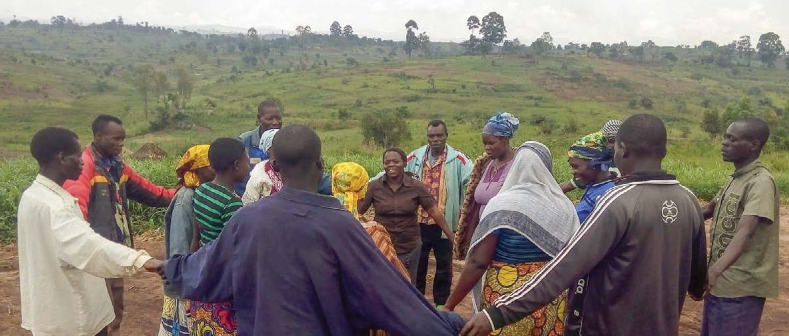
"Rigorous evaluations have shown the potential for preventing VAWG through multi-year, intensive change interventions with well-trained and supported community action teams, that purposefully engage both women and men to effect change."
Violence against women and girls (VAWG) is driven in part by socially reproduced and shared attitudes and norms on gender inequality and the acceptability of violence. Women's rights organisations across the Global South have undertaken interventions to challenge these social norms. Funded by UK Aid from the United Kingdom (UK) Department for International Development (DFID), What Works to Prevent Violence against Women and Girls Global Programme (What Works) has generated evidence on the effect of these interventions in a range of settings.
Social norms theory explores: behavioural patterns (what we as individuals do), collective attitudes (what we as a group think and feel about something), and individual beliefs about the behaviours and attitudes of others (what I think others would do and think). All three influence the behaviours of people, albeit in different ways. There is much debate on how social norms should be measured, and it can be challenging to evaluate interventions in this area. There is also an emerging recognition that norms-based strategies alone may not be sufficient to reduce violence, because social norms are a part of the multifactorial drivers of violence in any setting.
What Works conducted five evaluations of community activism approaches to shift harmful norms across diverse settings. In brief:
- Gender Studies and Human Rights Documentation Centre's Rural Response System (RRS) to prevent VAWG in central and coastal regions of Ghana - The intervention aimed to reduce VAWG by changing community attitudes, norms, and behaviours toward gender inequality and VAWG by using Community-Based Action Teams (COMBATs) nominated by the community (women and men) who were deployed over an 18-month period. They engaged community members through activities such as: holding discussions at funerals or at parent-teacher association meetings to raise awareness about VAWG and challenge inequitable gender attitudes, providing information on inheritance law, offering mediation and counselling to couples, engaging leaders and state actors, and strengthening linkages to violence response services. Sample result: Evidence of a statistically significant reduction in sexual intimate partner violence (IPV), male controlling behaviour, and depression reported by women.
- Tearfund and Heal Africa's Engaging with Faith Groups to Prevent VAWG in Conflict-affected Communities in the Democratic Republic of Congo (DRC) - 75 male and female Christian and Muslim faith leaders were trained to reflect and share messages on gender equality and non-violence and encouraged to incorporate what they had learned into sermons, prayer groups, youth groups, and counselling. In addition, 15 men and 15 women were trained as 'Gender Champions', each of whom held 18 community dialogues over 6 weeks, following a curriculum. Finally, 15 community activists per community were trained to hold sensitisation activities and to offer support to survivors. Sample result: There was evidence of a reduction of over 50% in physical and sexual IPV, as well as non-partner sexual violence, which reduced more than 5-fold.
- Equal Access and Vijaya Development Resource Centre's Change Starts at Home, in Nepal implemented a 38-week, 30-minute edutainment radio programme involving drama and discussion elements across 3 districts. In addition, a 40-week couples' curriculum was delivered to 360 married couples via weekly facilitated Listening and Discussion Groups (LDGs). Furthermore, two workshops were held for religious and community leaders. Overall finding: The 9-month curriculum did not show a reduction in women's exposure to IPV, and there was no evidence of benefit in the community from the diffusion activities, although there were positive changes in some secondary outcomes relating to relationship quality and skills.
- Sonke Gender Justice's Sonke Community Health Action for Norms and Gender Equity (CHANGE) trial in South Africa - Components included door-to-door mobilisation and discussions, activism to challenge local authorities to improve services, workshops to challenge ideas on gender inequity and the use of violence, and training of 18 active volunteer community action team members. Overall finding: There was no evidence of positive impact on men's use of IPV or non-partner sexual violence overall.
- CARE International, Rwanda Men's Resource Centre (RWAMREC), and Rwanda Women's Network (RWN)'s Indashyikirwa: Community activism led by trained couples, opinion leader training and women's safe spaces in rural Rwanda - Activities included participatory curricula with couples, opinion leader training, community activism activities, and the creation of women's spaces as safe venues whereby community members could interact and obtain support. Overall finding: The randomised control trial (RCT) results showed no evidence of a reduction in IPV in the community component, although a separate RCT conducted to evaluate the impact of the couples' intervention found that women's odds of experiencing physical violence and/or forced sex in marriage were 55% lower among couples who participated in the couples' curriculum compared to those who did not.
In sum, then, effective interventions evaluated under What Works had multiple avenues for achieving impact, including speaking out about, and challenging the legitimacy of, violence and gender inequality. Many interventions provided direct training to community members to support non-violence, often in workshops providing communication skills, building empathy, and enabling critical reflection. Some also engaged and equipped religious, traditional, and local leaders to better understand and support VAWG survivors and to promote actions to address VAWG. Others engaged directly with women and couples experiencing and using violence and strengthened their access to care and support, sometimes by constructively engaging formal services in the health and justice sectors.
Looking at the evidence gathered, the researchers note that some projects positively affected precursors to violence (e.g., through reduced acceptability of IPV and more responsive and supportive community responses to survivors reported in Rwanda), but had not translated into reduced violence within the timeframe of the evaluation.
In short, What Works research has shown that norm change interventions can achieve significant reductions in violence within a programmatic cycle - up to or over 50%. However, these are highly complex behavioural change interventions that require considerable intensity and time; not all of them demonstrated a significant impact on reducing VAWG. Recommendations based on the findings include:
- Design interventions that are contextually appropriate and relevant to the ways in which gender norms change and activism and diffusion play out differently in different settings.
- Ground interventions in a robust theoretical approach to intervention design, including a theory of change: The interventions that were successful followed a social empowerment approach to behaviour change and viewed it as a social process in which behaviour might change before attitudes, or vice versa.
- Allow sufficient time for social norm change approaches to achieve change (18-36 months was the range at which changes in VAW were first evident) and ensure sufficient intensity (e.g., by meaningfully engaging large numbers of people and social groups).
- Consider combining behaviour change communication (BCC) activities (e.g., use of radio or public talks) with opportunities for interpersonal communication, skills-building, and changes in thinking (e.g., through structured participatory approaches). Effective workshops/trainings were based on theories of gender and power and used learning methods such as those that developed critical reflection skills, communication, empathy, and leadership in VAWG prevention.
- Integrate support for IPV survivors alongside primary prevention, which can, for example, challenge complacency by showing that VAWG has a major impact on survivors and is disapproved of by community activists and their networks.
- Engage community leadership structures - both religious leadership and traditional leadership - as well as police, health, and social services, where available.
- Carefully select, train, and supervise a cadre of facilitators or community activists who are known in their community to be respected, gender equitable, and non-violent.
Advancing Learning and Innovation on Gender Norms (ALIGN) website, February 10 2020. Image credit: Tearfund
- Log in to post comments