










































Practical Guide for the Design, Use and Promotion of Home-Based Records in Immunization Programmes
"Home-based vaccination records play an important role in documenting immunization services received by individuals, yet current evidence suggests these tools are too often underutilized. Furthermore, home-based records currently vary in complexity across and sometimes within countries and lack standardization in content."
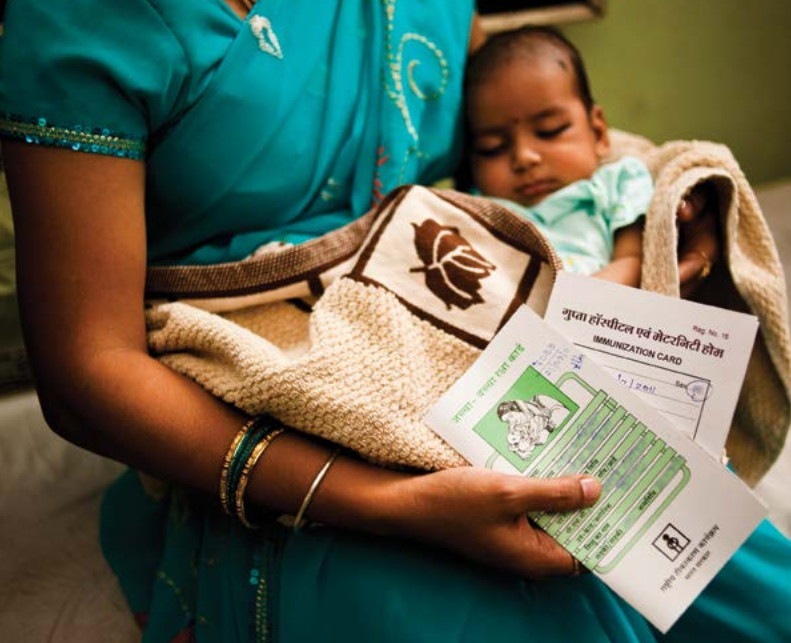
This guide, developed by the World Health Organization (WHO) in consultation with partners, is intended to provide practical direction to immunisation programme managers and those affiliated with other national health programmes on how to improve the use and design of home-based records (HBRs) and to serve as a reference when developing or revising HBRs. As explained here, an HBR is a medical document (more often physical rather than electronic) issued by a health authority (such as a national, provincial, or district health department) on which an individual's history of vaccinations received (including the name and number of doses of vaccine(s) along with dates given) from all healthcare providers is recorded. In contrast to a facility-based record, the home-based record is maintained in the household by an individual or their caregiver (e.g., mother, father, grandparent, etc.) and brought to the health clinic/post to be completed by a health worker at each time of vaccination.
In addition to an extensive description of the HBR, the resource explores the function and benefits of this tool. For example, WHO asserts that the HBR can facilitate improvements in: caregiver awareness, compliance, and empowerment to seek out health services; communication between health workers and caregivers; and continuity and coordination of care among health workers, as well as public health monitoring and reporting. Subsequent sections of the resource explore the topics of: designing the HBR for multiple intended users, the core content of an HBR, additional design elements to consider, and strategies for moving from design to implementation. Example of a strategy: "Recording practices for SIA doses will depend on countries' national policy. While in polio endemic countries with frequent OPV [oral polio] vaccination, it is not recommended to record these in the home-based record; in countries conducting periodic SIAs [supplementary immunisation activities] (for example, MR [measles and rubella virus vaccine live], yellow fever, or meningitis) using the child's existing record should be considered. This practice will need to be accompanied by appropriate training and sensitization of caregivers to bring the immunization cards to the SIAS. If the parent/caregiver does not bring the home-based record to the SIA, replacement cards should be provided. In some cases, specific SIA vaccination cards may be used."
Examples with practical tips are provided throughout the resource. For instance, in Mexico, an integrated health booklet, distributed free of charge in all medical units of the national health system, is used to document an individual's vaccination history across the life-span and to provide other health promotion, nutrition, physical activity, disease control, and prevention information. Five distinct, yet similar, HBRs comprise the lifetime HBR - "each containing messaging to keep the documents in good condition and to bring them to every health encounter."
Annexes explore the terminology and history of HBRs and methodologies for evaluating HBRs.
This document is particularly intended for: countries where there is low prevalence and utilisation of HBRs; places where stock-outs of HBRs occur; times when a country is introducing a new vaccine; and other circumstances in which a country is considering a revision of the HBR.
50
Email from David Brown to The Communication Initiative on July 8 2015. Image credit: ©UNICEF/Jim Holmes
- Log in to post comments