










































PPIUCD Services: Start-Up to Scale-Up
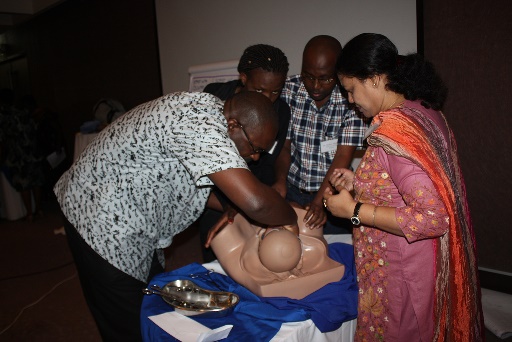
The Maternal and Child Health Integrated Programme (MCHIP) and Population Services International's (PSI) Support for International Family Planning Organisation (SIFPO) programme (funded by the United States Agency for International Development - USAID) convened a regional meeting in Africa to bring together international and regional experts to advance integration of postpartum intrauterine contraceptive device (PPIUCD) services into maternal health services. Fifty-nine participants (policymakers, champions, maternal health providers, programme managers working in maternal healthy, global agencies, and donors) from Ethiopia, Kenya, Liberia, Malawi, Mozambique, Rwanda, Tanzania, Uganda, and Zimbabwe engaged in South-to-South learning, sharing successes and challenges based on their country experiences.
A surge in interest in postpartum intrauterine contraceptive devices (PPIUCD) has brought about greater experience and a greater need to make the option of this "long-acting, reversible contraception method" available to every woman who delivers in a facility. This exchange among countries, as well as a presentation on India's experience of taking services to scale, was intended to allow countries with a solid base of programming to learn from each other and gain insights while helping less-experienced countries advance their programmes.
Strategies that have helped to provide services or scale-up were shared as well as issues to be overcome by strategic interventions:
- Counselling of women on postpartum family planning (PPFP) and the PPIUCD is provided to women during antenatal care (ANC), when they arrive at the facility in early labour, and in postpartum wards. Counselling during ANC avoids lengthy counselling in the labour ward and also provides an opportunity to address family planning (FP) with couples.
- Investments in training for staff members are key to ensuring that they have accurate information and strengthened counselling skills. Measures should be taken as well to lessen staff turnover.
- More trainers and more training are needed, with continuous mentorship for scale-up and quality assurance.
- Continued advocacy is essential.
- Keeping FP in the public eye as a priority is a challenge.
- A useful platform for scaling up PPFP and PPIUCD is the health surveillance assistants charged with community-level health work, strong community-based prorates to promote PPIUCD in communities.
- Ministry of Health support and coordination is key to scale-up success as is having a champion of the issue without government or a role of influence.
- A trained staff (sensitive to PPIUCD and the role of PPFP in saving lives) and adequate supplies and equipment available 24/7 facilitate success.
- Limited resources for scale-up and a high rate of home delivery are challenges, as are negative perceptions of IUCDs among clients and providers.
- A communications strategy is critical even during implementation and institutionalisation of an FP implementation plan.
India's programme benefited from the "involvement of the government throughout the implementation process and advocacy efforts whenever there was a change in government officials contributed to government engagement." Among their successful strategies: engaging with champions, supporting experienced providers to make presentations in reputable national forums, nurses who follow up with clients via phone, and dedicated government-paid counsellors.
Participants used the MCHIP PPFP Country Integration and Readiness for Scale Benchmarks rubric, which is provided in the document, and helps countries determine when conditions are ready for a scale up of PPIUCD services.
The MCHIP website on November 17 2013.
- Log in to post comments