










































The Omaheke Health and Education Programme (OHEP)
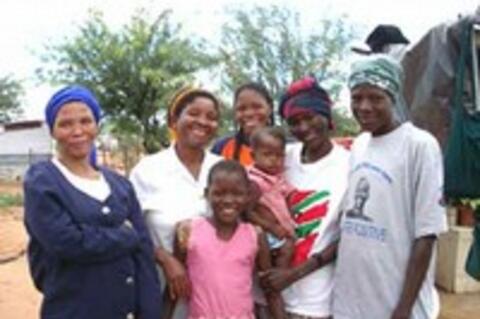
The initial intervention, which started in 1999, involved building the capacity of hospital staff in case management and the direct observation of treatment (DOT) method. When these measures were found to be insufficient to improve results, the approach was modified to include community participation in 2000. The programme established community-based structures and community clinic health committees - often consisting of former patients - which formed a link between government health services and the community, including the local San chiefs. They all received training regarding the control and management of TB and HIV/AIDS.
Each local clinic then had a focal person who was trained to supervise the community treatment supporters. These community treatment volunteers were drawn from the community and were trained on treatment observation. They would supervise patients when they took their medication and make sure that patients had sufficient supplies of the necessary tablets. In order to increase case detection rates, volunteers were trained to refer any chronic coughers to clinics for investigation and testing, and would get in touch with a patient's closest contacts at home or work and scan them for the disease. They also distributed condoms and gave advice on their proper use, storage, and disposal. The treatment volunteers in turn recruited volunteers to provide home support and education to help break down the stigma associated with TB and HIV.
To support these outreach activities, the programme provided transport and drivers. Also, recognising that many in their community were too ill or too economically poor to secure the food needed for their treatments to have effect, the health clinic committee members organised funding, acquired land from the municipality, and purchased 200 laying hens in order to produce and distribute eggs to bolster diets. They also planted vegetable gardens, using hens' droppings to fertilise the plots.
According to Oxfam, community involvement in Omaheke worked because there was good collaboration between general health services, the TB control programme, and the community. Oxfam claims that the project provided effective education to TB patients and their families, as well as good training for community supporters and health workers. The system of supervising community supporters by TB programme staff also proved effective. The approach was flexible and was adapted to suit the local situation when it became apparent that new adaptations were not having the desired effect. In addition, the introduction of a "Best Managed Clinic Health Committee of the Year" competition based on TB control criteria reportedly generated great interest and enthusiasm in the region.
Health.
In 1999, Omaheke Region had Nambia's worst TB treatment outcomes, with success rates of less than 30%. The challenges facing the Omaheke Region's efforts to control TB included a highly mobile San population in a vast and sparsely populated farming area, making patient follow-up a major challenge.
According to Oxfam, OHEP has been hugely successful at improving the cure rate for TB and reducing the number of patients who stop treatment before its conclusion. The project has also greatly increased early detection and treatment of TB, thereby reducing fatalities. Results showed that - of an initial 1,200 defaulters in the region's TB register when the programme began - only 2 were never located. The rest were found and put back on treatment, which they completed. Treatment success increased from less than 30% in 1999 to 89% in 2003 among a cohort of 376 smear-positive patients, while the proportion of patients who defaulted treatment fell to 0.5%. Recent knowledge, attitudes, and practice (KAP) surveys have shown that the stigma associated with TB has also decreased in the region.
Oxfam Canada has been supporting OHEP since its inception in 1999. From the outset, the goal was to strengthen the Namibian Ministry of Health so that it could take up this approach to care, building on African expertise and demonstrating a model that could be replicated throughout the country.
Namibian Ministry of Health, Oxfam Canada.
Oxfam website on April 14 2008 and November 2 2009; and African Union: Best Practice Case Studies on HIV/AIDS, Tuberculosis And Malaria document [PDF] on April 14 2008.
- Log in to post comments