










































Nigerian Urban Reproductive Health Initiative (NURHI)
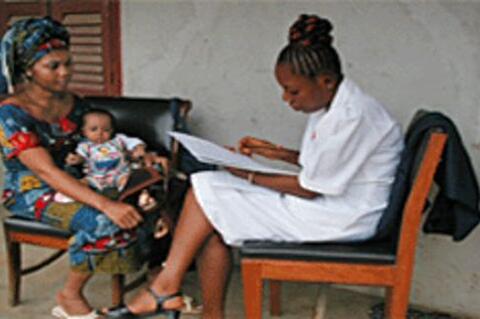
Launched in 2009, the 5-year Nigeria Urban Reproductive Health Initiative (NURHI) seeks to reduce barriers to family planning/child spacing use and increase the contraceptive prevalence rate in selected urban areas of Nigeria. The programme brings together private and public sector resources to strengthen the delivery of family health services, starting in 6 urban focus sites: Abuja FCT, Ibadan, Kaduna, Ilorin, Benin City, and Zaria.
NURHI is using a variety of communication strategies to change the social norms surrounding family planning and envisions a Nigeria where both men and women are responsible for initiating conversations about family planning and where family planning information is gleaned from multiple, credible sources - not only health care providers. NUHRI's approach involves testing public-private partnerships and private-sector approaches to increase access to and use of family planning by the urban economically poor. In particular, the programme looks to emphasise developing cost-effective interventions for integrating quality family planning with maternal and newborn health, HIV and AIDS counselling, and post-partum care programmes.
A core aspect of the initiative is research. For example, focus group discussions were held in Ibadan, Nigeria in September 2010. Similar focus group discussions are being held by NURHI in Kaduna. Results from this formative research will be used to guide project activities and dismantle the existing barriers to family planning use.
NURHI's Advocacy Core Groups focus on influencing local religious leaders to become champions of increased contraceptive use and family planning to their congregants. The focus is on the importance of open dialogue with women AND men about family planning, as well as on debunking the myth that Islam disapproves of contraceptive use.
The NURHI website offers several resources, such as a family planning toolkit designed to help programme planners replicate the most successful approaches of the NURHI project. Visitors here "will find design documents, strategies, how-to's, and other resources organized by program component. Only activities that NURHI believes have the most promise to contribute to family planning use will be posted here."
Family Planning.
According to organisers, Nigeria has one of the highest levels of maternal mortality in the world, losing more than 500 women with every 100,000 live births.
Research conducted by the Johns Hopkins University Bloomberg School of Public Health Center for Communication Programs (CCP) in September 2010 under the auspices of the NURHI confirms that there are many barriers to family planning in Nigeria. Focus group discussion (FGD) participants (men and women, married and unmarried, old and young, low and middle income, family planning users and nonusers) agreed that family size is dictated by husbands, but wives must take responsibility for initiating the family planning discussion. The success of such discussion reportedly depends wholly on the wife's presentation; one participant (female, married, age 18-24) suggested that, "She [a wife who is initiating an FP conversation] needs to make sure that her husband is in the right frame of mind. Prior to the time she discusses it with her husband; she should make sure that her husband is well pleased. Possibly, his favorite food should be prepared on that day." It was the belief of FGD participants that it is up to health service professionals to make them aware of their options during health care visits. As one participant (female, married, age 25-39) explained, "[i]t is good for doctors to always seize every opportunity they have to talk to people about family planning irrespective of the purpose for which the patient came."
The NURHI project team is made up of 4 partners: the Johns Hopkins University Bloomberg School of Public Health Center for Communication Programs (CCP), John Snow Inc. (JSI), the Association for Reproductive and Family Health (ARFH) and the Center for Communication Programs Nigeria (CCPN). It is funded by the Bill and Melinda Gates Foundation.
"Influencing Men: Nigerian Religious Leader Identifies the Key to Improving Women's Health", on the CCP website, June 17 2011; and the CCP website and the NURHI website - both accessed on August 22 2011.
- Log in to post comments