










































The Media of Iraq Ten Years On: The Problems, the Progress, the Prospects
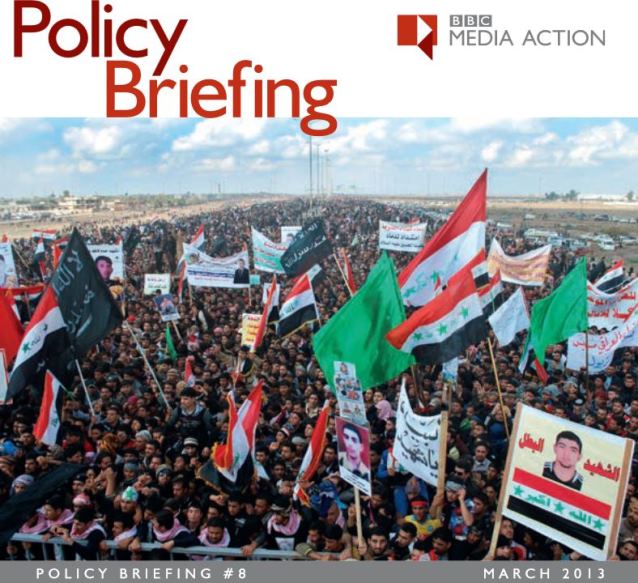
"The seismic shift in attitudes that the Iraqi media was asked to embrace in the reconstruction of the sector after Saddam Hussein's fall was always likely to take time. It is suggested here that the prospects for Iraq's media are less bleak than is often assumed."
This policy briefing is the eighth in a series commissioned by BBC Media Action into the role of media in fragile states. Based on first-hand experience of working in Iraq, as well as research and interviews with Iraqi and Western actors, the briefing is designed to generate greater understanding of the complex challenges facing support to the media in Iraq and other countries in the Arab region. In short, it argues that the Iraqi media landscape of 2013 has real strengths, as well as weaknesses, which reflect the reality and complexity of modern Iraq.
- Part 1 examines how history has shaped the media of Iraq today, looking at development of the media since the foundation of the modern Iraqi state in 1920. "Throughout that time, only temporary interludes of relative media freedom have interrupted a pattern of politically motivated media co-option and authoritarian control." According to the briefing, when United States (US)-led coalition troops entered Iraq and removed Hussein from power (in 2003), there was an expectation (on the part of the coalition) that Iraq's new leaders would share their conception of a Western-style liberal media sector. But there was no tradition of independent journalism in the country.
- Part 2 analyses the legacy of attempts at media reform and media development in the past 10 years. It describes attempts at media reform by the Coalition Provisional Authority (CPA), established by international forces following the invasion. It documents the "misplaced assumptions and mistakes acknowledged by many of those involved", but also argues that "there have been lasting and positive impacts on Iraq's media sector from decisions made at the time." For example, the briefing calls the dismantling of the former regime's Ministry of Information a "decisive positive step"; however, "the lack of understanding of how embedded the Iraqi media was in the state's architecture led to missed opportunities to secure more journalistic freedom for those working in publicly-funded media."
- Part 3 describes how, as soon as power was transferred to the new Iraqi state in 2004, traditional patterns of media co-option rapidly re-emerged - overwhelming the "piecemeal and hastily designed media support strategies that Western powers had hoped would create a liberal, free and open media." However, the independent regulator established by the coalition is described here as offering the potential to facilitate necessary legal and regulatory reform, though its performance to date "has been far from exemplary."
- Part 4 outlines the fact that privately owned media has boomed, as evidenced by the spike in the number of television, radio, and print outlets - "testimony to long pent-up demand for information and perhaps an even greater demand for self-expression. The diversity of the non-state media is the single greatest advance within Iraq's media community over the last decade and is likely to be sustained. However, in keeping with earlier phases of Iraqi history, these outlets continue to operate in the vanguard of political interests." The briefing notes that Iraqis tune into the television or radio service that reflects their own ethnicity and religious or tribal affiliation; this finding could either indicate a potential polarising force or a legitimate, rather than violent, expression of specific identities.
- Part 5 examines the challenges and prospects of freedom of expression in the country. It is noted that "despite accusations of growing authoritarianism, there is limited evidence to suggest that the government of Prime Minister Nouri Al Maliki is pursuing a concerted and organised campaign to silence the press." Furthermore, the legal framework for the media is "in need of substantial reform....A combination of political divisions and a lack of expertise in media law reform pose real challenges to the creation of a clear legal framework for a free and independent media."
- Part 6 summarises the challenges facing the Iraqi media 10 years after the invasion. The briefing suggests that the greatest obstacle to the removal of state control over the media is structural. "Sitting on the third largest reserves of oil in the world, there is little basis for a social contract between the state and its citizenry....In such circumstances, the health of institutions such as the media is likely to be critical to the effective functioning and accountability of government."
- Part 7 highlights lessons from the Iraq experience that may be useful to other Arab countries, especially those in transition. Key lessons include:
- Media support needs to be holistic - Training will invariably form part of any media reform agenda, but "training alone can end up further entrenching institutional practices by creating the false impression that improving the media is only a matter of improving skills."
- Media development is a goal in itself - "As in Iraq, the character of democracy in transitional Arab countries has been, and will continue to be, shaped by the media." It is noted here that the media development organisation IREX has developed a set of indicators to measure the capacity of a country's media to strengthen democracy.
- Stakeholders should be carefully mapped - "One of the key challenges highlighted in this briefing has been the limited understanding by international actors of the political complexity and positioning of local Iraqi actors."
- Independent regulation is a useful model - "The availability of international media should not deter clear, determined efforts to further independent regulatory structures in order to facilitate the emergence of national media capable of reflecting those voices."
- People's expectations of the media are not universal - "Arab audiences are not necessarily looking for their media to act in the way that the Western media does."
- Public service broadcasting is a challenging necessity - The briefing notes that reforming state broadcasters, as has been the case in Iraq, is one way of achieving public service broadcasting which relies on funding from the national government, though such reform needs to be carefully planned and designed.
- Media support must consider market realities.
BBC Media Action website, July 9 2013. Image credit: BBC Media Action
- Log in to post comments