










































Media Development Research Project
By pinpointing strategies that work, this research is designed to give media development practitioners a deeper understanding of how best to leverage the power of the media for social change. The project proceeds from the acknowledgment that "It is well-accepted that independent media and quality journalism make positive contributions to society. But we need to better understand what kinds of media matter in particular, and what types of interventions help or hinder the media's impact on social and economic development," according to a senior advisor working on the project.
The research team will compile and analyse a wide range of data, from studies of freedom of the press, to economic indicators and literacy rates, to the reach and affordability of different information sources - both domestic (United States (US)-based) and external. Researchers will aim to identify how media development interventions such as management or journalism training, support for legal and regulatory reform, external broadcasting, and investments in media messaging around development issues change the media environment. Looking at the media economy and the accessibility of various media forms, including networked digital media of all kinds, all within the context of political, social, and economic development, researchers will look for patterns that demonstrate the effectiveness of specific projects in various situations. This data (dating back as far as 20 years) will be compared over both developed and developing nations in Central and Eastern Europe, Asia, South America, and Sub-Saharan Africa. This analysis will be complemented by qualitative research into a variety of media-focused development efforts implemented by international and local organisations. Finally, several country-level case studies will use the resulting analysis in the context of a specific news and information environment. That is, the research will go beyond measuring tactical outcomes such as the number of journalists trained and programmes produced to examine how the information environment as a whole impacts progress towards development goals such as reducing poverty, raising educational levels, combating corruption, and improving health.
The research team will make its work available online as the project evolves, to the end of creating an accessible collection of data and statistics - hopefully with a user-friendly interface - that might help contribute to better understanding of media in developing countries and its evolution over time. Online processes will also be used to facilitate and encourage complementary and collaborative work by other researchers in order to increase impact. An international advisory board for the project will provide feedback and guidance from multiple perspectives. The project will culminate in a summary paper and several other publications to be published by The World Bank Institute and Internews.
Media Development, Democracy and Governance, Development Assistance.
Internews and World Bank Institute. Funding provided by the Bill & Melinda Gates Foundation.
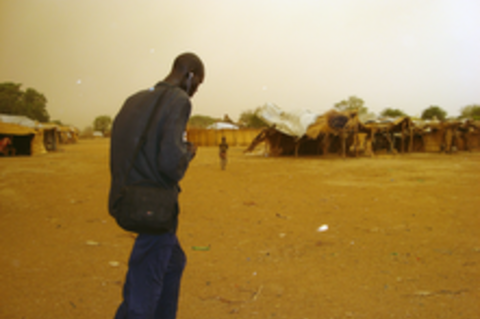
"New Initiative to Study Impact of Media on Global Development", Internews, August 7 2009; and emails from Patricia Chadwick and Persephone Miel to The Communication Initiative on September 29 2009. Photo detail: Reporter Simon Rica Taker from Naath FM in Leer [Sudan] listens to some audio he just recorded for a radio feature while walking through Malualkon during a recent exchange visit. Photo credit: Eleanor Dobing/Internews
Comments

for academic work
very resourceful research work towards human development.
- Log in to post comments