










































MEA Policy Advocacy Strategy on Engaging Men to End FGM
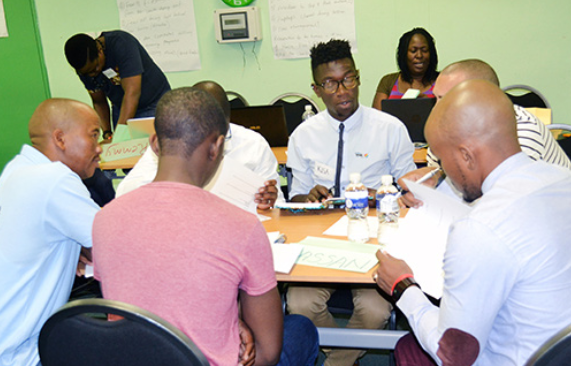
"While women appear to endorse and are more involved in the perpetuation of FGM in the African region, men play a significant role in its continuation - as fathers, husbands, community, religious leaders and as beneficiaries of the practice. However, most of the existing FGM intervention programmes involve men in limited ways..."
MenEngage Africa (MEA), a network of civil society organisations (CSOs) and activists, works to contribute to the elimination of all forms of discrimination, violence, and harmful practices against all women and girls, including female genital mutilation (FGM), which is internationally recognised as a violation of women's and girls' rights. Published by MEA in partnership with Sonke Gender Justic, this strategy document sets out the motivation, imperatives, and entry points for engaging in national, regional, and international advocacy initiatives and articulates the necessary actions and available opportunities at these levels for effecting change.
As outlined here, rigid gender norms and harmful practices that determine individuals' behaviour, causing gender-based violence (GBV) and gender injustice, are upheld and reinforced by the community, civil society, and state institutions. National governments may for a number of reasons fail to formulate and/or implement laws, policies, and programmes that address the root causes of GBV and gender injustice, and are rarely held accountable when women and girls' rights are violated. In some places, members of the community have bypassed existing laws prohibiting FGM by cutting younger girls to avoid a lot of attention and/or clandestinely cutting women and girls in the night or across borders.
Per MEA: "At the local and global level, men and boys can - and should be - effectively engaged in addressing the misconceptions about FGM, and by providing information about the negative health consequences of FGM. Men and boys can also play a critical role in addressing the social norms and practices that facilitate the continuation of FGM and be involved in sensitising and educating other men and boys about the need to eradicate the practice."
In this context, MEA's FGM Policy Advocacy programme seeks to identify, analyse, and locate laws and policies in relation to women's and girls' experiences, premised on the understanding that gender is both ignored and enshrined in legal theory and practice. The programme/campaign systematically uses public policy and law as vehicles for social change and seeks innovative methods of harnessing these in a positive way to improve the lives of women and girls.
Following a situational analysis of FGM and its prevalence in African countries, the document outlines the purpose of the MEA strategy, which is premised on the belief that an end to FGM can be achieved through purposeful individual and collective action, led by women and supported by solidarity and credible rights-based alternatives, including the effective engagement of men and boys. Building from the strengths of MEA's partners' direct engagement with local communities, including men and boys, MEA's role is to catalyse men, boys, and communities to confront the root causes of FGM and to push for solutions and effective government responses in order to end FGM practice in Africa.
The strategy objectives fall under 3 categories:
- Contribute to Policy Development:
- To contribute to the development and effective implementation of progressive national and regional mechanisms and practices that address the practice of FGM; and
- To advocate for clear language and strategies on engaging men and boys in all laws and policies addressing FGM.
- Advocate for Policy Implementation:
- To raise public awareness, challenge prevailing gender norms, and foster sustained participation of men and boys on issues related to ending FGM; and
- To provide technical and content support to policy and decision makers, implementers, and practitioners on effective strategies to engage men and boys in the prevention and response of FGM.
- Conduct Policy Monitoring:
- To monitor the implementation of national, regional, and international laws and policies that seek to address FGM; and
- To build networks and partnerships to advocate for the strengthening of regional and international mechanisms to effectively address emerging trends and patterns of FGM (such as cross-border FGM).
Additional sections of the document explore the following, often presenting information in the form of text boxes and charts/maps:
- Overview of FGM in MEA countries under the UNICEF/UNFPA Spotlight Initiative
- Overview of policy strategies aimed at ending FGM
- Advocacy entry points and existing policy windows
- Mechanisms available to MEA within the regional and international arena
- Implementation strategy
- Annexure A: regional and international legal and policy framework on FGM
Publishers
Sonke Gender Justice website, August 4 2023.
- Log in to post comments