










































Managing Disaster Response through Mobile: Asia Pacific
"Mobile networks and the connectivity they provide can be a lifeline for those affected by natural disasters and other humanitarian emergencies. They are vital to facilitating access to information and coordinating assistance within affected populations and among governments, first responders and the international humanitarian community."
From GSMA Intelligence, in collaboration with the GSMA's Disaster Response team, this report on disaster response in Asia Pacific provides an overview of the Asia Pacific mobile market, the disaster risk landscape, and examples of solutions being developed by the industry. "Asia Pacific is the world's most disaster-stricken region. The vast diversity in geography, development and population density across the region makes disaster preparedness a challenge." One of the key sectors stepping up to the challenge is the mobile industry, with mobile network operators (MNOs) playing a critical role. In addition to providing a regional overview, this report focuses on 2 markets - Bangladesh and Myanmar - which have been selected as examples due to their disaster risk profiles.
As detailed here, in March 2015, the GSMA launched the Humanitarian Connectivity Charter to support the mobile industry in improving preparedness and resilience. The charter consists of a set of shared principles adopted by key players in the mobile industry, and endorsed by key humanitarian organisations, to support improved access to communication and information for those affected by crisis in order to reduce the loss of life and positively contribute to humanitarian response. The principles of the charter are to:
- enhance coordination within and among mobile network operators before, during, and after a disaster;
- scale and standardise preparedness and response activities across the industry to enable a more predictable response; and
- strengthen partnerships between the mobile industry, government, and the humanitarian sector.
To date, over 100 MNOs operating in more than 75 countries have committed to these principles. Charter engagement will be based in 4 key regions: Asia Pacific, Middle East and North Africa, Sub-Saharan Africa, and Latin America. This report is part of a series focusing on these regions.
MNO networks have facilitated access to information and coordinated assistance within affected populations and among governments, first responders, and the international humanitarian community in the face of disasters. Another way in which mobile technology can be used to provide humanitarian assistance to displaced populations is through digital cash transfers, including mobile money. The potential for mobile money to improve resilience against disasters, and livelihoods more generally, is significant in the Asia Pacific region. There are 82 live mobile money services in 25 Asian countries, and up to 80% of the adult population is unbanked in some countries - not least in Pakistan and Afghanistan, 2 countries which also happen to be among the top 15 countries in the world at risk of disaster.
Examples of services launched in the region to prepare for disasters include:
- Japan: With regulatory approval, base stations have been placed on ships to provide connectivity if networks on land are compromised. Additionally, infrastructure has been built with enhanced technology to ensure network equipment is as resilient as possible - for example, by reinforcing antennas and building extra strong foundations for base stations.
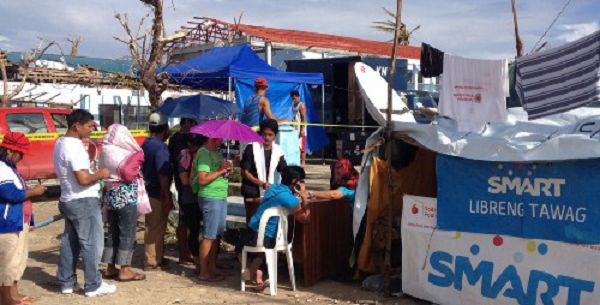
- Philippines: Smart Communications has formed the "ICT [information and communication technology] Bayanihan" communications summit series. Participants include the private sector, media, government, utilities, and amateur radio operators. The aim is to enhance coordination between all organisations involved in the provision of communications in the country and develop a regional Rapid Emergency Telecoms Team.
- Sri Lanka: Dialog, in partnership with the Disaster Management Centre and other partners, launched the Disaster and Emergency Warning Network (DEWN) in January 2009. Alert messages can be received on mobile phones and DEWN alarm devices.
Examples of services launched in the region to respond to disasters include:
- Japan: KDDI and NTT provide fast network restoration and free charging and calling facilities to subscribers. A collaborative approach ensures that the 2 operators cover all affected areas without duplication of effort. NTT also provides customer support through a Disaster Message Board.
- Nepal: Following the Nepal earthquake in April 2015, Flowminder, in partnership with Ncell, was able to analyse call detail records and provide information on population displacement patterns. The organisations shared this with the United Nations for consideration in planning response activities.
- South Korea: Drones have been used to assess the impact of disasters by providing aerial views of roadways and damaged buildings and other real-time information. Drones have also been used to provide mini base transceiver stations in affected locations.
The report concludes with case studies of the markets in Bangladesh and Myanmar.
"Managing disaster response through mobile: focus on the Asia Pacific region", by Jenny Casswell, November 17 2016 - accessed on December 1 2016. Image credit: © Smart Communications
- Log in to post comments