










































Majalisar Mata Manoma
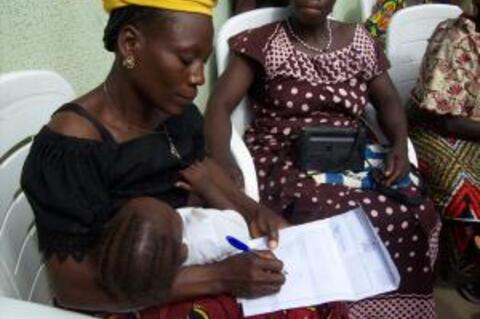
Prior to commencement of the project, ARDA carried out a baseline study to identify the needs of the beneficiaries and to draw out issues to be addressed by the radio programme. The baseline was also used to determine the appropriateness of local theatre as a development tool.
According to ARDA, the participation of two key male figures - a community elder and a school teacher - helped curtail possible opposition from the spouses of participating women. In addition, previous preparation, including work using theatre for development with men and women in the community, helped the women's husbands accept their participation. However, mobilising the women was still a challenge, as their heavy daily workload made listener group activities a secondary priority.
The project also addressed the issue of unequal workloads between women and men in the community. According to ADRA, the workload for young girls and women is disproportionately heavier than that of their male counterparts. An activity that requested participants to chart the daily diaries of the opposite sex helped build awareness around this problem for community members, while focus group discussions explored the significance of this issue. The theatre for development skits also portrayed this topic.
Broadcast live, the 30-minute radio programmes included music, a talk-show with an expert guest, phone-ins, and inserts recorded by the listeners' club members. These inserts consisted of discussions, songs, and opinions. The women involved in the project provided a priority list of issues they wanted the radio programmes to address. To deal with these identified issues, the programme relied on scripts downloaded from the Farm Radio International website.
As part of the project, the listeners' club was given a mobile phone to allow the women to engage with the radio programmes. According to the organisers, this strategy was necessary because women generally have less access to mobile technology due to gender inequalities in the community and lack of income. Members were trained to use the phone to make and receive calls and text messages. The women have also started using the phone to generate income for the club.
To read more about the programme, visit the listeners' club blog.
Gender, Agriculture
According to ARDA, the women in the club are increasingly willing and able to organise themselves with less effort on ARDA's part. They ask more questions about issues to be addressed on the programmes and are generally much more vocal in discussions. The club has also recently evolved into a formal association to be used as a vocational group, development group, or farmers' cooperative.
African Radio Drama Association (ARDA) and Gender and Agriculture in the Information Society (GenARDIS).
GenARDIS website on March 10 2010; and "Rural Nigeria: Radio and Mobile Phones Change Women's Lives", on the Association for Progressive Communications (APC) website and listeners' club blog - both accessed on December 13 2010.
Comments

Radio Dramas & Listening Clubs
great ideas for expanding outreach to meet the MIPP requirements for prevention programming in Nigeria

- Log in to post comments