










































Journalism in 300 Questions - Masterclass Videos
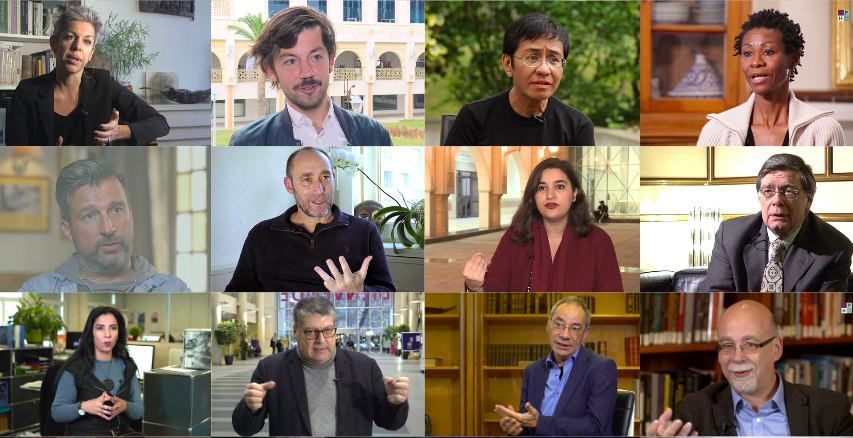
"Some people no longer trust the so-called 'traditional' media, distrust journalists, no longer wish to or no longer know how to get information."
This collection of video interviews is designed to offer a comprehensive view of the work of journalists and the role of the media in the context of a world where news information is no longer trusted. Interviews with media professionals and academics from across the world cover around 30 topics that include the basics of reporting, public service broadcasting, media economics, "fake news", working with sources, the rights and duties of the journalist, and the future of the press. The videos are intended for journalists in training but also for the general public interested in finding out more about how the media works.
As explained by the organisation that produced the Masterclass videos, Foundation Hirondelle, "In the anarchy of online information, getting informed means navigating in a world without a map or a compass. To avoid the worst - disinformation and the lack of diversity of viewpoints that create self-centredness or information bubbles - it is better to understand the mechanics of the production of information. This is the whole point of these masterclasses designed by Fondation Hirondelle." The initiative is seen to be part of an increasingly recognised trend: media literacy and the need for media consumers to learn how this sector works and what the professional rules are.
Over the 30 videos (between 12-18 minutes long), interviewees answer 300 questions related to the media. The subtitled videos in French and English fall within the following categories:
- The Basics - Interviews cover issues such as the history of journalism, the rights and duties of a journalist, and the handling of sources.
- Genre and Formats - Interviews discuss issues such as public service broadcasting, the press cartoon, war reporting, blogs, and photojournalism.
- Challenges - Interviews cover issues such as social media, journalism in crisis zones, women and journalism, and reporting under a "democratorship".
- New Models - Interviews cover issues such as funding of reliable information, humanitarian journalism, constructive journalism, and innovative projects such as "The Conversation".
Publishers
Foundation Hirondelle website on October 12 2023. Image credit: Fondation Hirondelle
- Log in to post comments