










































Intercultural Dialogue on Violence against Women
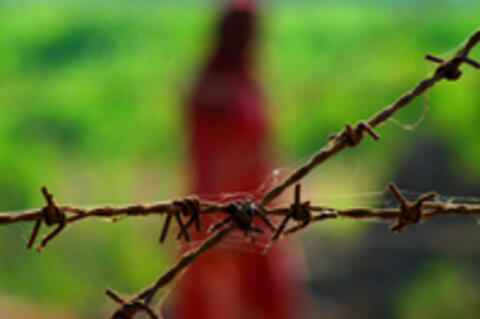
This advocacy project drew, first, on artistic expression to communicate - in a very personal way - the impact of violence against women. Namely, young women aged 18 - 40 years from each of the 5 countries were invited to enter a photo competition. Each participating country selected its 5 best entries. The photographs were evaluated for their creativity, originality, gender sensitivity, and their ability to raise awareness on Violence against Women to a wide audience, particularly youth. One final successful photographer from each country was then selected to travel to Cyprus to represent her country in a 2-day training workshop (see below for details), and to participate in the final exhibition, which was held for 1 week in November 2007 at the University of Nicosia.
Information sharing and capacity building complemented this creative component. A 2-day workshop that took place in conjunction with the exhibition joined together non-governmental organisation (NGO) activists, journalists, women from minority groups, as well as the short-listed candidates of the photo competition. Participants presented the situation of violence against women in their home countries, and then split up into working groups that discussed and reported back on issues such as the steps involved in developing projects for the prevention of violence against women, lobbying and advocacy strategies, approaches for carrying out effective awareness campaigns, and ways to promote gender equity in and through the media. Upon parting, participants discussed the formation of an online group as a method of communication and possibly creating a larger network for information sharing among young women and NGOs working on related issues in the region.
One suggestion to emerge from the workshop was that each partner organisation host a photo exhibition in their respective home countries as an awareness raising measure. To that end, Heura, the Spanish partner organisation, hosted an exhibition in Spain for the celebration of International Women's Day on March 8 2008. Another means of bringing this experience to a broader audience is the planned publication of a resource manual that will include a synthesis of the reports from all 5 partner countries, information from the workshop and training, and the short-listed photographs - with the award-winning photograph on the cover of the publication. Other tools for spreading the word will include press releases, electronic and audiovisual media, the internet, and lectures.
Gender, Women, Rights.
MIGS states that "...There is consistent lack of research as well as lack of quantitative and qualitative data on the extent, forms and manifestations of violence against women in the Mediterranean region. This lack of information creates significant obstacles and enables states to avoid taking necessary measures and to deny that such a problem even exists in the region....Most of the southern countries do not have legislation on violence against women and attitudes to gender violence are extremely conservative and it is largely considered a private rather than a public matter."
MIGS (Cyrpus), the Isis Center for Women and Development (Morocco), Antigone - Information Centre on Racism, Ecology, Peace and Non Violence (Greece), AAW - Alliance for Arab Women (Egypt), and Heura (Spain).
Posting to the Women's UN [United Nations] Report Network (WUNRN) listserv, July 21 2008; Intercultural Dialogue on Violence against Women: Final Results of a Euro-Mediterranean Project [PDF]; and MIGS website.
- Log in to post comments