










































Group Dialogue and Critical Reflection of HIV Prevention: An Evaluation of the C-Change Community Conversation Toolkit
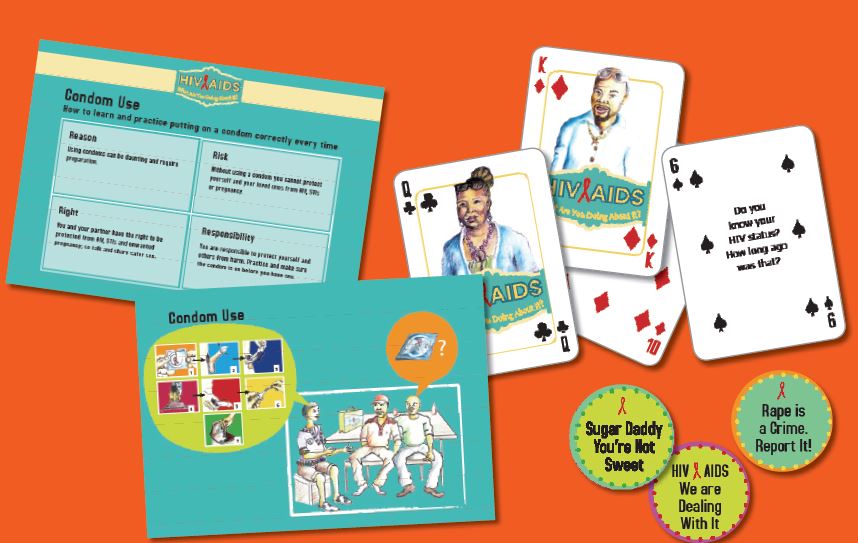
This 53-page report discusses evaluation findings related to the use of the Community Conversation Toolkit (CCT) developed by Communication for Change (C-Change) to foster interactive communication through group dialogues and to prompt engagement on HIV prevention issues among low-literacy adults. As stated in the report, the CCT is "a social and behaviour change communication (SBCC) resource that comprises a set of interactive communication components including role play cards, throw cubes, playing cards, dialogue buttons, finger puppets, and guides for facilitation and community mobilisation." The evaluation looked at whether this toolkit elicited changes in behaviour and practices by participants around HIV prevention, and whether the processes of reflection and problem solving led to community-level action for HIV-prevention-related change.
The report explains that C-Change used an Action Media methodology to develop the Toolkit. "Action Media follows participatory action research principles by bringing together health and communication professionals and audience representatives who jointly determine communication needs in relation to health, including developing concepts for communication materials and resources." The process included workshops with 20 low-literacy participants in a rural community in South Africa, drafting of the Toolkit materials, pre-testing, and the production of materials and supporting documents, such as a Facilitator's Guide. The final regional toolkits were adapted for use in seven countries and were made available in ten languages.
This report draws on experiences of using the CCT in four communities in Malawi and Zambia, based on interviews and focus group discussions with people who had used the Toolkit and participated in the community dialogues. According to the report, users of the Toolkit's resources appreciated it encouraged participant-led problem solving, rather than one-way didactic lectures. The set of interactive and visually engaging tools increased the curiosity of dialogue participants, while also building the credibility of facilitators. The throw cubes, which included local idioms and proverbs to act as starting points for discussion, were cited as the most useful. Participants also received Dialogue Buttons that they wore during sessions and outside to prompt discussion around sensitive issues such as Sugar Daddies.
The evaluation study found that "participants were able to recognise their own risks and felt empowered to change their behaviour, for example, insisting on using a condom or increasing dialogue with their partners and within their families and communities. The group dialogues encouraged critical reflection about contextual risks, enabling both community members and leaders to analyse risk factors in their communities."
The participatory nature of the dialogues and their focus on encouraging people to apply what they already know about HIV helped dialogue participants "to develop new insights into HIV, including how to address HIV vulnerability and risk at the level of oneself and others." The dialogues also fostered a broad range of "health literacy" improvements, which are outlined in terms of functional health literacy, conceptual health literacy, and health literacy as empowerment.
The evaluation report discusses the CCT in reference to a number of conceptual, situational, and social factors that are hypothesised to contribute to behavioural and social change. The Toolkit was found to have conceptual, situational, and social resonance, while also allowing people to internalise their understanding of HIV risks. Participants indicated new actions and commitments to actions. "These included changing their own risk practices by adopting safer sex or other strategies, and engaging with partners as well as family, friends, and community members to address HIV." There were also some examples of new social norms, for example, changes in cultural practices relating to sexual cleansing, and strengthening legal processes related to rape.
A number of recommendations are offered, including the value of replicating the Toolkit in its current form, the possibility of adapting for youth audiences, and the Toolkit's usefulness as a complementary resource to the ongoing work of organisations. There is a need to better understand the durability of the Toolkit and the ideal number of group dialogues, which may differ within different contexts.
C-Change website on December 12 2014.
- Log in to post comments