










































Generating Genuine Demand with Social Accountability Mechanisms
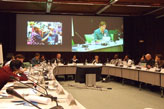
This 39-page report summarises discussion at a Communication for Governance and Accountability Program (CommGAP) workshop in Paris, France, exploring how to increase the effectiveness of and demand for social accountability mechanisms. "In political systems where citizens have little power to formally influence their governments, creative tools known as 'social accountability (SA) mechanisms' have been developed, whereby people can directly hold their governments to task-in particular for the delivery of public services. Among the mechanisms to have gained widespread acceptance are the Citizen's Report Card, the Community Scorecard, the Social Audit, Participatory and Transparent Monitoring, and the Public Expenditure Tracking Survey (PETS)." This workshop sought to explore how to ensure more impact from and demand for SA mechanisms. It also sought to explore how they can create behaviour change in public authorities or agencies. It examined contributions from the fields of communication and allied social sciences and, particularly, strategies from social movements and collective action.
The workshop was organised around the five process stages of SA mechanisms. Within these sessions, participants presented evidence of practice and research that could demonstrate success or failure of SA initiatives, as follows:
Analysing the public sphere/political context
From discussion generated by this panel discussion, the following approaches were suggested:
- Assess the macro-level context through a public sphere analysis;
- Assess the legal/regulatory environment;
- Build a coalition supporting an access to information regime; and
- Build legal capacity on access to information issues.
And the following techniques were suggested:
- Deploy a framework to answer: "Is this tool applicable in a particular context?"; and
- Use the system of international courts as allies when challenge governments in international courts.
Gaining official support in using SA tools
From discussion generated by this panel discussion, the following approaches were suggested:
- Assessing and improving official support using the spectrum of state posture and state support;
- Mobilising support from middle managers;
- Formalising partnerships with government agencies;
- Strengthening synergies by holding problem-solving sessions among agencies and stakeholders; and
- Identifying champions within government.
And the following techniques were suggested:
- Analyse state posture and state support;
- Establish early engagement;
- Consider the context and focus on the positive;
- Provide evidence on the ground and use credible spokespersons to express it; and
- Design simple and easy-to use monitoring tools.
Building Citizen Competence (informed citizenry)
From discussion generated by this panel discussion, the following approaches were suggested:
- Broaden journalists’ knowledge of SA;
- Enhance coordination among development partners to think and act strategically about media support and regulation;
- Use an inclusive approach that includes young and marginalised groups in building citizen competence; and
- Engage citizens in dialogue via different modes of structures and mechanisms.
And the following techniques were suggested:
- Promote and develop training for journalists;
- Establish partnerships with academia to implement interdisciplinary curricula;
- Engage with marginalised groups;
- Develop a platform to enhance coordination among development partners;
- Support independent media; and
- Utilise and raise awareness regarding existing information sources, as well as consultative structures and mechanisms.
Mobilising public will and inspiring citizen activism (engaged citizenry)
From discussion generated by this panel discussion, the following approaches were suggested:
- Map out types of publics, participatory inputs, and degree of influence;
- Use local, political context and people as the starting points; and
- Enlist educational institutions as partners and target the youth as audience.
And the following techniques were suggested:
- Make strategic use of the media, traditional, and modern;
- Mobilise formal and informal social networks;
- Use technology to renew direct communication between groups of organisations and individual citizens; and
- Use electronic newsletters, guides, or handbooks.
Achieving behaviour change in public officials through mobilised public opinion
From discussion generated by this panel discussion, the following approaches were suggested:
- Take stock of horizontal and vertical accountability mechanisms;
- Use a five-pronged framework, including cultural, social, institutional conditions, the quality of the public sphere, and international regimes;
- Build initiatives from below and initiatives from above, and assess type of public being engaged;
- Cultivate collaboration and an evaluative culture, ensuring feedback and follow up;
- Use three directions as paradigms - top-down, bottom-up, and horizontal; and
- Adopt a systems perspective through a social ecological model of analysis;
And the following techniques were suggested:
- Identify an organisational anchor, and find institutional champions;
- Hold brainstorming sessions with stakeholders, present them with alternative tools, and hold multi stakeholder workshops on the tools;
- Select local drivers carefully;
- Circulate draft findings;
- Form stakeholder alliances at the national and local levels;
- Institutionalise findings through government response and action;
- Prepare media in advance and educate them on the details of the tools; and
- Deploy mobile digital schools toward public opinion mobilization: mobile teacher (MT4 player, a place where people already gather, course content in the form of an oral library (A/V based), trained mentors, collective learning process, and cascade effect through community sharing.
The final sessions highlighted the issues raised and enumerated action steps indicated.
CommGap website on April 7 2008.
Comments

human computer interaction
social mechanism used in communication and collaboration
- Log in to post comments