










































Effectiveness of Home-Based Records on Maternal, Newborn and Child Health Outcomes: A Systematic Review and Meta-Analysis
Bruyère Research Institute (Magwood, Kpadé, Mayhew, Pottie); Ottawa Hospital Research Institute (Thavorn); University of Ottawa (Thavorn); Institute for Clinical and Evaluative Sciences (Thavorn); UCL Institute of Education (Oliver); University of Johannesburg (Oliver); University of Ottawa (Pottie)
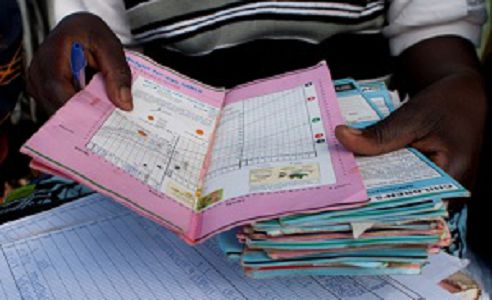
Home-based records (HBRs) are paper or electronic documents that pregnant women and caregivers maintain and use in over 163 countries or territories to monitor the health of the household's children. HBRs come in different forms, starting with the most basic antenatal or vaccination-only cards, and progressing to vaccination-plus cards, maternal and child health (MCH) books, and electronic records. Among other roles, HBRs link mothers and caregivers to maternal, newborn, and child health information and health care. In addition, health education messages are often included in these records so as to promote better health care seeking, healthy behaviours, and safe home care practices. This review assessed the effectiveness of HBRs on maternal, newborn and child health reporting, care seeking and self-care practice, morbidity and mortality, and women's empowerment in low-, middle-, and high-income countries.
The researchers conducted a systematic search for randomised controlled trials (RCTs) and cost and economic evaluation studies published between 1950 and 2017. Among the included 14 studies (out of 16,419 identified articles) were 9 RCTs, 1 cluster RCT, and a 3-year follow-up, as well as 2 controlled trials. Studies were conducted in high-income countries: Australia (n = 1), England (n = 4), Norway (n = 1), United States (US) (n = 1); and in low- and middle-income countries: Cambodia (n = 1), Indonesia (n = 1), Mongolia (n = 1), and Pakistan (n = 2).
Selected findings of the review:
- HBRs had positive effects on some maternal health outcomes. For example, in Indonesia, women in areas where the MCH handbook is used were more likely to receive 2 doses of tetanus immunisation (odds ratio (OR) 1·98 95% confidence interval (CI): 1·29-3·04).
- Among child health outcomes, evidence indicates that HBRs may have an impact on immunisation rates, growth, and development. Age-appropriate immunisation, including a 3-dose series of diphtheria-pertussis-tetanus (DPT) by 7 months of age, improved with newly designed immunisation cards and educational interventions.
- HBRs improved rates of vaccination among children (OR: 2·39, 95% CI: 1.45-3·92) and mothers (OR 1·98 95% CI:1·29-3·04).
- The 3-year follow-up study included in the review shows that HBRs reduced risk of cognitive delay in children (p = 0.007).
- HBRs improved antenatal care and reduced likelihood of pregnancy complications.
- HBRs improved patient-provider communication and enhanced women's feelings of control and empowerment.
In discussing these results, the researchers note that countries have identified the need for a standardised HBR so as to improve data transferability and secure the accuracy of data recording and transcription. Organisations have highlighted the need for stakeholder engagement in the design, distribution, and implementation of HBRs for MCH so as to ensure the successful uptake and sustainability of these records. In addition, further research is needed that compares electronic versus paper HBRs for MCH. Finally, it would be helpful to compare integrated HBRs (e.g., MCH handbooks) and stand-alone records (e.g., vaccination cards, growth charts).
As the researchers explain, one of the reasons HBRs are recommended in resource-limited settings is that these records improve relationships and communication between mothers and healthcare providers; they also enhance women's feelings of empowerment and promote more efficient use of health service resources. In Palestine, women who were part of a national programme noted that it is easier to ask questions about their health when they are holding their own handbook. Personalised guidance, such as through face-to-face interactions or maternal- and child-health-related social events, can ensure that mothers who are less literate and who are using HBRs understand the information on pregnancy, for example. "These results have implications for hospital administrators and health planners, and it is necessary to train health care providers on the appropriate use of these records..."
In conclusion, this review found that HBRs show modest but important health effects for women and children. These effects with minimal-to-no harms, multiplied across a population, could play an important role in reducing health inequities in maternal, newborn, and child health.
PLoS ONE 14(1): e0209278. https://doi.org/10.1371/journal.pone.0209278. Image credit: World Health Organization
- Log in to post comments