










































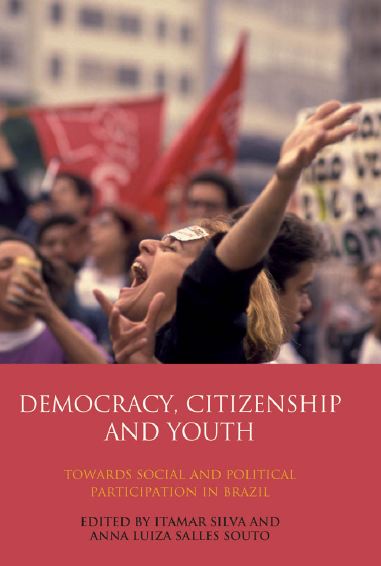
Democracy, Citizenship, and Youth - Toward Social and Political Participation in Brazil
Image
SummaryText
Between 2004 and 2006, the Institute Brasileiro de Andlises Socials e Economicas (Ibase) and the Institute de Estudos, Formafao e Assessoria em Polfticas Socials (Polis) carried out the study Brazilian Youth and Democracy: Participation, Spheres and Public Policies, which listened to and debated with a wide variety of young Brazilians (over 8,000 interviews and 40 focus groups in 8 metropolitan areas of Brazil) between the ages of 15 and 24. The goal of the study was to understand the place of young people in today's complex and changing world and to understand their perceptions and practices.
This report, published as a book in 2009, sought to have a qualitative influence on policymaking in order to help extend rights and opportunities for young Brazilians. Researchers also hoped to "share our data and analysis with other countries and continents so as to prompt ideas about new, more sensitive, rapid and effective research methods which can address what is diverse, what is singular, and what is universal." According to the authors, the book is relevant beyond the Brazilian and South American context if similar study methodologies are used to involve youth and impact government agendas. The book may be of particular interest to government experts, representatives of youth related government agencies and non-governmental organisations (NGOs), academic researchers, and students working in the areas of youth issues, political science, governance studies, and international development.
The first three chapters examine the most important aspects of young people's social participation, the importance of school, and the resulting challenges for creating public policies. The remaining chapters consider the study process, the choices made relating to the methodology, how the network of researchers was formed, the reactions of the young people studied, the successful media-relations strategy, and the rewarding partnerships generated from the research.
One finding of particular interest is the acceptance and success of the participatory methodology known as dialogue groups, a method adopted from the Canadian Policy Research Networks. One thousand young people gathered in groups and discussed what type of country they wanted to live in and how they proposed to make this vision a reality. Dialogue groups created opportunities for participants to pursue their thinking together beyond the simple emission of an opinion or attitude. The groups recognise that humans form their opinions through interaction, rather than individually, and they provide participants with a chance to speak freely, to listen openly, and to be listened to. For many, this was the first time they were actually listened to. According to this document, that empowerment has led to negotiations with the federal government of Brazil on issues that are relevant and important to young people.
In this regard, researchers attest that dialogue groups function simultaneously as a research method and an extended educational process. While researchers learned that young people in their country are not, in fact, apathetic, young people were able to share, learn, and mobilise on issues they care about.
Another aspect of the study was the diffusion of study results in the local and national press. The strategy chosen was to involve all media possible, rather than giving one organisation exclusive rights to the story. This choice helped to sensitise the media and to draw attention to data which show that young people are the subjects of rights and capable of critical thinking and of making constructive proposals about their lives.
This report, published as a book in 2009, sought to have a qualitative influence on policymaking in order to help extend rights and opportunities for young Brazilians. Researchers also hoped to "share our data and analysis with other countries and continents so as to prompt ideas about new, more sensitive, rapid and effective research methods which can address what is diverse, what is singular, and what is universal." According to the authors, the book is relevant beyond the Brazilian and South American context if similar study methodologies are used to involve youth and impact government agendas. The book may be of particular interest to government experts, representatives of youth related government agencies and non-governmental organisations (NGOs), academic researchers, and students working in the areas of youth issues, political science, governance studies, and international development.
The first three chapters examine the most important aspects of young people's social participation, the importance of school, and the resulting challenges for creating public policies. The remaining chapters consider the study process, the choices made relating to the methodology, how the network of researchers was formed, the reactions of the young people studied, the successful media-relations strategy, and the rewarding partnerships generated from the research.
One finding of particular interest is the acceptance and success of the participatory methodology known as dialogue groups, a method adopted from the Canadian Policy Research Networks. One thousand young people gathered in groups and discussed what type of country they wanted to live in and how they proposed to make this vision a reality. Dialogue groups created opportunities for participants to pursue their thinking together beyond the simple emission of an opinion or attitude. The groups recognise that humans form their opinions through interaction, rather than individually, and they provide participants with a chance to speak freely, to listen openly, and to be listened to. For many, this was the first time they were actually listened to. According to this document, that empowerment has led to negotiations with the federal government of Brazil on issues that are relevant and important to young people.
In this regard, researchers attest that dialogue groups function simultaneously as a research method and an extended educational process. While researchers learned that young people in their country are not, in fact, apathetic, young people were able to share, learn, and mobilise on issues they care about.
Another aspect of the study was the diffusion of study results in the local and national press. The strategy chosen was to involve all media possible, rather than giving one organisation exclusive rights to the story. This choice helped to sensitise the media and to draw attention to data which show that young people are the subjects of rights and capable of critical thinking and of making constructive proposals about their lives.
Publication Date
Languages
English
Number of Pages
2200
Source
IDRC website on April 10 2012.
- Log in to post comments