










































COVID-19: How Can Risk Communication and Community Engagement (RCCE) Include Marginalized and Vulnerable People in the Eastern Mediterranean Region
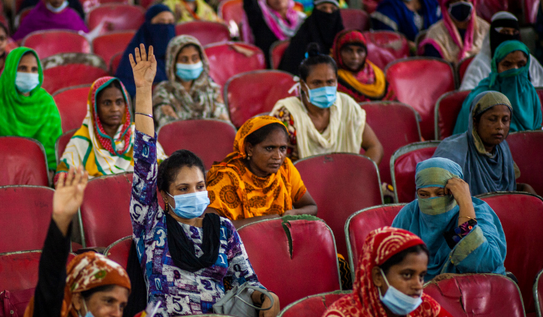
"People who experience marginalization, particularly those facing intersecting forms of discrimination across diverse factors,...become even more vulnerable in emergencies."
Risk communication and community engagement (RCCE) are tools for ensuring people are aware of the dangers posed by COVID-19 and for involving them in national and local efforts to stop the spread of the virus and minimise disruptions to their lives and livelihoods. However, according to the World Health Organization Regional Office for the Eastern Mediterranean (EMRO) Regional Risk Communication and Community Engagement (RCCE) Working Group, in order for RCCE efforts to be effective, they need to be gender-responsive and include all segments of societies, particularly the most vulnerable and marginalised social groups. These guidelines explain the vulnerabilities of different social groups to COVID-19 and how to address these vulnerabilities in RCCE efforts and plans.
Topics covered include:
- Why include a protection, gender, disability, and inclusion lens in RCCE?
- What have we learned about protection, gender, disability, and inclusion in RCCE in other epidemics?
- Addressing stigma and misinformation
- Populations at disproportionate risk in case of COVID-19 outbreak and key implications for RCCE [Why are they vulnerable? How to help them?]: children; persons with disabilities; women and girls; pregnant and lactating women; people living with HIV; gender-based violence (GBV) survivors; ethnic, indigenous, national, and religious minorities; people living in conflict zones, camps, and densely populated areas; the elderly; refugees and migrants; healthcare workers; people with pre-existing medical conditions such as high blood pressure, heart disease, lung disease, cancer, or diabetes; and sexual and gender minorities.
- Key protection, gender, disability, and inclusion actions for RCCE - here are just a few examples:
- Ensure that national RCCE plans are informed by data and analysis disaggregated by sex, gender, age, maternal status, disability, and migration status, taking account of the most vulnerable women.
- Put data privacy and protection guidelines in place for assessments and healthcare documentation.
- Set up assessment teams that represent the communities they serve, that are gender balanced, and that include representatives of marginalised populations.
- Involve vulnerable groups in community engagement work, including for social and behavioural change.
- Disseminate information tailored to different needs based on community data: visual, hearing, intellectual and physical impairment.
- Establish targeted forums to communicate with vulnerable groups. Consider factors such as their literacy and technology requirements.
- Ensure TV and radio shows and communication materials do not reinforce gender or other stereotypes. For example, do not depict COVID-19, or its spread as being a problem of particular populations.
- Plan community engagement initiatives, including on social media, so that leadership and roles of vulnerable people are visible, and promote the full participation of women, especially from the most excluded groups, at all levels.
This is an updated version of a guide whose development was led by UN Women and Translators without Borders on behalf of the RCCE Working Group on COVID-19 Preparedness and Response in Asia and the Pacific. The contextualising of these guidelines for use in the Eastern Mediterranean region was led by UN Women Regional Office for the Arab States (ROAS) in consultation with the members of the EMRO Regional RCCE Working Group, which is an interagency coordination platform established to provide technical support on RCCE to COVID-19 preparedness and response in the Eastern Mediterranean region.
Publishers
English; Arabic
16 (English); 17 (Arabic)
UN Women Arab States website, March 30 2021. Image credit: Fahad Kaizer, UN Women
- Log in to post comments