










































Communication for Development Approaches in the Australian NGO Sector and Academia
"When planning a development intervention, it is crucial to put forward the question: how do we build the C4D component of this programme? While it may not be possible to see a shift in the whole sector, we can begin by taking small steps forward. It is only once enough C4D practitioners and researcher will be able to participate in the system, that communication for development as a recognised practice will have enough voice/power to change how the system operates."
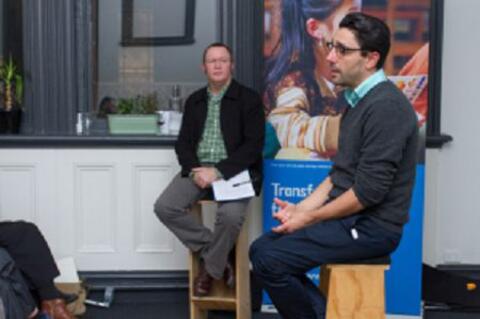
In June 2015, an event in Melbourne, Australia brought together academic researchers from Australian universities and think tanks with Australian non-governmental organisation (NGO) practitioners who are involved or interested in communication for development (C4D) work. The purpose was to enable participants to share experiences, lessons learned, and recommendations, as well as to facilitate connections between practitioners and researchers on future C4D-related research projects. The event was organised by Valentina Baú from the University of South Wales and Tait Brimacombe from La Trobe University.
During the first portion of the seminar, attendees listened to a series of informal 15-minute presentations on various organisations' work or research in the area of C4D. A variety of communication approaches were outlined. For example,
- Jessica Noske-Turner discussed the Royal Melbourne Institute of Technology (RMIT)'s engagement in two industry partnerships to investigate evaluation and learning in C4D. The first, Mobilising Media for Sustainable Outcomes in the Pacific Region, partners with Australian Broadcasting Corporation International Development (ABC ID) and PACMAS (Pacific Media Assistance Scheme) and focuses on the Innovation Fund (IF) programme. The second project, Evaluating Communication and Development: Supporting Adaptive and Accountable Development, partners with the United Nations Children's Fund (UNICEF) and aims to "co-develop evaluation approaches that marry an emergent, adaptive and learning-based approach to evaluating C4D with an increasingly dominant results-based management agenda. Working concurrently at such different scales, from the very grassroots through to one of the major global development agencies, provides a unique opportunity to consider both the different contexts of learning and evaluation, as well as the common themes, such as the centrality of capacity development, the eternal challenges of resourcing evaluation, and the question of 'evidence'." Links between the two projects included: (i) capacity building; (ii) promotion and sanctioned space for learning and reflection; (iii) scarcity of resources and need for feasible and realistic approaches; and (iv) pressure for evidence.
- Tamara Plush's presentation, "Exploring story-driven participatory video with mobile technology as a pathway for citizen mobilization in South Africa", provided context: Visual storytelling practitioners often find it difficult to incorporate the personal in collaborative, community-driven storytelling processes such as participatory video (PV). It was with such intent that researchers partnered with community mobilisers in Cape Town, South Africa, to develop a story-driven PV process inclusive of mobile technologies (e.g., use of mobile phones for the production of participatory videos). The mobilisers' aim was to use the process in their work on health, violence, and gendered inequalities in the city's informal settlement and township contexts. According to Plush, four elements lie as cornerstones to this process: group development and relationship building; appropriate technology; personal and collective storytelling; and dialogue and listening. A toolkit was implemented in Phases. Phase I included an introduction to storytelling; Phase II framing the story from the personal to the collective; Phase III technically bringing a story to life; Phase IV developing story content; Phase V technically building the story; and Phase VI speaking dialogue and listening.
- Representatives from ABC ID discussed their C4D efforts in various areas, such as working to build the capacity of national broadcasters to improve their technology, build staff skills, and improve their understanding of public interest broadcasting in areas such as health, education, climate change, governance, and violence against women. This has led to local trainees producing C4D content, such as in the case of the PACMAS NCD (non-communicable diseases) animation training held in Melbourne and Suva. In addition to its own team of eight full-time international and local researchers, ABC ID collaborates on research programmes to gather deeper insights and understanding of the context, culture, interests, and needs of people across Asia-Pacific. ABC ID then works to report on and disseminate this research to make findings accessible and practical information available, an example of which is the support the organisation provided to the Papua New Guinean national broadcaster through their "Citizen Access to Information" report. Examples of ABC ID projects were shared during this presentation, such as a radio talkback show in Cambodia designed to assist citizen engagement and promote two-way dialogue. One aspect of this is a youth voice project in Battambang made up of six segments. "The topics featured on the programme have led to behavior change and increased voice for positive contributions to political processes in Cambodia."
- Hamish Weatherly from the non-profit organisation RedR Australia shared field stories from his work as part of the Communicating with Communities (CWC) initiative's Standby Register programme. CwC is an emerging field of humanitarian response that seeks to meet the information and communications needs of people affected by crises through a cyclical process of gathering (listening), analysing (thinking), and sharing (speaking) communities' needs. If effectively implemented, this continuous cycle leads to outcomes such as efficiency, transparency, and accountability in the emergency operations. For example, as a RedR Australia global emergency deployee, Hamish worked in Myanmar, where "the context was one of complex emergency in a highly sensitive environment, as the population viewed humanitarian actors as parties in the conflict. This required an approach that focused on training and technical support....[T]here were limited broadcast options in the country. Hence, the challenge was to find sufficient technical support to persuade people to prioritise humanitarian information over other content."
- In "Communication for Development in Peacebuilding", Valentina Baú of the University of New South Wales "argues that a C4D in Peacebuilding approach moves from a media/journalism framework to one that centres community and social development as its primary goal. Incorporating this approach in peacebuilding enables different actors to be heard in the process, particularly at the community level. In recent years, Valentina's work has looked at the use of participatory media in peacebuilding. Her research and analysis frameworks are built around individual change, relational change, social change and the contribution of participatory video to conflict transformation processes."
- The next presentation provided an overview of current and prospective research projects exploring the intersection of gender and C4D in the Pacific that are being undertaken by Tait Brimacombeat at the Institute for Human Security and Social Change, La Trobe University. The first project, Communicating Gender for Social Change in Melanesia, examines case studies of effective communication practices that seek to challenge gender norms and stereotypes and/or promote gender equality. The second, Online and Offline Processes of Advocacy and Activism, responds to recent research on information and communication technologies (ICTs) and social media use in the Pacific for networking, advocacy and dialogue, with a view to mapping some of the links between young women's online and offline activities.
Following the presentations was a "C4D Jam", which provided participants with the opportunity to ask specific questions and then engage in a group conversation around issues such as ethics, power, inclusion, and participation. For example, during the session, John Wallace, director of the Asia Pacific Journalism Centre, shared a reflection on the Centre's work, which promotes economic literacy and capacity building for journalists. "Reporters participating in these programmes want more training and they want to receive it locally. Yet, in order to receive funding, each year the Centre needs to develop new ideas on how to make its work 'sexy' and 'on trend'. On the one hand, this preference for innovation encourages the organisation to modify and improve the product, but on the other hand it is exhausting and often comes at the expense of being able to offer continuity."
More details on the full presentations and projects discussed are available in the report where the proceedings of this event have been compiled. Please access the full report here.
Environment, Gender, Governance, Health, Technology, Youth
University of New South Wales and La Trobe University
Emails from Valentina Baú to The Communication Initiative on September 3 2015, September 12 2015, September 14 2015, and December 16 2015; and event description [PDF]. Image credit: Dan A'Vard, Opencage Photography
- Log in to post comments