










































Changing Gender Norms: Training Manuals from the Masculinities, Faith and Peace Project
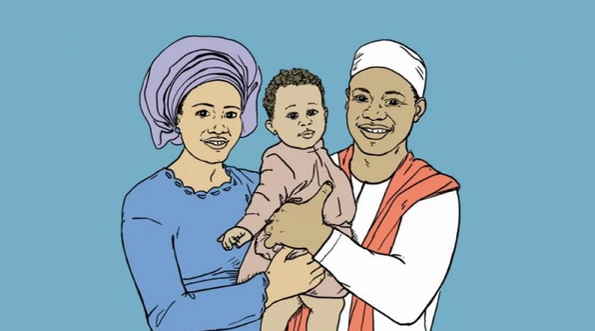
"This is a community-led and community-owned initiative, rooted in the potential of individuals, cultures, traditions and faiths to promote a life of dignity and happiness so all members are free from harm, discrimination and violence."
Implemented by the Institute for Reproductive Health (IRH) at Georgetown University and Tearfund in partnership with two local partner organisations, Masculinities, Faith, and Peace (MFP) addresses harmful social norms in mixed Muslim and Christian communities in Plateau State, Nigeria. Detailed at Related Summaries, below, MFP is an adaptation of Transforming Masculinities, Tearfund's faith-based intervention to end sexual and gender-based violence (SGBV). The resources below emerge from and support implementation of MFP and may guide those undertaking other social-norms-centred initiatives.
The resources - which, in each case, are designed to be used in parallel with the alternate (Christian or Muslim) version - include:
I. Transforming Masculinities - Masculinities, Faith, and Peace Project: A Training Manual for Gender Champions and Faith Leaders
This MFP manual introduces training for either Christian or Muslim faith leaders and gender champions: men and women who volunteer within communities to lead and facilitate change with respect to gender norms, gender equality, and the role of faith. It provides a detailed activity guide for use in training, and it includes guidelines to support the community dialogues that the gender champions will lead and facilitate. It is based on the standard Transforming Masculinities manual (see Related Summaries, below) but includes new components on social cohesion and child spacing.
Key interventions outlined include:
- Engaging faith leaders and communities: A process to engage key decision- and opinion-makers on the need to work with men and boys on SGBV prevention and response, to give an overview of the approach, and to gain support and leadership to progress and sustain the work.
- Training key faith and community leaders: A process to work with key individuals on addressing their own knowledge, attitudes, and behaviours on gender, masculinities, and SGBV. The idea is that personal transformation is a critical step before individuals are able to provide leadership and model positive behaviour, as well as to engage effectively and meaningfully to change social norms in their respective spheres of influence (e.g., home, church, community).
- Training of gender champions: A process to guide those who are committed to working with their peers as facilitators and leading community dialogues on a weekly basis.
- Holding community dialogues: A series of dialogues/discussions facilitated by the gender champions on issues such as gender, masculinities, and SGBV, with the aim of journeying with men and women, in single-sex groups and subsequently mixed-sex groups, towards personal change. These dialogues constitute a structured process to facilitate the transformation of individual behaviour and of social norms - in part through contextualised scriptural studies.
Key principles in this endeavour include: personal transformation, engagement, dialogue, accountability, and community ownership.
II. Community Dialogues - Masculinities, Faith, and Peace Project: Promoting Respectful Relationships and Equitable Communities
This resource has been adapted for gender champions who have been trained using Tearfund's Transforming Masculinities toolkit and are working with communities - either Christian or Muslim - as part of the MFP project. The ultimate aim of the dialogues is for couples to be transformed as individuals and in their relationships.
The sessions are composed of both scriptural reflections and other tools to facilitate honest dialogues at the community level. The discussion themes are tailored for both women's and men's groups, with the expectation that couples will come together for joint reflection in Weeks 6-8 and for a joint celebration in Week 9. The sessions are practical and action oriented, so, at the end of each one, participants are given personal and relational reflections to take home and think through during the week, with a view to sharing their thoughts in the following session. Holy texts from the Bible - or Qur'an - are used to help address misinterpretations that support and perpetuate harmful masculine ideologies, gender inequality, and SGBV. Scriptures are also used in reflections to support dialogue on child spacing and men's support of safe motherhood.
Publishers
MFP Transforming Masculinities manual: 96 (Christian), 92 (Muslim); MFP Community Dialogues manual: 60 (Christian), 56 (Muslim)
Tearfund website, June 22 2022. Image credit: Petra Röhr-Rouendaal
- Log in to post comments