










































Campaign School For Women

The 5-day programme consists of 4 modules, and covers the following topics:
- Campaigning for affirmative action for parliament
- Campaigning for gender equality in political parties
- Campaigning for political equality and government action (includes campaigning for government action on political equality and women campaigning for political equality)
- Campaigning for elected office
ALP has developed a conceptual framework linking these topics, which is based on the recognition that women need to acquire effective election campaigning skills. However, ALP stresses, given the current cultural and institutional barriers in Asia and the Pacific, this alone will not be enough to get women elected. Research and the experience of women from around the world suggest that overcoming these barriers requires both governments and political parties to adopt affirmative action measures of some form. It also indicates that women themselves will have to drive the campaigns required to bring about the changes needed in political parties, government, and the wider community, to increase the number of women in elected office.
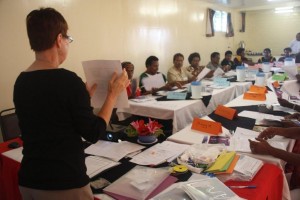
These observations have shaped the participatory, practical nature of the Campaign School for Women. For example, the 2008 programme, organised under the Australian Political Parties for Democracy Program (APPDP), brought together 25 political practitioners from Asia and the Pacific. The programme focused on the campaigns required to get women elected to office in the region. Special attention was paid to the building blocks of successful election campaigns, internal campaigns within parties to get more women into decision-making positions, advocacy campaigns for affirmative action measures, and the role of political parties and other organisations in getting more women into office. The practitioner-oriented programme included meetings and functions with senior Australian politicians and was timed to coincide with the Cairns sitting of the Queensland Parliament. Participants observed a Queensland Regional parliamentary sitting and learned about other methods of community engagement and participation.
ALP has produced and is disseminating detailed guidance to those seeking to achieve sound policy outcomes that support women by encouraging women to participate in ALP structures at every level, to use these as platforms to fight for government positions, and to take an active part in public life. Available materials include a Trainer's Guide, Students' Resource Kit, and PowerPoint presentations.
Women, Gender, Rights, Democracy and Governance.
The proportion of women in Parliament in the Asia Pacific region ranges from zero to about 30%, but is generally still very low. For example, there are 23 women Ministers of Parliament (MP) out of 222 in the Malaysia Parliament; this is less than 10%. Dr. Lesley Clark, Course Director for the Campaign School for Women, shared her 20 years experience in public office at the local and State level with women participants during the 2008 course: "The use of gender quotas in the Australian Labor Party which has resulted in the ALP having the highest proportion of women in all Australian parliaments at 37% is a powerful lesson for women from other countries and parties that have yet to adopt temporary special measures like gender quotas."
Posting to the Women's United Nations Report Network (WUNRN) listserv on February 23 2009; ALP website; and Chong Eng's blog, entry dated November 13 2008.
- Log in to post comments