










































Behavior Change Interventions for Safe Motherhood: Common Problems, Unique Solutions
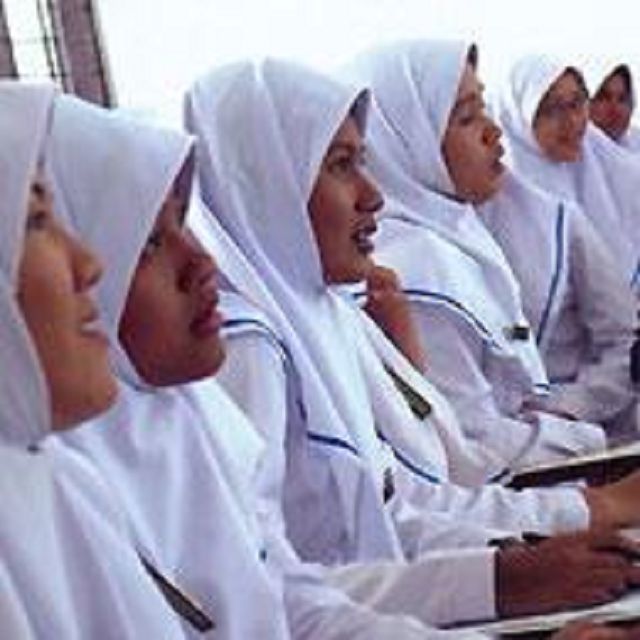
"Program planning and implementation must include all stakeholders while simultaneously improving clinical services, and generating greater and better-informed demand for appropriate support and quality services."
This report focuses on the activities of Jhpiego's Maternal and Neonatal Health (MNH) Program in the area of behaviour change interventions (BCI), which were undertaken in nearly every country in which the MNH Program worked. They were evaluated through population-based surveys in Burkina Faso, Guatemala, Indonesia, and Nepal. Each of these countries has related economic, geographic, and political obstacles to overcome. Working with United States Agency for International Development (USAID) Missions, government decision-makers, health workers, and community champions in each country, the MNH Program designed BCI activities suited to the local cultures and circumstances.
In the MNH Program, BCI includes behaviour change communication (BCC) activities, community and social mobilisation, advocacy, and alliance building. The Program's approach is reflected in the Birth Preparedness and Complication Readiness (BP/CR) Matrix, a programming tool that outlines key actions and responsibilities of each actor within the safe motherhood arena: policymakers, healthcare facilities, providers, communities, families, and individual women. The actions that these actors, or stakeholders, can take are listed in separate sections of the BP/CR Matrix that relate to pregnancy, labour and childbirth, and the postpartum/newborn period. (The matrix is included at the end of this report. To preface the matrix, examples are provided for how it has been used in practice. For example, in Thailand, during an activity aimed at generating discussion about how to ensure that all safe motherhood stakeholders are heard, participants in a safe motherhood workshop used the matrix to facilitate dialogue around barriers created by power and gender.)
The MNH Program used the Stages of Change Theory as an underlying theory of behaviour change. This theory stipulates that individuals move through stages in the behavior change process: from acquiring knowledge, to formulating intentions, to performing behaviours. In safe motherhood, these stages are denoted as knowledge of the danger signs of pregnancy, knowledge of available and appropriate obstetric services, intentions to use services, intentions to perform certain actions to prepare for birth (plan for a skilled provider, plan to save money, plan to arrange backup transport if the need arises), and the actual carrying out of these behaviours.
The concept of BP/CR directly influenced the design and development of BCI activities, including:
- Community mobilisation techniques to support the development of community-based plans to transport women, help fund health services, provide education to pregnant women and their families, and create demand/community norms for healthcare services;
- Mass media and local media to educate women and their families about BP/CR, advertise and promote healthcare services or providers, and support community efforts to create funding and transport systems;
- Interpersonal counseling training to help close cultural, ethnic, and social gaps between healthcare providers and traditional birth attendants (TBAs) and community members; and
- Advocacy to institutionalise change at all levels of the healthcare system.
Formative research is described here as an important tool in BCI programme design. For example, in Guatemala, researchers conducted participatory video discussion groups with women, men, community leaders, and TBAs. The audiences were shown two videos of maternal-health-related situations: one of a woman at home with a complication and the other arriving at a hospital seeking care. The participants were asked to act out and discuss an ending for each video. The research revealed that distance to health facilities, lack of money to pay for the transportation and other expenses, and negative views of healthcare services were major factors in women's reluctance to seek help during an obstetric emergency. As a result of this information, the programme helped communities organise emergency plans and communication efforts that addressed these issues directly.
BCIs in the 4 MNH Program countries were evaluated with pre- and post-intervention population-based surveys. These surveys found that the MNH Program had an impact on behaviour relating to maternal health. The most fundamental and salient lesson learned was the importance of designing and implementing an integrated programme - one where advocacy was integrated with the design and implementation of behavior change communications, and where integration was a priority for both programme planners and stakeholders. In the four countries examined in this report, knowledge of birth preparedness, danger signs, and antenatal care attendance all increased after an integrated campaign. Highlights include:
- An increase in childbirth with a skilled provider in Burkina Faso, Guatemala, and Nepal: In the Koupéla district of Burkina Faso, skilled attendance at birth increased from 39% at baseline (2001) to 58% at follow-up (2004). In Guatemala, researchers found a statistically significant increase in skilled attendance at birth in the proportion of women giving birth in the healthcare system. More than half (55%) of the exposed women in the follow-up survey gave birth at a facility, compared to 31% at baseline and 31% of those women who were not exposed to the Program (adjusted for sociodemographic characteristics). In Nepal, skilled attendance increased from 15% at baseline to 37% at follow-up. In Indonesia, although the BCI surveys did not measure a statistically significant increase, the Demographic and Health Survey reported an increase from 31% to 49% in West Java and from 43% to 66% in Indonesia overall during the programme implementation period (1998-2003).
- An increase in antenatal care attendance in all four countries: In Burkina Faso, for example, the number of first-time users of antenatal care rose from 66% in 2000 to 85% in 2003 in the MNH Program area.
- Increased awareness of severe bleeding as a danger sign during the postpartum period among women in all four countries: Women exposed to BCI activities in all four countries showed higher levels of knowledge than did women who were not exposed. (More than half of maternal deaths result from postpartum hemorrhage.)
- An increase in the proportion of women who made arrangements for transportation to a healthcare facility in case of an obstetric emergency in all four countries: Women exposed to BCI activities showed higher levels of action - by making arrangements for emergency transport - than those who were not exposed.
According to the report, health-seeking behaviour change to improve maternal and neonatal health can occur through a programme that includes the following components:
- Improving and ensuring high-quality clinical services and skills;
- Creating a locally appropriate mass media component to help define safe motherhood as a broad social issue; and
- Establishing community mobilisation systems to effect change at the community level, where pregnant women and their families live, and to make maternal health both a community effort and an explicitly shared responsibility.
Conclusions from the study include:
- Demonstrating the impact of BCIs is "an increasingly serious challenge for programs that must operate in an international environment fraught with emergencies and crises and that must compete for scarce resources."
- "The BP/CR Matrix is a useful framework for addressing all audiences in a simultaneous, integrated way."
- "There is often a dynamic tension between the clinical and BCI components of a safe motherhood program....To avoid mobilizing communities into poor quality services, clinical improvements such as provider training and facility upgrades must be in place before communication efforts are fully underway."
- "Mass media can be an important tool in safe motherhood programs....[P]rograms should include creative professionals in creating memorable, behavior-changing media, especially in a cluttered media environment."
- "Building a brand name for safe motherhood can extend the concept of BP/CR."
- "For maximum impact, health messages must be consistent and broadcast over a fairly long period of time."
- "Community mobilization activities are often hard to get started and take longer than anticipated."
- "Community mobilization can effectively address delays in seeking care and reaching care by supporting identification of danger signs and complications, transport systems, and savings."
- "White Ribbon Alliances can powerfully support and mobilize stakeholders for action and should be linked to BCC efforts to help spread safe motherhood messages."
The MNH Program was jointly implemented by Jhpiego, the Johns Hopkins University Bloomberg School of Public Health Center for Communication Programs (JHU/CCP), the Centre for Development and Population Activities (CEDPA), and the Program for Appropriate Technology in Health (PATH), with support from the United States Agency for International Development (USAID).
Jhpiego website, March 1 2013; and ReproLine Plus website, December 4 2014.
- Log in to post comments