










































Are gender-transformative evaluations in conflict situations different from similar evaluations in other settings?
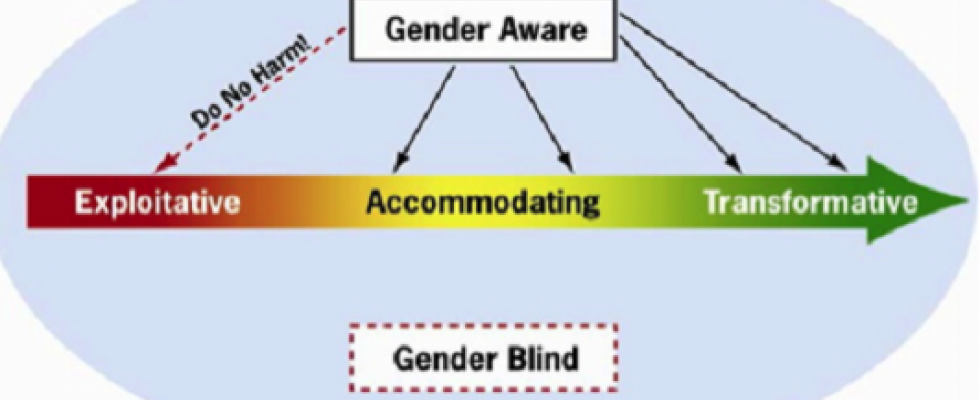
Author: Ranjani K Murthy, August 18 2016 - Gender-transformative evaluations seek to assess impact of policies, programmes and projects on transforming gender and other social relations. These evaluations: adopt transformative evaluation methodologies and methods; are done people with gender expertise; and feed back findings to marginalized women and men.
Are gender-transformative evaluations in conflict situations different from similar evaluations in non-conflict settings? Does the evaluator have to keep specific aspects in mind?
In this blog I offer some insights that I would like to share from gender-transformative evaluations in Sri Lanka (during conflict), Nepal (conflict and post conflict), Sudan (conflict) and Afghanistan (conflict) in times of conflict:
- Share objectives of evaluation strategically: Conflicts can be gender-neutral, gender-regressive to gender-transformative. It is important to not share the transformative orientation of evaluation in situations of ‘regressive’ conflicts. Stating openly with men community leaders that one has come to the village to assess how far conflict response/recovery has led to women’s empowerment may not work. Instead it may be better to explore what how women have benefitted through response/recovery activities, what they think about it and what is the direction to go.
- Individual interviews are very important. Remember that people on either side of the conflict may be present in focus group discussions and this may lead to conflicts in group discussion which are not to do with gender issues, or one party not taking part in the discussion. Hence supplementing with individual interviews is very important. For example, one woman shared in individual interview that her husband was killed by the army as he was believed to be a terrorist. The group would not support her livelihood activity believing she was also one, and shunned her. When she was in the Focus Group Discussion she did not share the same.
- Use transformative methods which grapple with feelings: Happiness mapping - entails capturing happiness level before the intervention began and at the time of evaluation- throws a lot of insights on change if any and reasons for change. Story telling on discrimination and exercise on shifts in confidence and security are other methods that could be used.
- Examine whether women on either side of the conflict are benefitting and who is in leadership positions: During conflict, it is necessary to see if practical and strategic gender interests of women - of both sides - are being addressed equitably in camps for internally displaced. Effectiveness of violence prevention mechanisms need to be assessed. In post conflict situations, it is necessary to see which women are benefitting. I have come across peace committees where majority are women from majority community, and ethnic minorities were neglected. Implementation of UN Resolution 1325 has to also be assessed in post conflict situations. For example, recovery funds were meant for livelihood of women from an ethnic minority group, but half their land was taken away by the majority.
- Assessing retributive justice: In post conflict situations assessing retributive justice is a must. If there has been violence against women by either sides justice has to be secured- and this requires assessment.
- Evaluation team should ideally consist of women from both sides of conflict: This is essential as there is a ‘trust deficit’ in conflict settings and in case one is going to a region dominated by one community it is important to have a woman facilitator from that community. At the same time ensuring the safety of the other evaluator is important.
- Be gentle when one interprets: Change takes time in conflict/post conflict situations; hence women coming to meetings without fear could be a transformative indicator, while in a normal context it may not. One also has to remember whether the conflict is progressive, regressive or neutral while interpreting.
Ultimately evaluations in normal situations have to address whether inequalities and human rights violations are decreasing, norms on masculinities are changing and vulnerability to conflict is decreasing!
Click here to access this blog on the Gender and Evaluations website.
Image credit: Karim
As with all of the blogs posted on our website, the content above does not imply the endorsement of The CI or its Partners and is from the perspective of the writer alone. We do not check facts and strive to retain the writer's voice, as is detailed in our Editorial Policy.
- Log in to post comments