










































Aid in Support of Gender Equality and Women’s Empowerment
For five years, the Organisation for Economic Co-operation and Development (OECD)'s Development Assistant Committee (DAC) has been tracking the extent to which donors' funding is focused on gender equality. The Development Assistance Committee is comprised of 24 major donor countries, all of which are required to report sex-disaggregated data on a regular basis. This document describes the evaluation methodology and reports the findings.
To compile the findings, DAC used the following definition and criteria on gender-focused activities of development:
To be an activity classified as gender equality focused, it must be "intended to advance gender equality and women's empowerment or reduce discrimination and inequalities based on sex."
Criteria for eligibility include: "Gender equality is explicitly promoted in activity documentation through specific measures which:
a) Reduce social, economic or political power inequalities between women and men, girls and boys, ensure that women benefit equally with men from the activity, or compensate for past discrimination; or
b) Develop or strengthen gender equality or anti-discrimination policies, legislation or institutions.
This approach requires analysing gender inequalities either separately or as an integral part of agencies‟ standard procedures.
Examples of activities that could be marked as principal objective:
-- legal literacy for women and girls;
-- male networks against gender violence;
-- a social safety net project which focuses specifically on assisting women and girls as a particularly disadvantaged group in a society;
-- capacity building of Ministries of Finance and Planning to incorporate gender equality objectives in national poverty reduction or comparable strategies.
Such activities can target women specifically, men specifically or both women and men.
Examples of activities that could be marked as significant objective:
-- activity which has as its principal objective to provide drinking water to a district or community while at the same time ensuring that women and girls have safe and easy access to the facilities;
-- a social safety net project which focuses on the community as a whole and ensures that women and girls benefit equally with men and boys."
The document contains results for reporting from 2009-2010:
- A chart on “Gender Equality Focus of DAC Members’ Aid by Sector” on page 3.
- Charts with statistics on aid focused on gender equality and women’s empowerment extended by each DAC member, with a disaggregated chart for each of the countries considered.
29
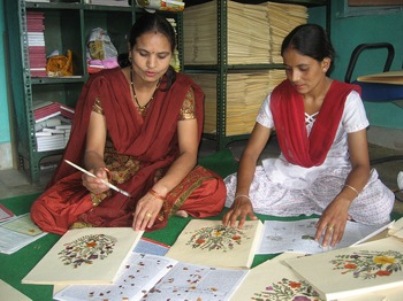
Inter Press Service (IPS), March 7 2012, accessed on April 26 2012. Image credit: Nitin Jugran Bahuguna/IPS
- Log in to post comments