










































African American Adults and Seasonal Influenza Vaccination: Changing Our Approach Can Move the Needle
University of Maryland
During the 2015-16 influenza (flu) season, the Centers for Disease Control and Prevention (CDC) estimated that almost 37% percent of all Black adults were immunised against the flu, compared to 45% percent of Whites. African Americans experience disparities in multiple chronic diseases, so lower vaccine uptake is a particular threat to their health. In an effort to help increase seasonal flu vaccination in the African-American population, in this commentary, Sandra Crouse Quinn reviews relevant research in order to suggest particular roles and strategies for healthcare providers (HCPs), public health agencies, and African-American communities and families.
Since 2012, Quinn's research team has used mixed-methods research to explore cultural and other psychosocial factors associated with flu vaccine disparities. This research has highlighted perceived risk of vaccine side effects, social norms that do not support vaccination, and lower knowledge of the flu and the vaccine as some of the factors affecting flu vaccine uptake among African-American adults. Yet the team's nationally representative survey of African Americans also found that there is substantial trust in one's own physician about the flu vaccine, coupled with valuing the provider's vaccine recommendation. Other research has found that African Americans are not receiving strong recommendations and specific offers of the vaccine during their healthcare visit.
In this context, Quinn's team's 2015 survey examined racial factors including: (i) racial fairness, defined as perceptions of whether treatment, either by government or within a healthcare setting, is fair to one's race; (ii) racial consciousness, defined as the awareness of oneself as a racial being in a healthcare setting; (iii) experience with discrimination in health care, and (iv) the impact of that discrimination on the ability to get health care. The researchers found that higher scores on racial consciousness were associated with lower trust in the vaccine, greater perceived risk of side effects, and higher perception of barriers. Higher racial fairness mediated higher trust in the vaccine, contributing to greater vaccine uptake. Racial consciousness and discrimination affected key variables such as perceived risk of side effects and decreased uptake.
Given that research shows that minorities rely more frequently on medical than non-medical settings (workplace, drug store, grocery store) for vaccination, Quinn suggests that working with HCPs is a critical step to reducing vaccine disparities. Stressing that both the message and the messenger matter, Quinn offers these reflections:
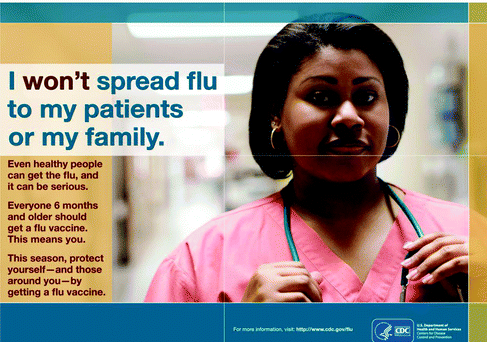
- Low vaccine uptake among HCPs remains a problem; efforts to increase vaccination rates among HCPs would likely also yield benefits in increasing patient uptake (role modeling). There are carefully designed health education materials, particularly from the CDC, that are designed to reach African-American HCPs (see above). Other materials, tailored to African-American patients, such as posters and brochures, can be given at the time of the encounter and form the basis of the discussion between the HCP and patient. The CDC has found that intergenerational photographs in such materials are particularly important for African Americans.
- Quinn's team has learned that 24% of African Americans reported that "what my healthcare provider recommends" is somewhat important, 25% fairly important, and 30% extremely important. Furthermore, there was substantial trust in their personal physician related to the flu vaccine. These data bode well for increasing uptake of the vaccine upon receipt of a recommendation and the actual offer of vaccine delivery. However, some changes in the communication between HCP and African American patients are in order.
- In those communications, Quinn explains that a sole focus on disease risk will not be sufficient if a patient sees the vaccine as risky. However, helping patients who are at high risk to fully understand their risk of complications, combined with an honest discussion of any vaccine risks, could improve their accuracy of perceived risk. Specifically, HCPs can use "gist" (bottom-line meaning) approach to communicate about the increased risk of serious complications and hospitalisations, followed by a "linking phrase" that addresses risk of vaccine side effects. For example, addressing both types of perceived risk could sound like this: "We know that the flu vaccine is approved annually and safe, with only minor side effects for few people. The reason that is important is that with your heart disease, you are more likely to have serious complications from the flu, and I strongly recommend that you take the vaccine."
In addition to HCPs, there is a role for public health agencies, including the CDC, in doing more to develop effective communication tools that address knowledge gaps related to influenza, the vaccine, and perceived risks of the vaccine. The present gap is often filled by misinformation and myths within social networks and specifically on social media.
On the lines of social networks, African-American families and communities have an influence on vaccine behaviour. The CDC's finding that messages focused on the collective good and protecting one's family are effective reinforces the importance of reaching African-American families and communities. The HCP can reinforce the potential impact of flu vaccination in protecting other members of families. Quinn also suggests engaging community organisations such as faith communities, trusted opinion leaders, and civic groups to promote the importance of flu vaccination as a means to protect the broader community. Many Black family reunions occur in late summer and early fall, providing an opportunity for promotion of early vaccination.
Quinn concludes by urging HCPs to ensure that all high-risk African Americans receive a recommendation, an offer, and effective communication about the vaccine. This in turn may help public health agencies and African-American families to change knowledge, attitudes, and social norms around flu vaccination for all African Americans.
Human Vaccines & Immunotherapeutics, 14:3, 719-723, DOI: 10.1080/21645515.2017.1376152. Image credit: CDC
- Log in to post comments